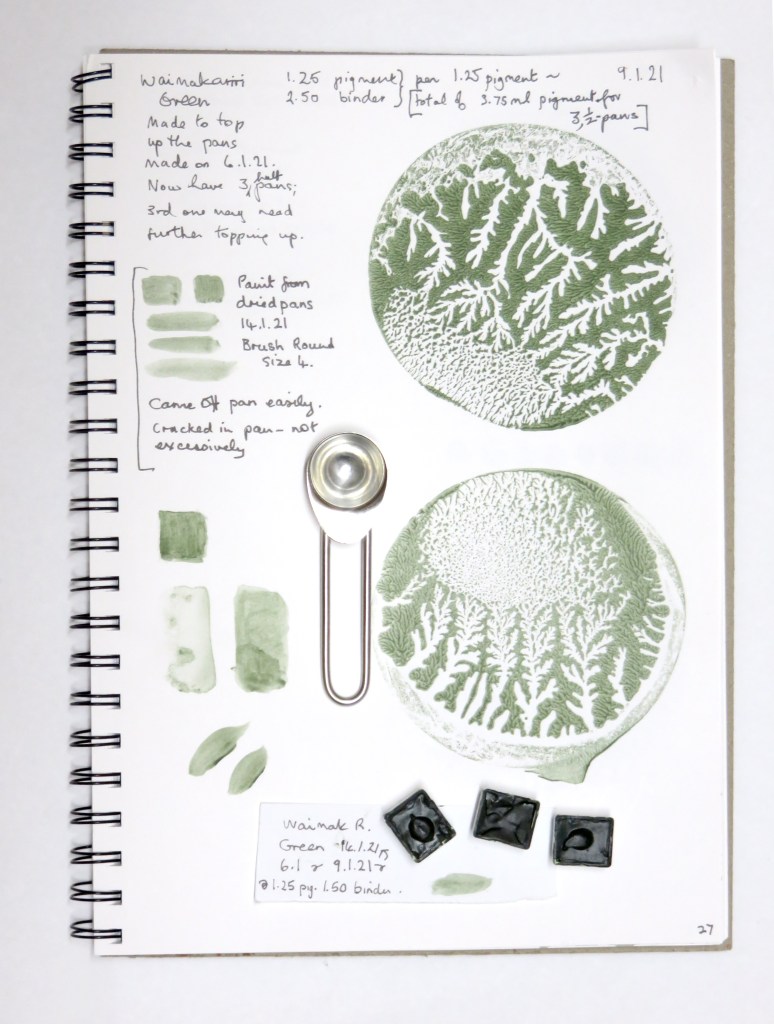
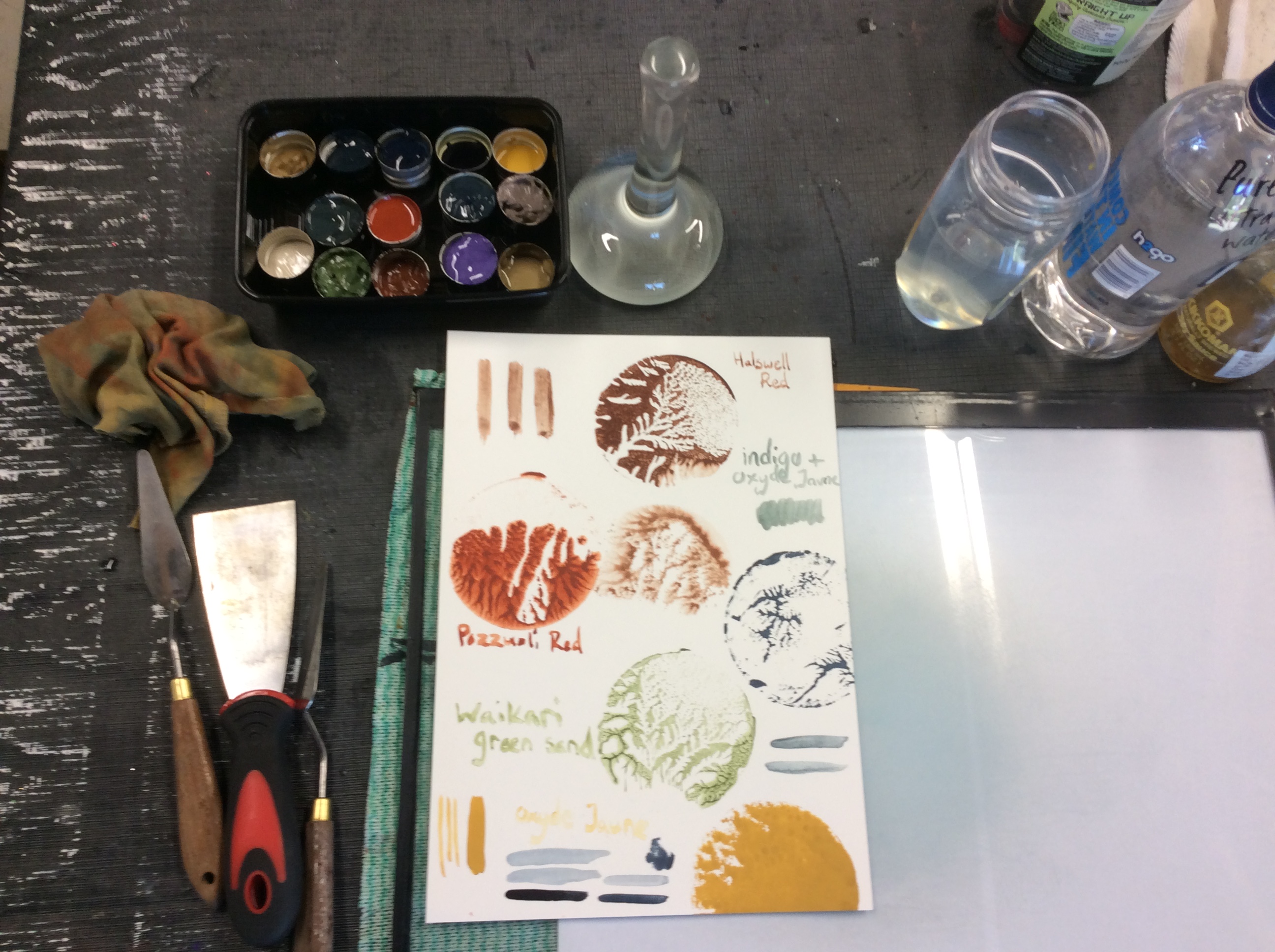
A page from one of my test books, showing this green sedimentary rock from the Waimakariri river. I make these tests every time a new paint is made. This in my ninth A4 book.
Earth pigments, paint, painting, printmaking, eco colour and visual arts; Canterbury, South Island, New Zealand
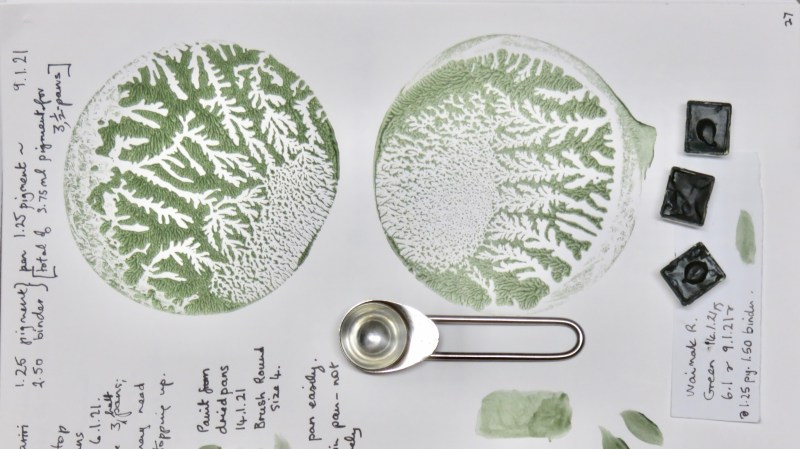
A page from one of my test books, showing this green sedimentary rock from the Waimakariri river. I make these tests every time a new paint is made. This in my ninth A4 book.
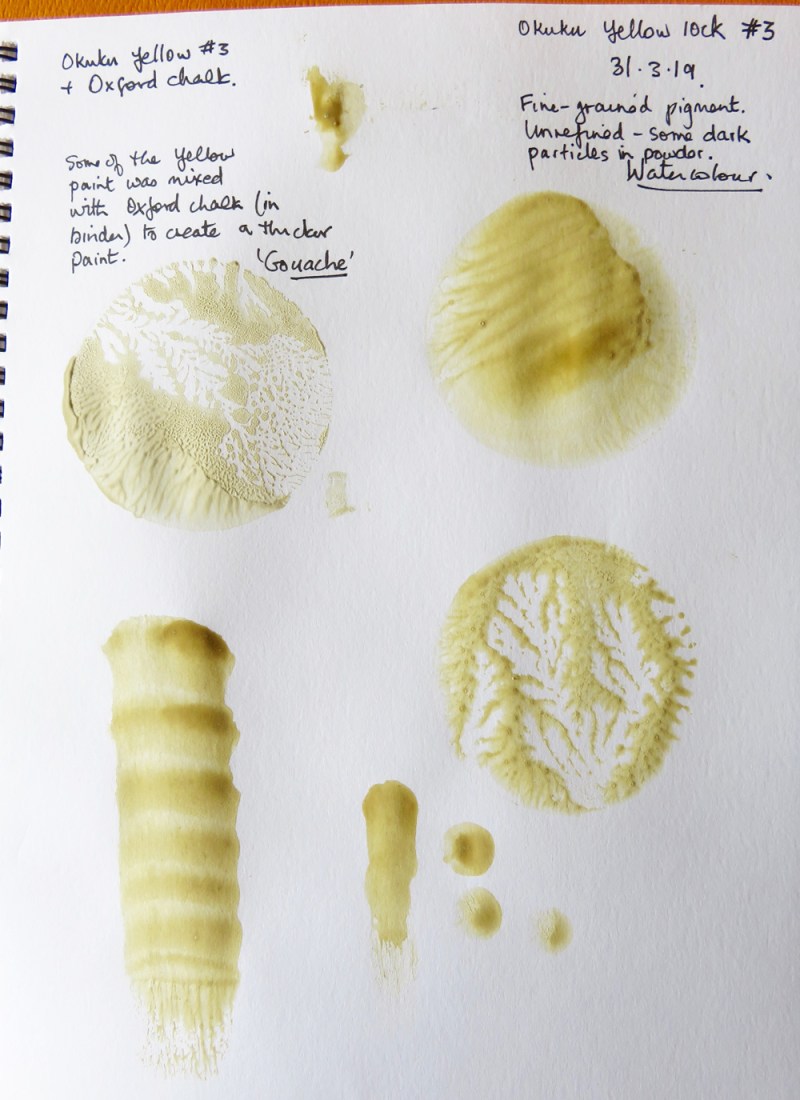
I found this pigment at Okuku Saddle, situated north of Oxford, in the Lees Valley.
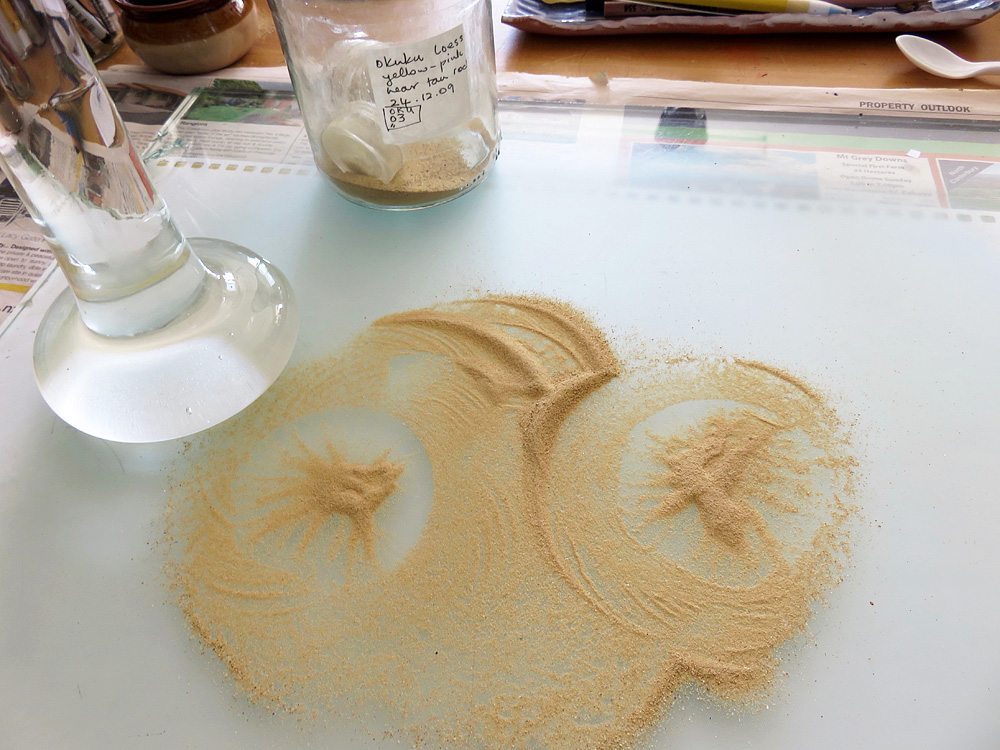
This was a chunk of loess from beside the road and above is the watercolour and gouache paint made from this pigment. The colour of the paint is reasonably true – varying from light tan when thick, to yellow when diluted with more water. The circular shapes are created by pressing the muller on to the paper and the patterns form as the muller is lifted. The top right impression was made with a wetter paint than the impression just below. The paint is reasonably opaque when thickly applied; and the chalk gives a lovely pastel colour. I made this paint again (pigment collected in 2009) as part of research for an artists book I have planned.
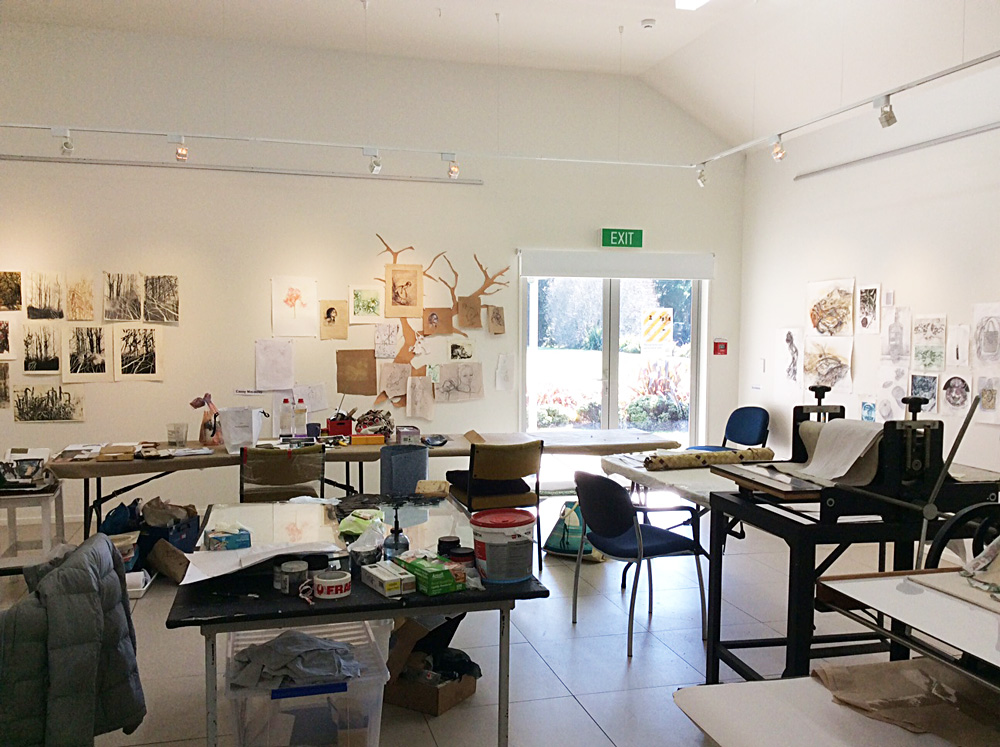
Open House is a great experience. We are in the final few weeks of the artist in residence project (on Fridays, Saturdays, and Sundays) . We think we have spoken to the public for about 60% of the time we have been in the gallery working. Its has been very satisfying to talk to visitors and to realise how many people out there are actually very curious about how printmakers make images, how we research and experiment. We have all enjoyed being artists together, a great opportunity to exchange ideas and learn in good company. Just such a great idea; we have been very honoured be invited and very pleased to take part.

Fellow invited artists with Jo Ernsten are Kathy Anderson, Casey Macaulay, Ruth Stanton McLeod, Kris Waldin, Tessa Warburton. Last weekend visitors were offered the opportunity to print and take home a calico carry bag. We have made some more which are now on sale in the gallery.
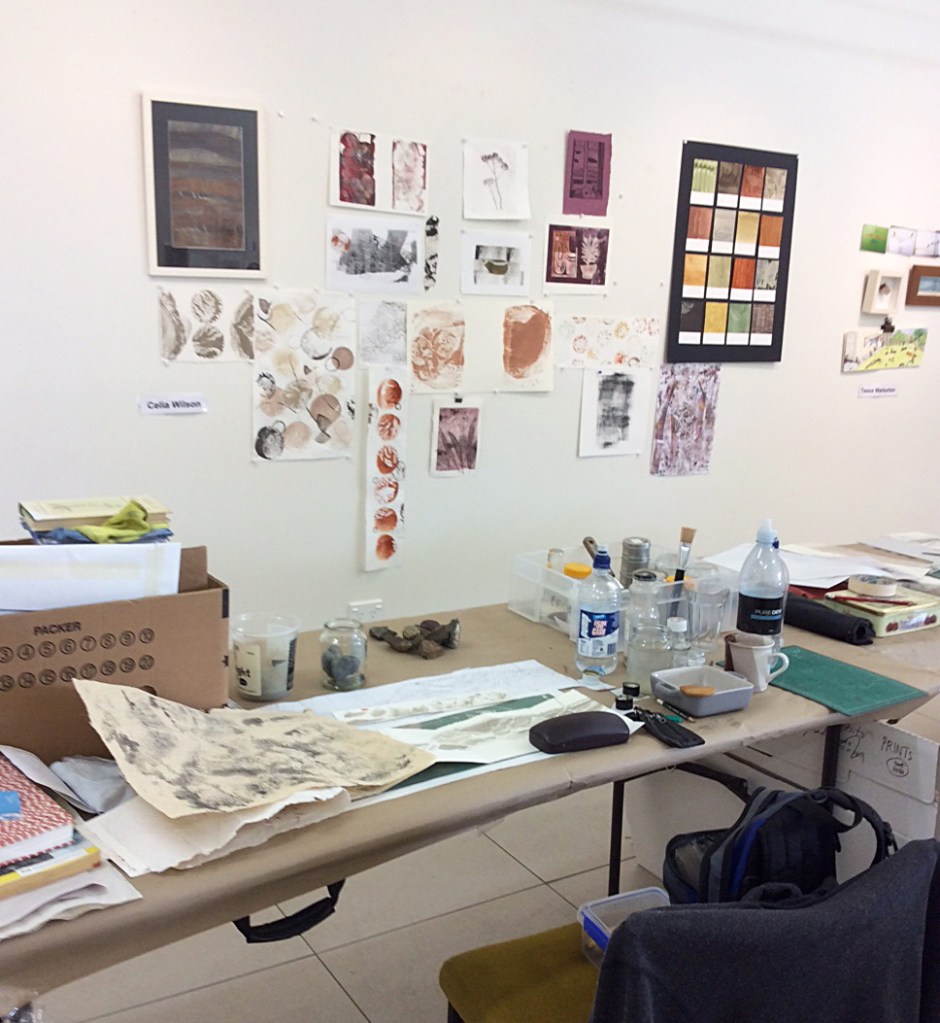
Here are some photos I have taken of some work made to date. First up is an image of my table and some old and new work on the wall.
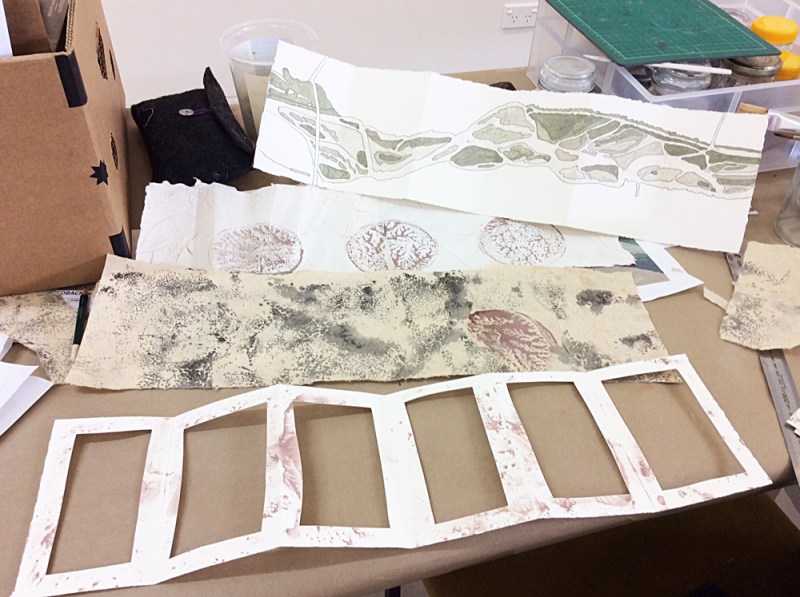
I have been using rock pigments from the Eyre/Waiaraki River that runs by Oxford. Water only runs through the braided river bed after rain, and the close-by headwaters are in and around the Mt Oxford hills. Weeds can grow and make the shingle beds unsuitable for nesting birds, but there is still lots to see at any time of the year. We have collected some of the weeds to make paper at the Gallery, and I am using some of this paper in my Open House art. I’ve been making *muller imprints with the paint I’ve made – browns, reds and greys. I have included paint made from green Waimakariri River rock as well – that river is not far from Oxford, and the Eyre/Waiaraki River eventually joins the Waimakariri closer to the coast. The Eyre/Waiaraki River used to end in swampy ground situated to the north of the point where it is now diverted into the Waimakariri.
From various maps I have drawn a section of the braided river in Oxford, made dry-point prints of the river bed structure (always moving!) and a selection of introduced weeds as well as New Zealand native plants that are found around and in the river bed.
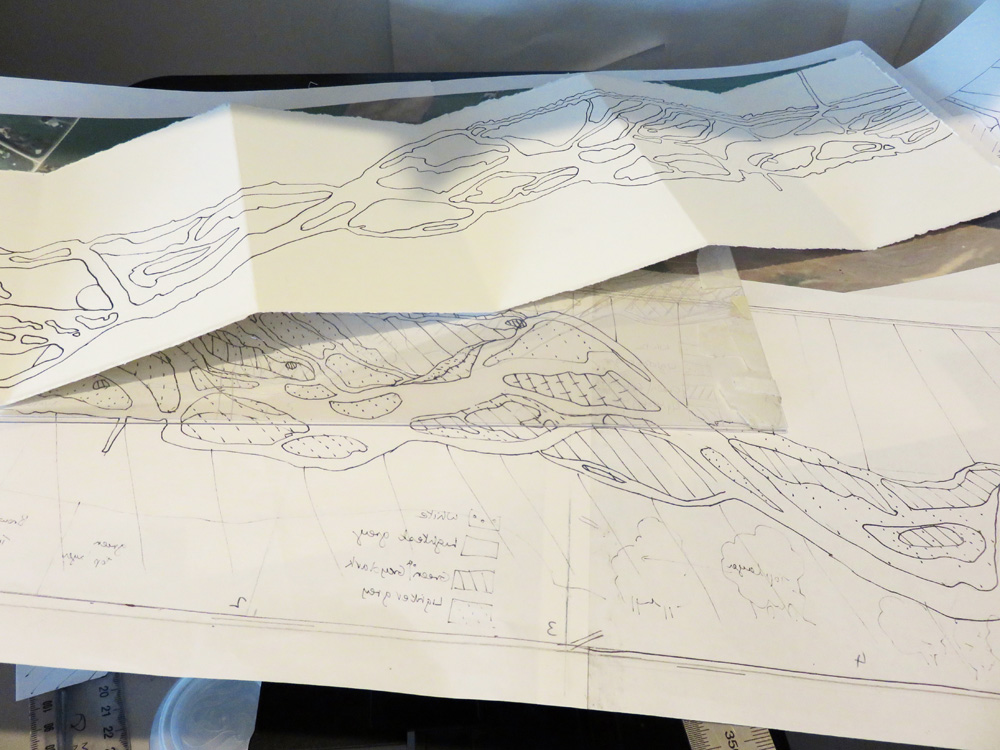
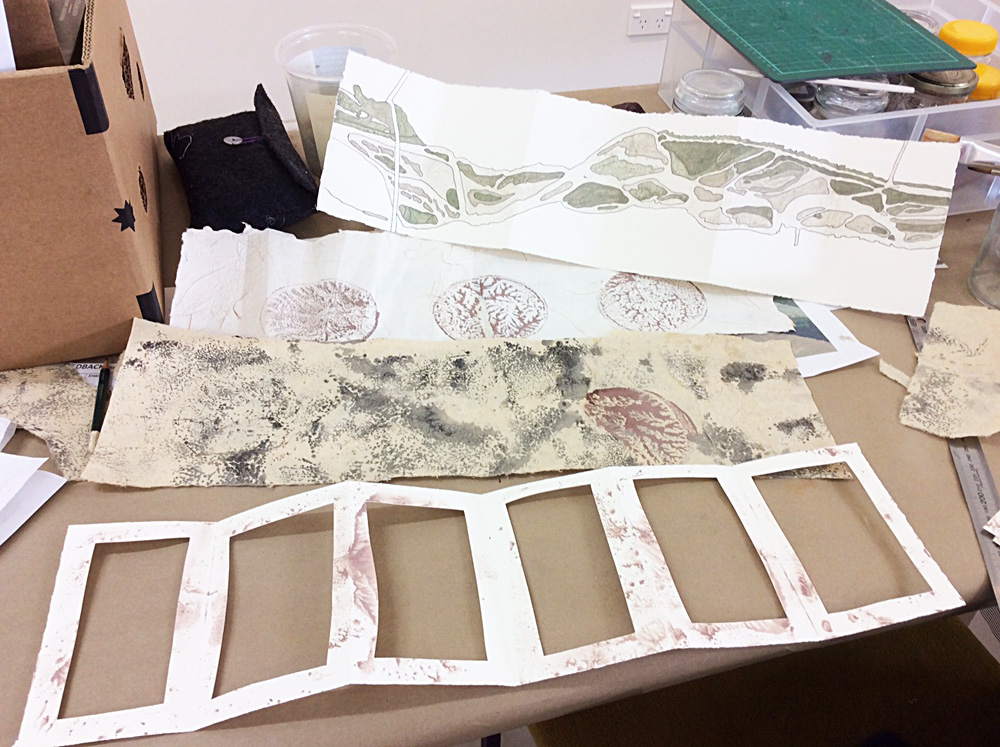
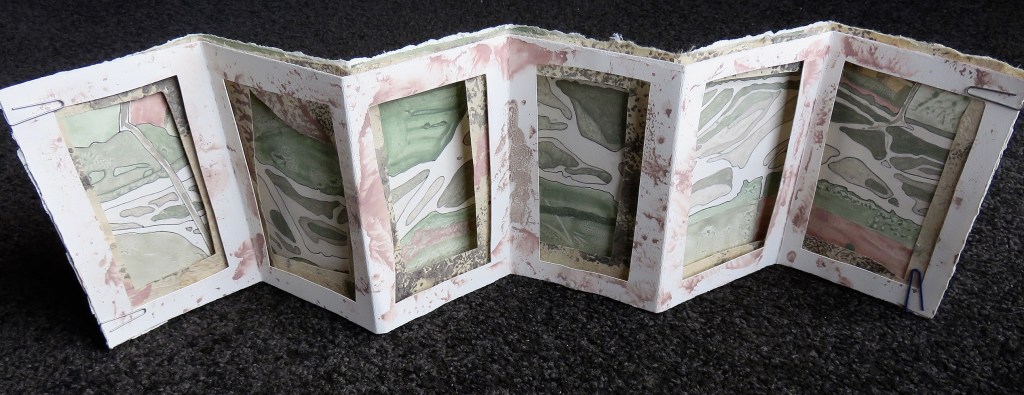
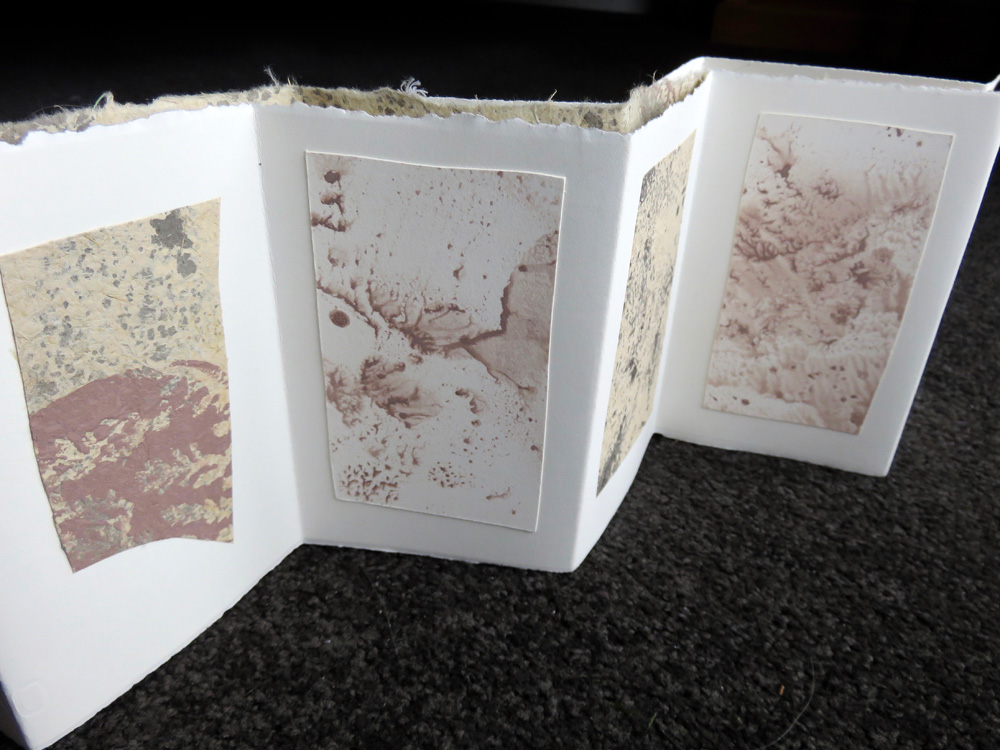
*Muller imprints are made with the tool that is used to grind the pigment powder into the binder. The suction created by lifting the muller off the paint creates the patterns on the muller base that I then imprint on to paper. I have made two layered concertina booklets using the pigments and the braided river as inspiration. Not finished yet! A couple of other books using print and paint are also in progress.
More to come later.
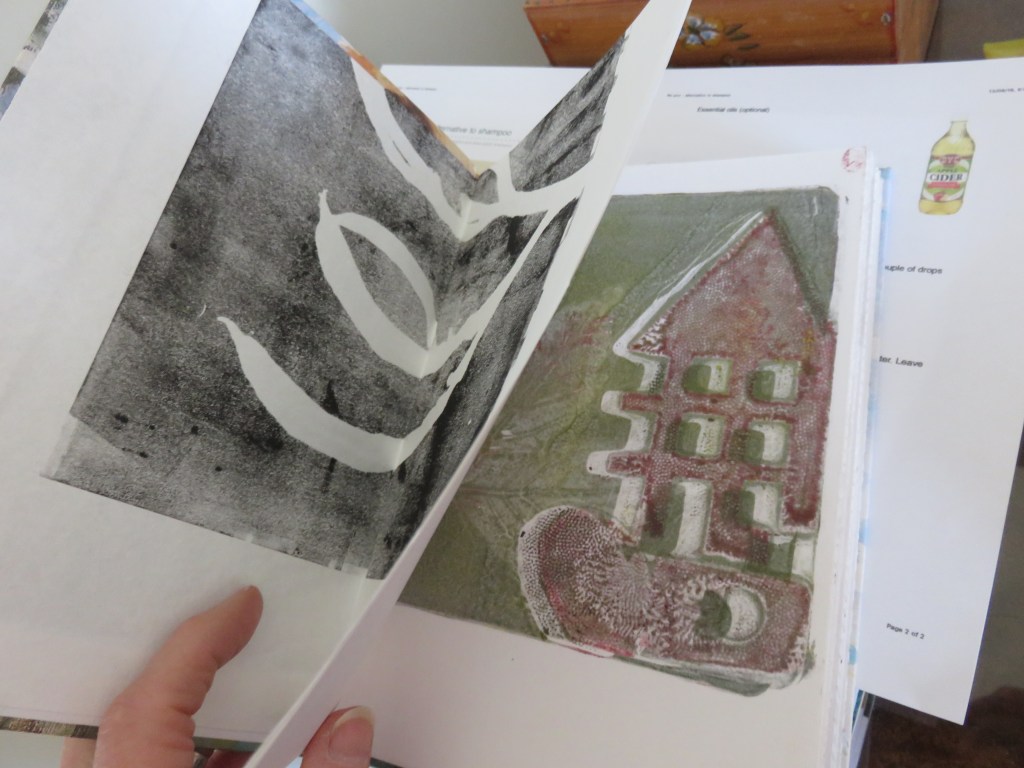
Have had a flurry of making prints to bind into books. These books are the result of making folios with painted paper and paper printed by two gelatine printing plates, one bought and one home made.
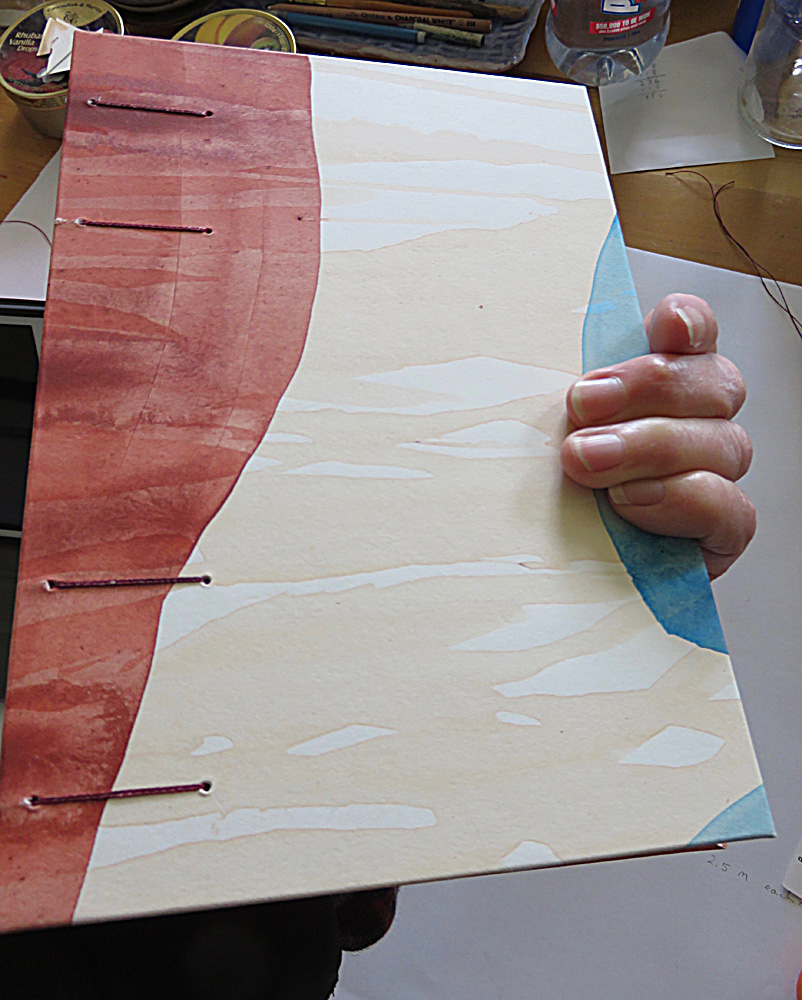
This is the latest effort; a book covered with acrylic paint on thick hot press paper (600 gsm or 360 gsm? Painted years ago). The binding is 4-needle coptic – my first one.
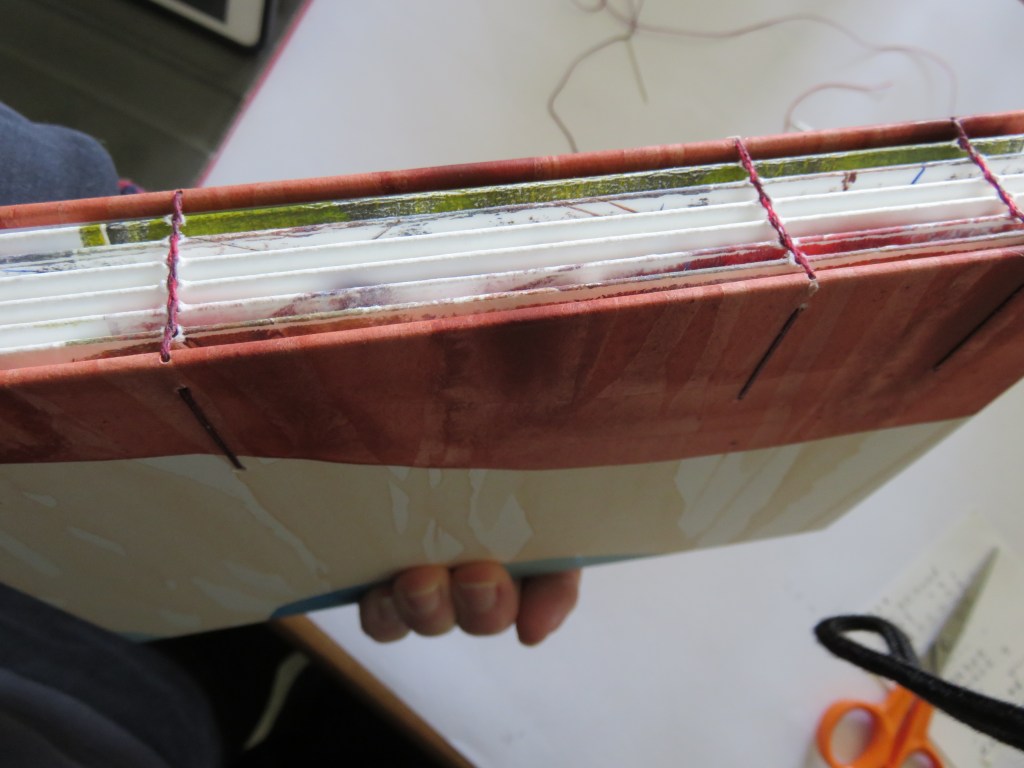
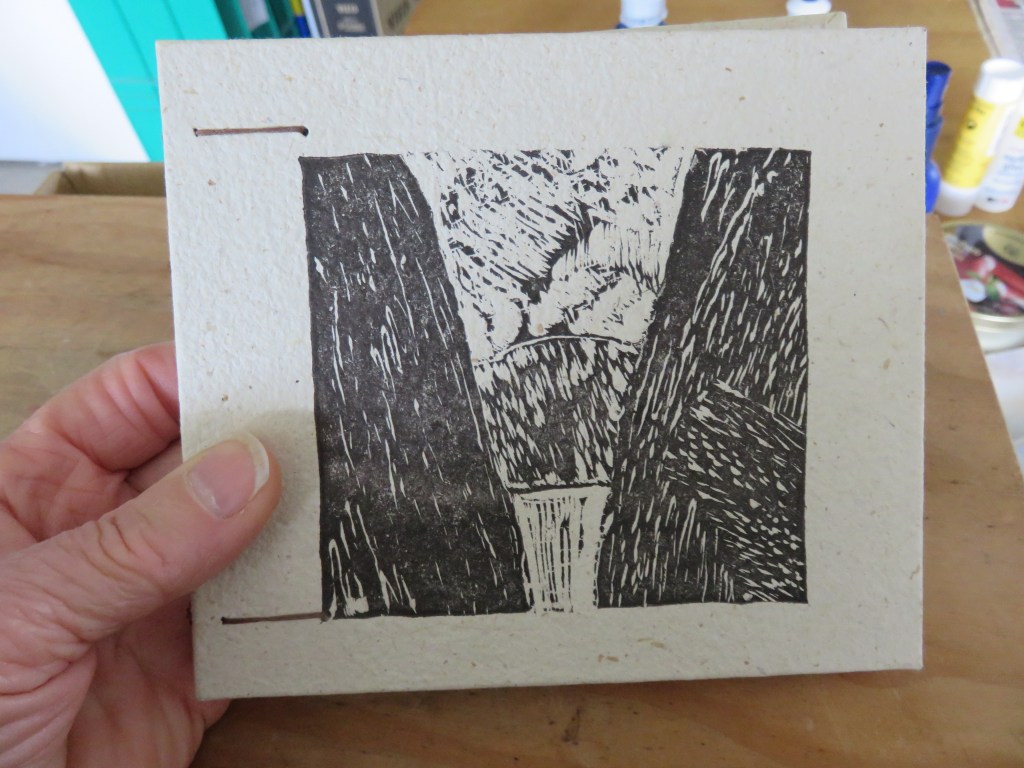
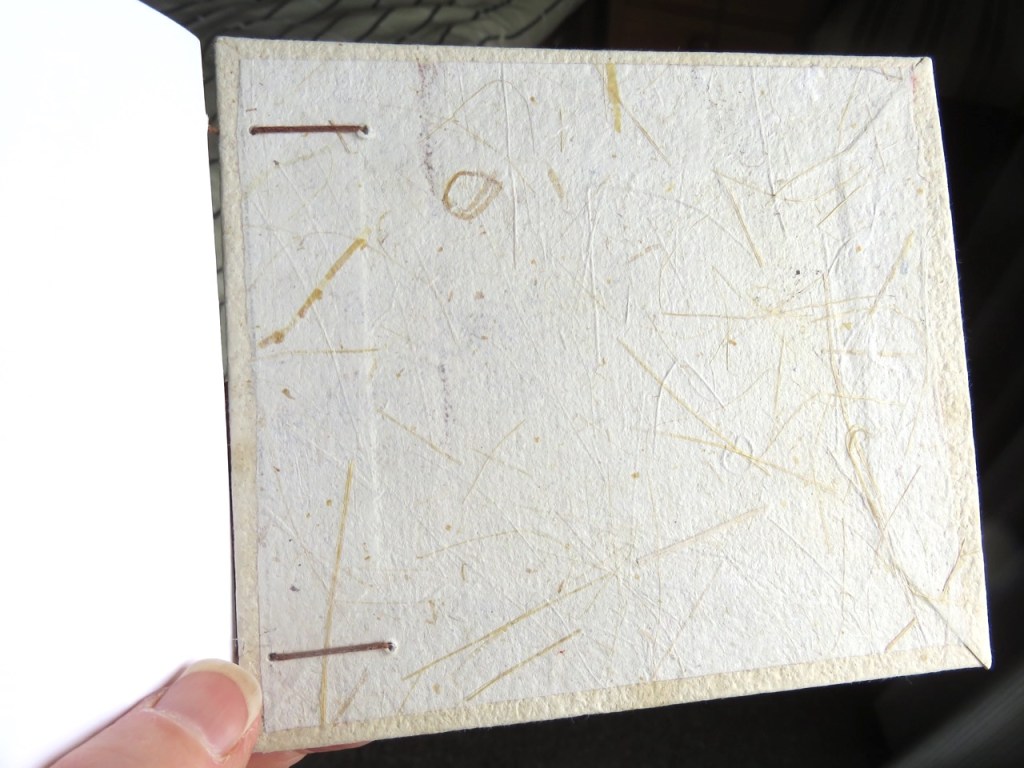
The book above has a 2-needle coptic binding. I’m following a video course – at the stage I’m at with bookbinding I sometimes find books hard to follow, and find being able to see what I am trying to do very helpful! The internet is such a wonderful resource.

This is a small concertina book. The cover is old wallpaper from my parent’s house in Auckland. Just love being able to use these odd bits and pieces left over and kept for decades. I thought the butterflies appropriate companions to the flowers, and had great fun using that trick of applying paint alongside a fold and then pressing the two sides together. I tried to be as quick and free as I could to outline the images in pen. I made a mistake though with the last one, as you can see, it wasn’t in the fold… but at least I had the opportunity to create another viewpoint.
These are all books I have made following the Handmade Book Club.
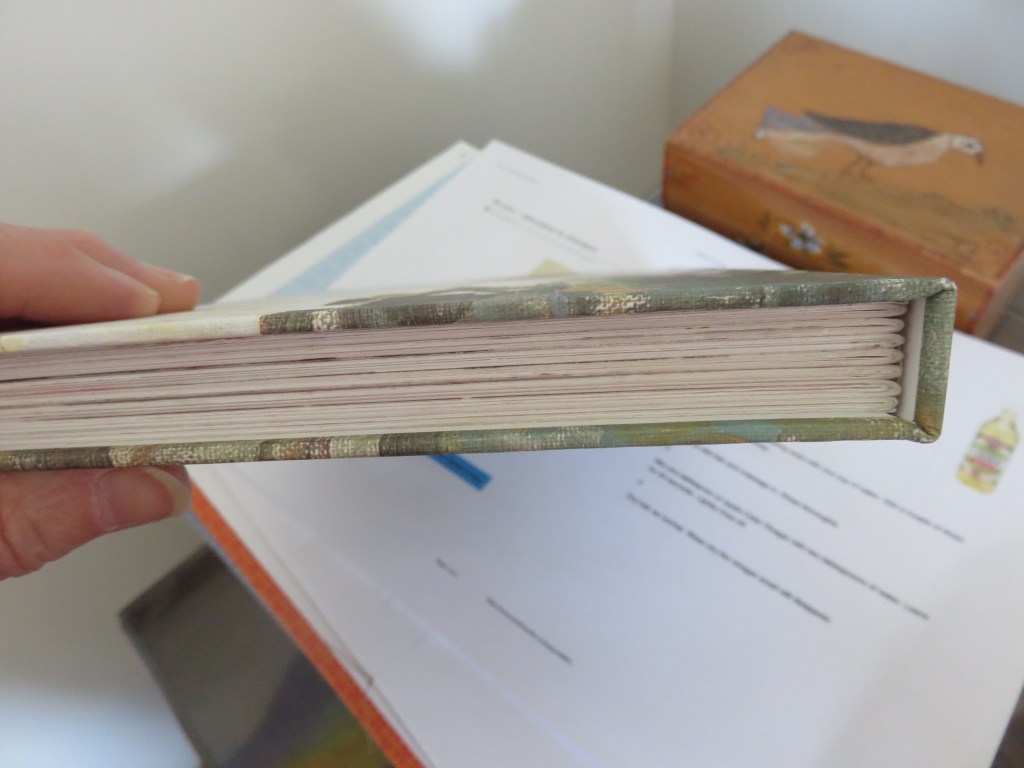
This is a case book that I made as well. In Oxford we have our own bookbinder – which is so great – and I learnt how to make these books from her a while ago. The first image below was created with a collagraph print suggested by the ‘fossil’ rock I have shown in a previous post.
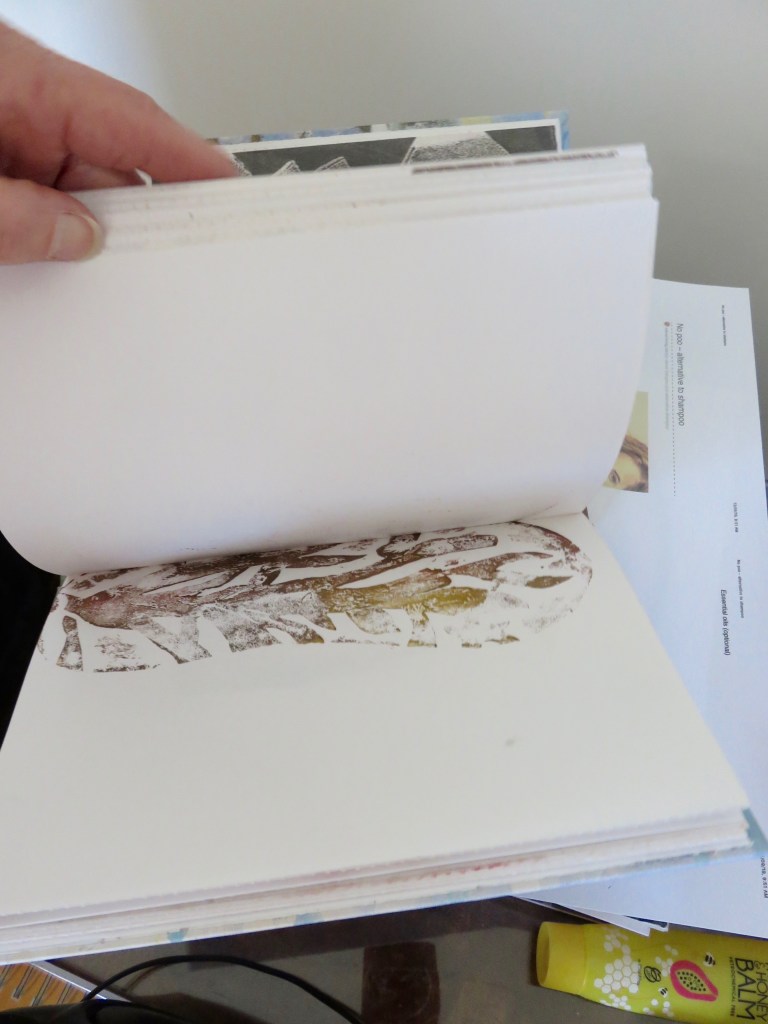
Many of the prints are from gel plates such as the one below. The end paper is an embossed print formed by a piece of harakeke (New Zealand flax plant).
This is my’ recycled’ book – made from a beer carton, ghost prints, left over printing ink or paint transferred to sheets of paper, and a cotton scrap from an old shirt to reinforce the spine for the exposed stitch binding – just in case. I consulted Alisa Golden’s book “Making Handmade Books” for this technique.
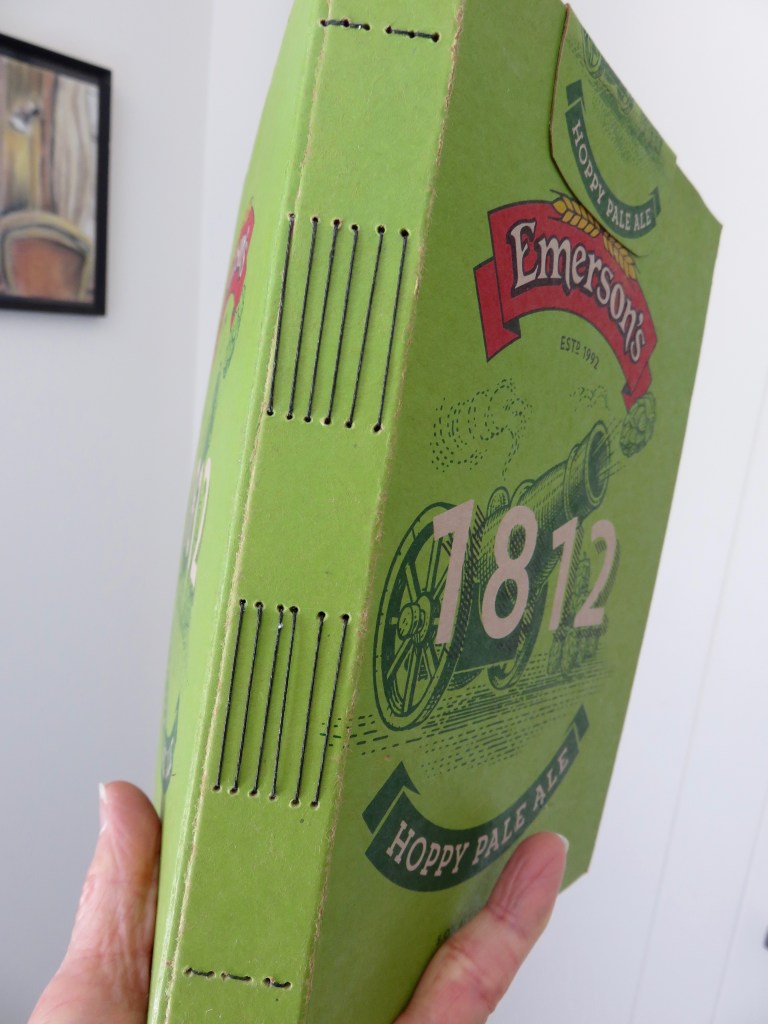
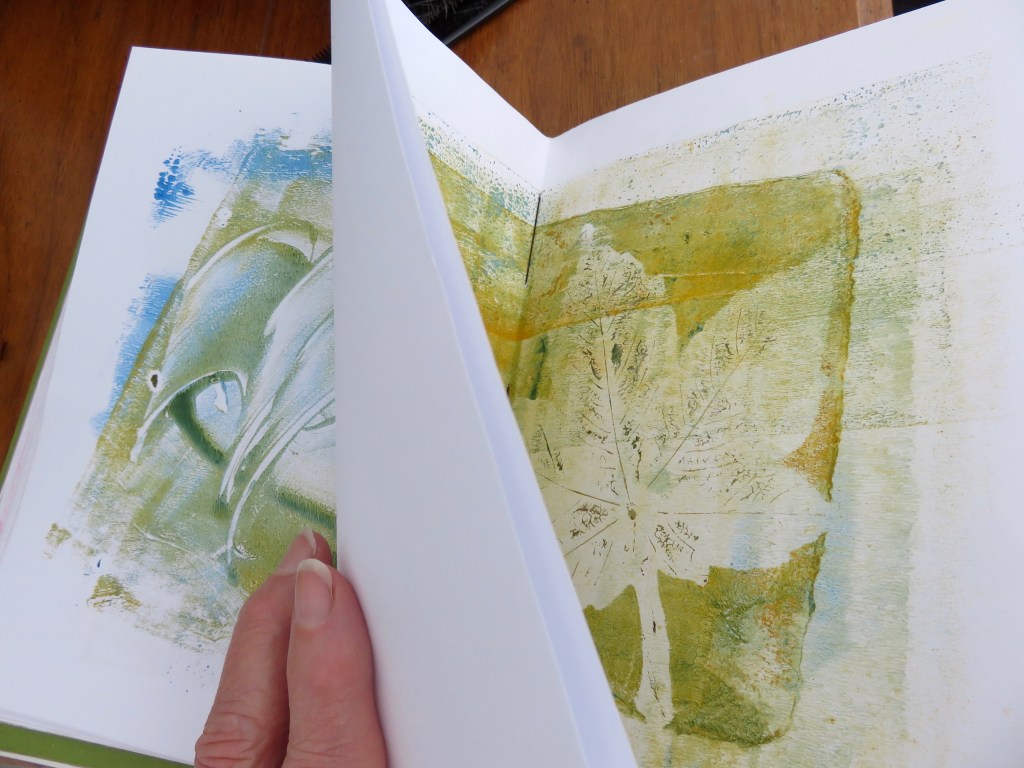
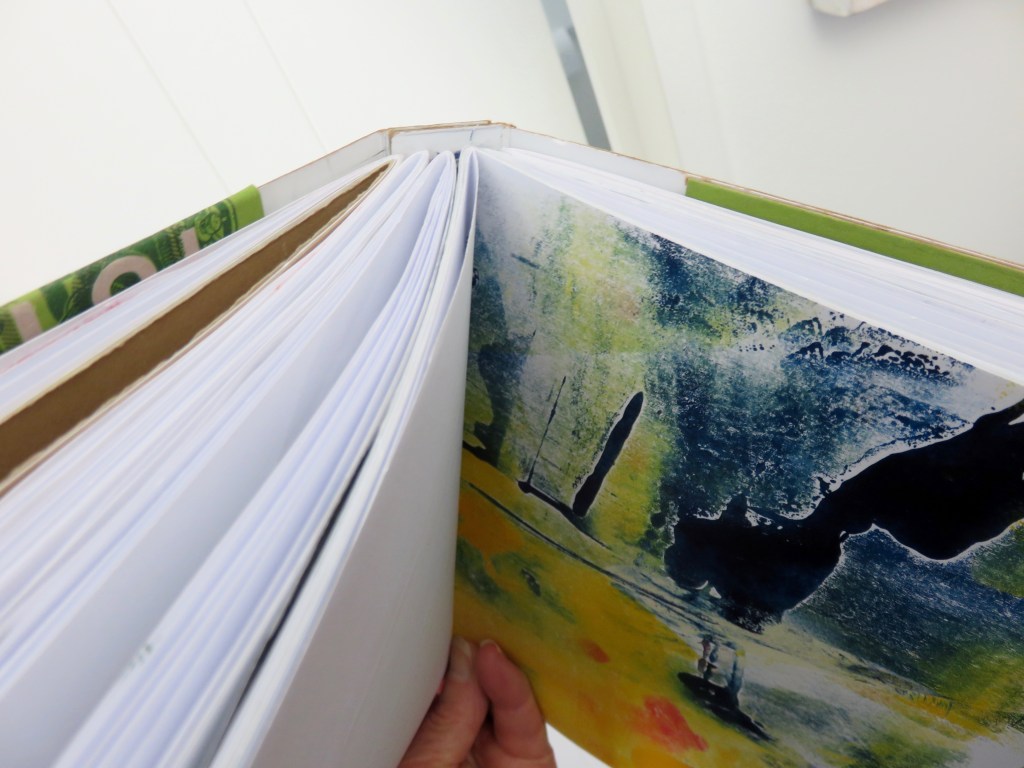

These books are destined to be diaries or journals or sketchbooks. Really happy to have found a use for my collection of paintings and prints.
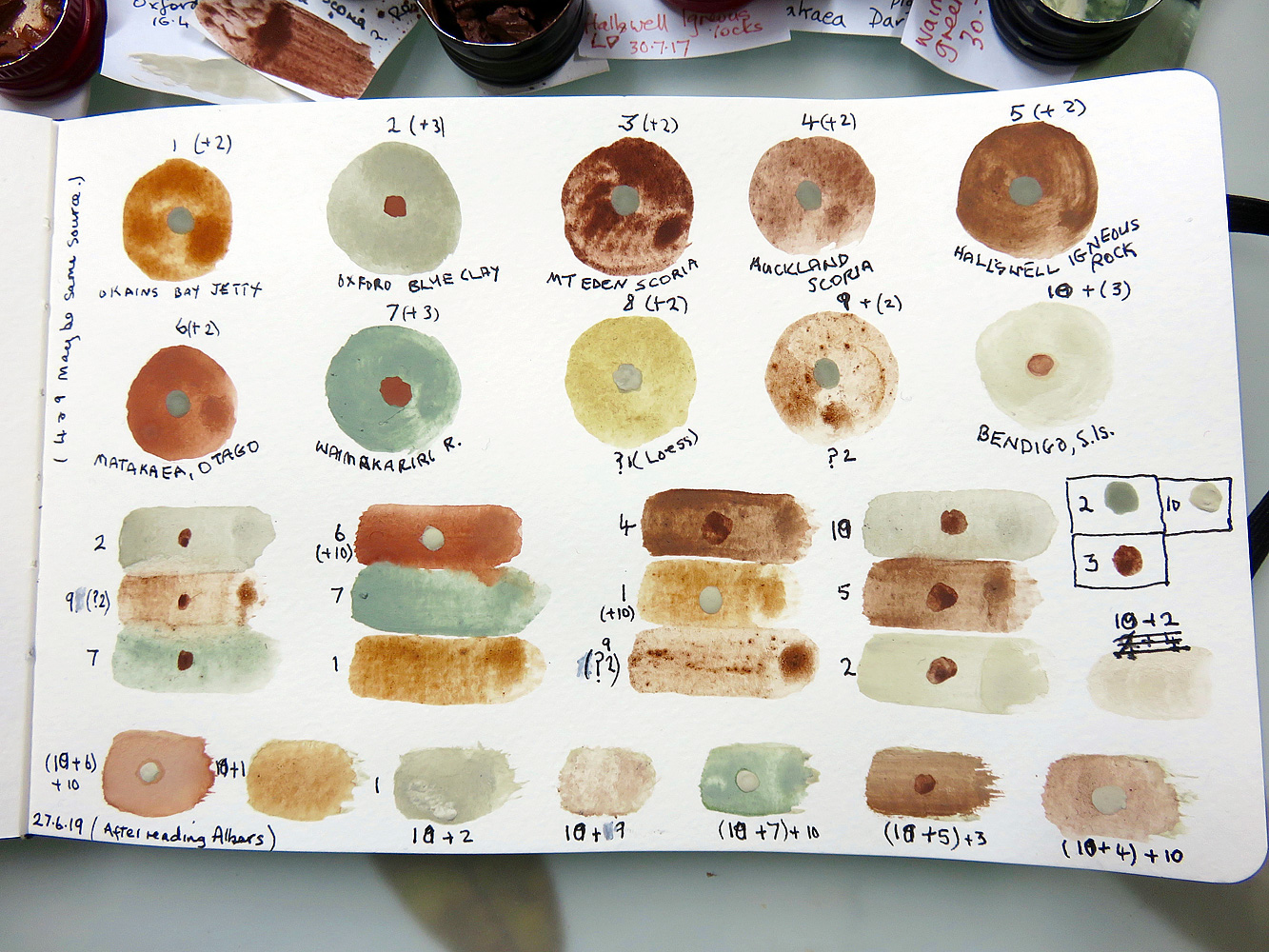
Seeing how colours change when applied to different background colours. Had been reading at Joseph Albers’ Interaction of Color. I understand why he used coloured paper – no brush marks etc!

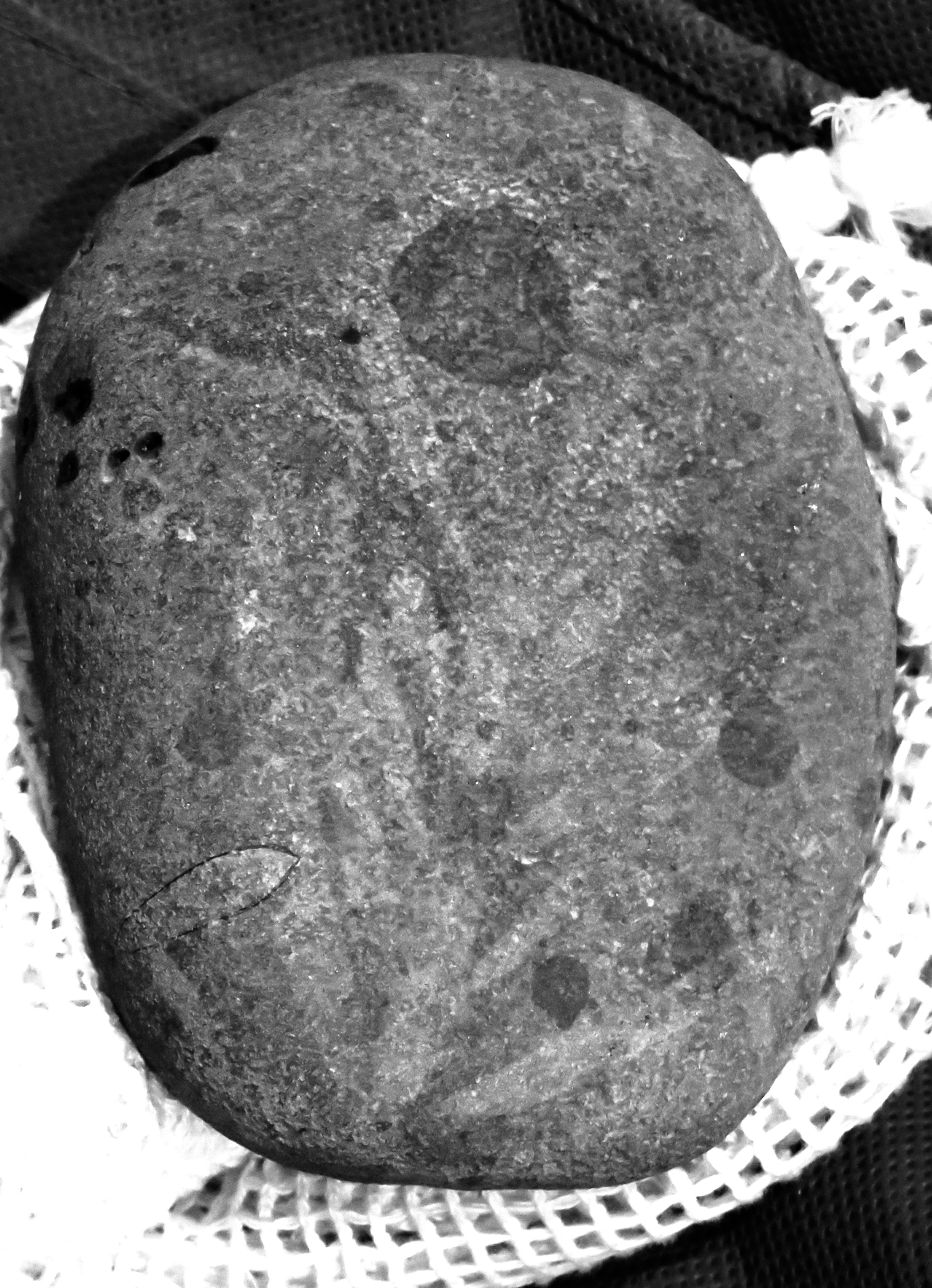
Can anyone help me identify this plant fossil visible on the surface of this rock? Research has not helped. I am just curious as to what the plant may be and which geological era it comes from. It would be great to find out!
The rock has been in my studio and unfortunately was splashed with ink and paint, so ignore the grey and yellow marks – the fossil appears in the pale grey markings. One of the leaves (?) bottom left is quite visible.
I brought the rock home as I was interested in the sea creature holes on the other side, and only later noticed the markings when I tried to remove the grey circles and the yellow stain.
The rock comes from Motunau beach north of Christchurch, and I attach some information from a really useful book for the uninitiated about the geology of the area which comes from the “Field Guide to NZ Geology” by Jocelyn Thornton.

Being pushed to take risks is one way to new creativity. I am enjoying this Skillshare class “Fearless Art Challenge” by Marie-Noelle Wurm.
This image using oil pastels (which defeated me badly in the past) was again attempted in the two day prompt – Metamorphosis I and II – for days 5 and 6.
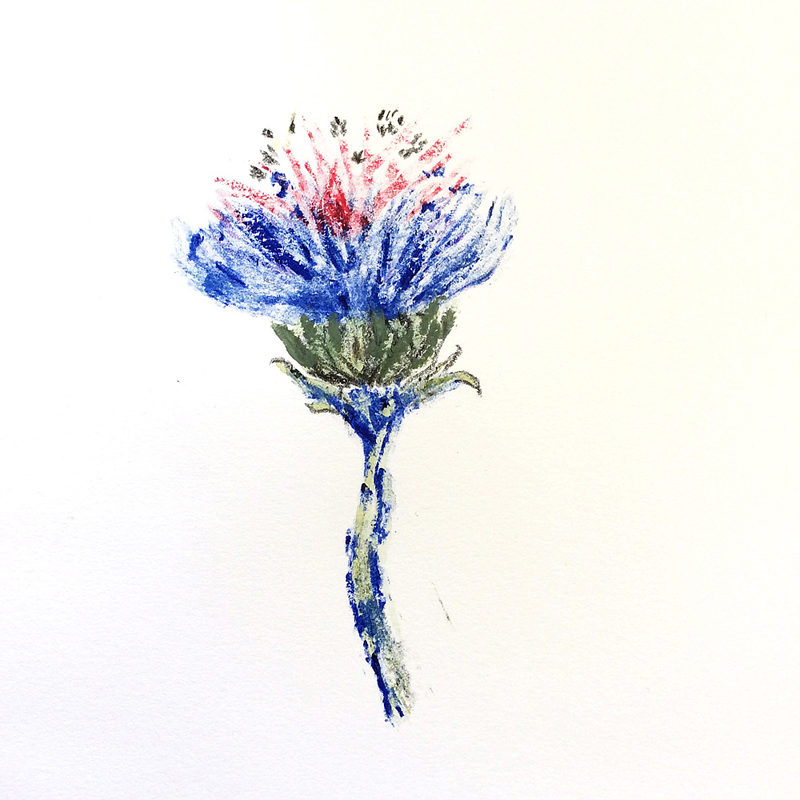
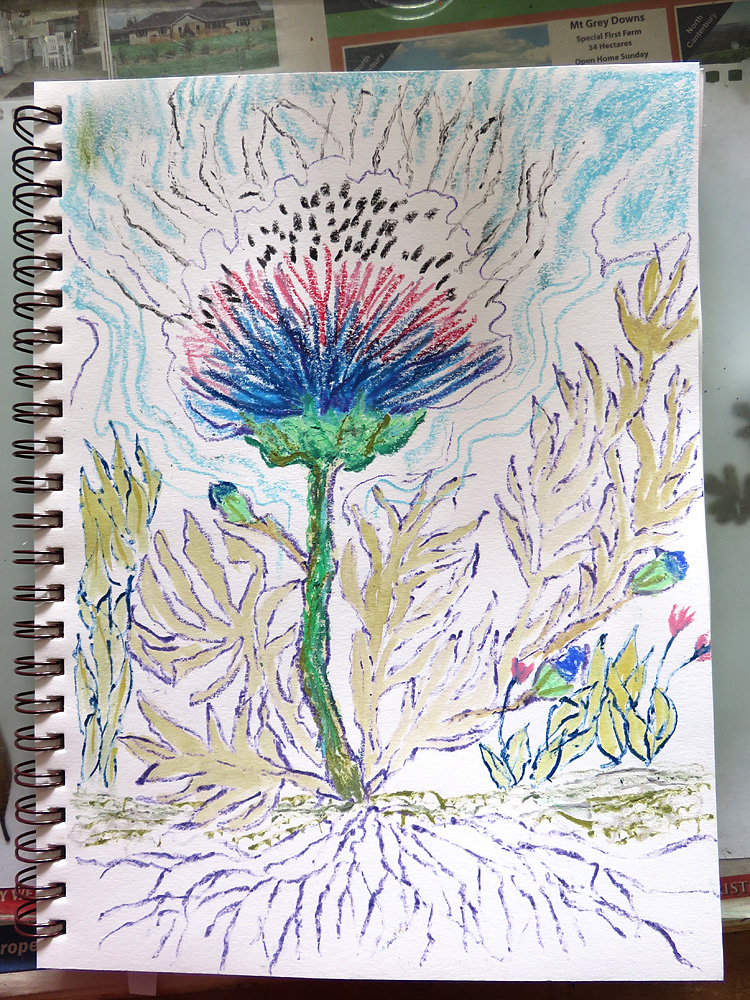
Most recently this has been my attempt at Day 8’s “Colours and More Colours”. I used my own handmade paint – Indigo from pigment powder, a local rock pigment powder that was rubbed on to the paper, and Okains Bay watercolour paint.
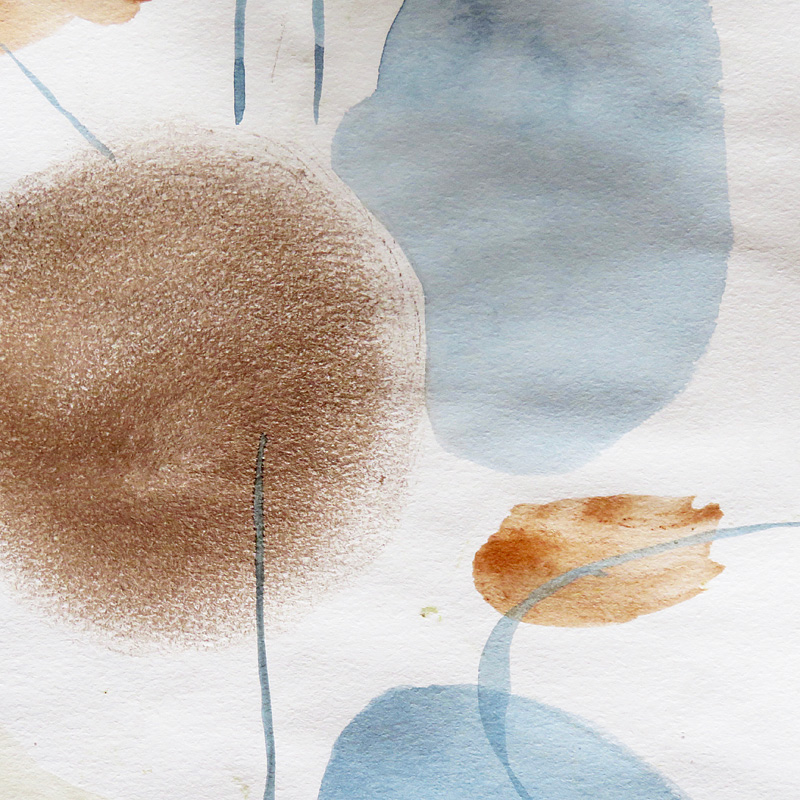
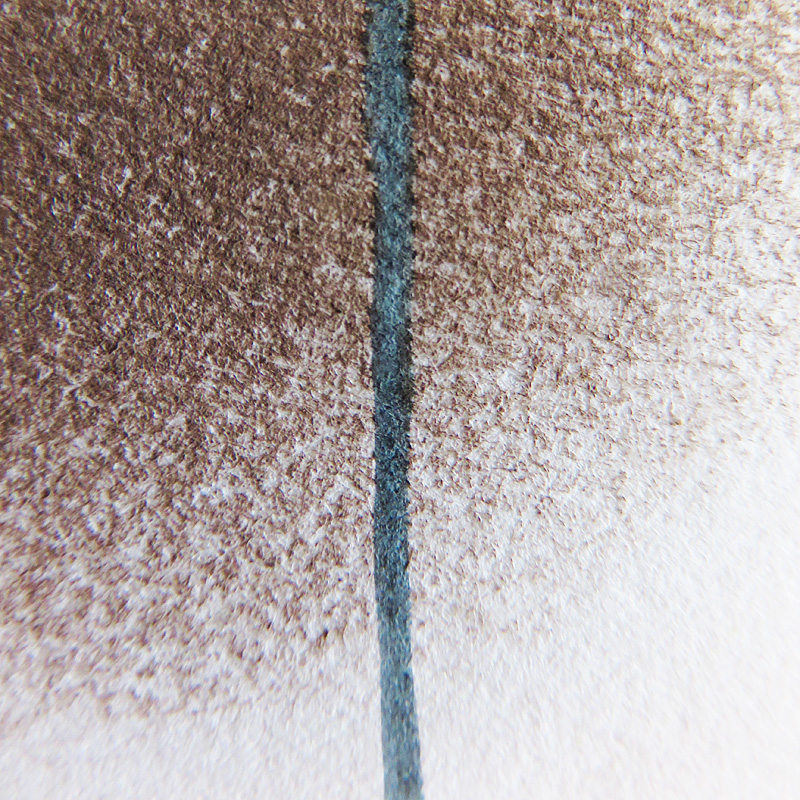
Love the streak of indigo in the brown pigment.
Day 9 coming up…
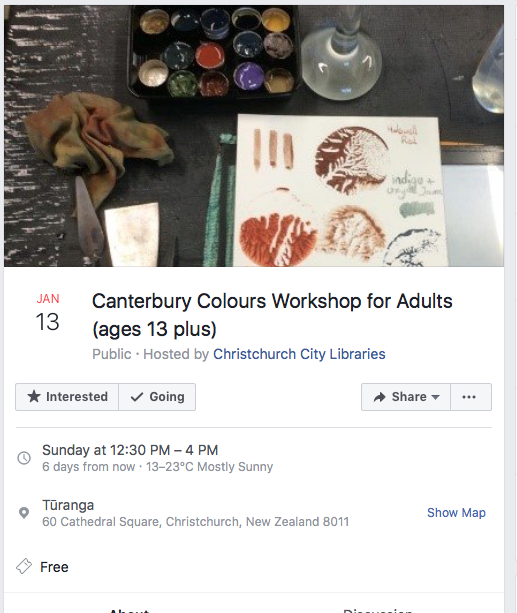
I am super excited to be showing how to make paint at the Turanga library next Sunday 13 January.
There will be a demonstration in the morning for children, and the workshop for adults in the afternoon.
I took part in this exhibition, and showed some of my paintings made with ink from empty seed pods from Harakeke (NZ flax plant). I also held a paintmaking workshop.
Here is the published information:
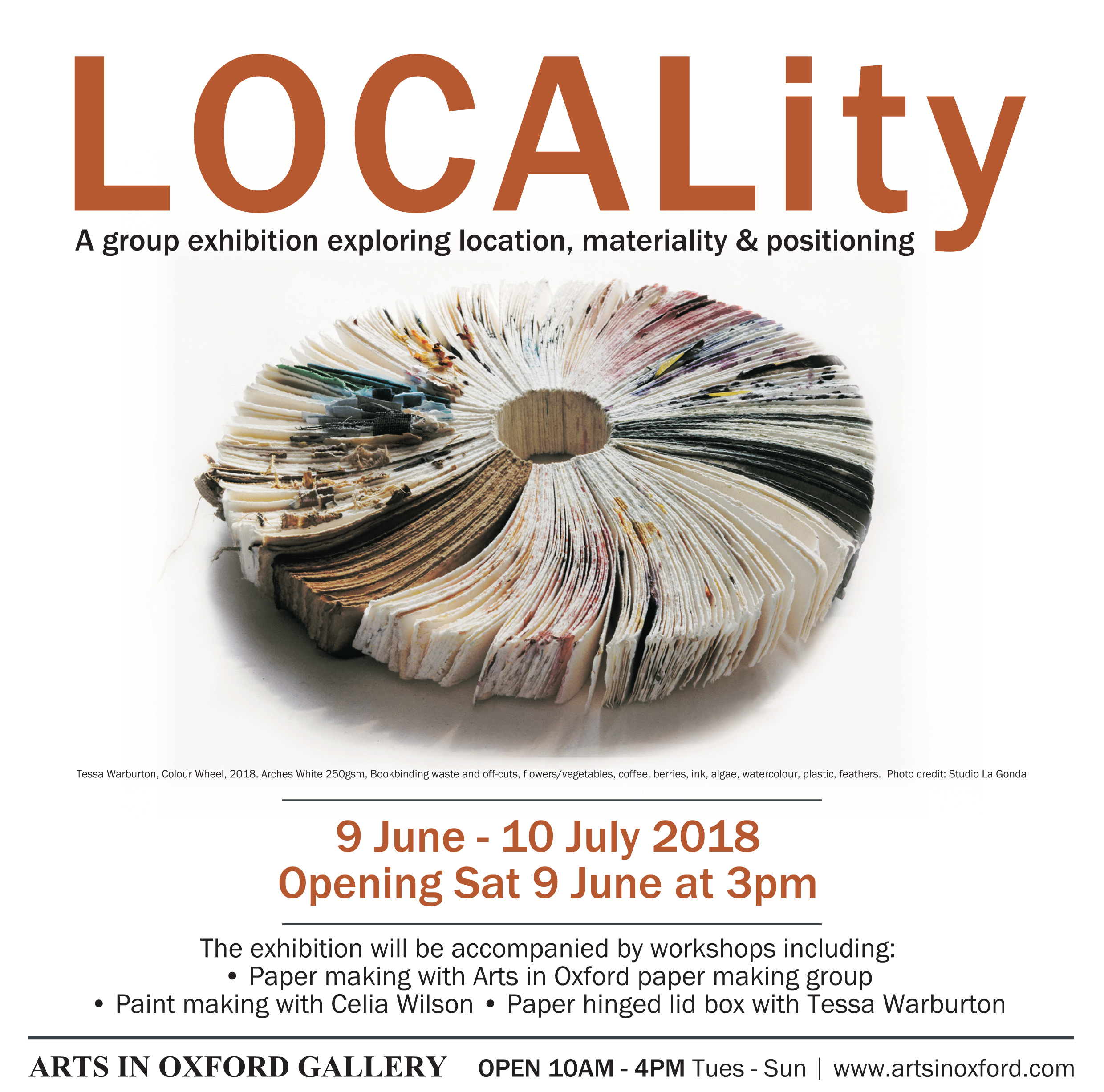
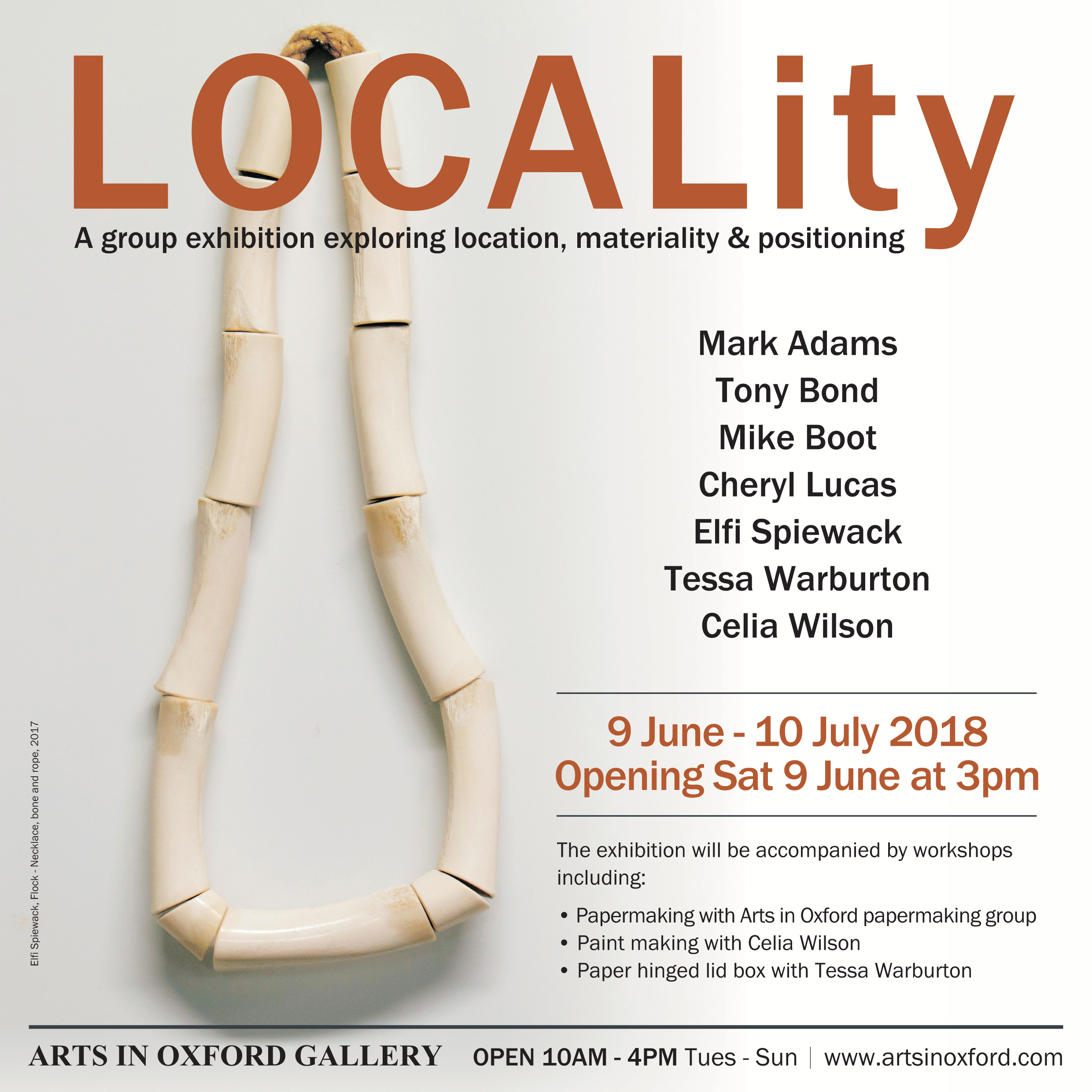
Last days for the exhibition LOCALity at Arts in Oxford, 72 Main St, Oxford. Exhibition closes Tues 10 July 2018.
LOCALity: a group exhibition exploring location, materiality & positioning
Arts in Oxford is pleased to present a selection of artworks by Canterbury artists Mark Adams, Mike Boot, Tony Bond, Cheryl Lucas, Elfi Spiewack, Tessa Warburton and Celia Wilson.
Artists each have diverse, unique practices but collectively are themes of rural life that connect all the works. Local geology, farming industry, water issues, native and introduced flora, recycling, repurposing are all reflected in this curated exhibition.
Images by Arts In Oxford.


(You can just see my artworks on the wall in this photo above.)
Press Release:
Art_in_Oxford_LOCALity_Press Release_final-1
Colours of Canterbury and other places, made at this morning’s printmaking workshop at Arts in Oxford Gallery. Many thanks to Jo who made these lovely paints.
 Celia Wilson