Transported from old to new dye possibilities

P1210737

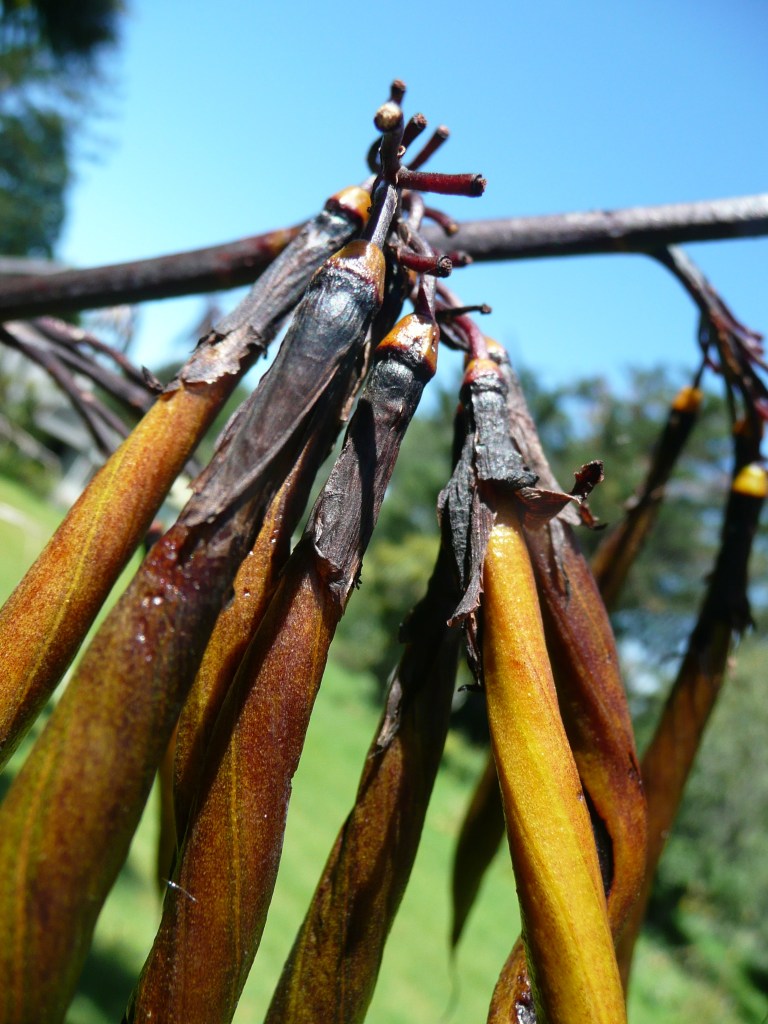
It is now August, and I started this post in March…   Time passes.  It now feels like home.  Seeds of a new beginning – seed pods of Wharariki, the New Zealand mountain flax plant.

Oxford in the early morning sunlight – Mt Oxford hills seen from the town.

Sentinel-trees

At the beginning of 2014, a ‘sudden rush of blood to the head’ started a process that before you would have believed it possible landed us in another house in the same town within a month.  It does not feel like a home yet, but we are settling our nerves now, coming out of the upheaval.  People wonder why we did it, but the old place, gorgeous as it was, needed  younger, stronger custodians than we could give.  We thought it would take months to sell, but it happened almost immediately.  I really miss the plants and the beautiful views;  trying not to think too much about it.  However, I’m finding new curiosities and opportunities and living in the town will possibly force us out to the wild places that we neglected.  We really had a semi-wild place in the garden to keep us occupied.

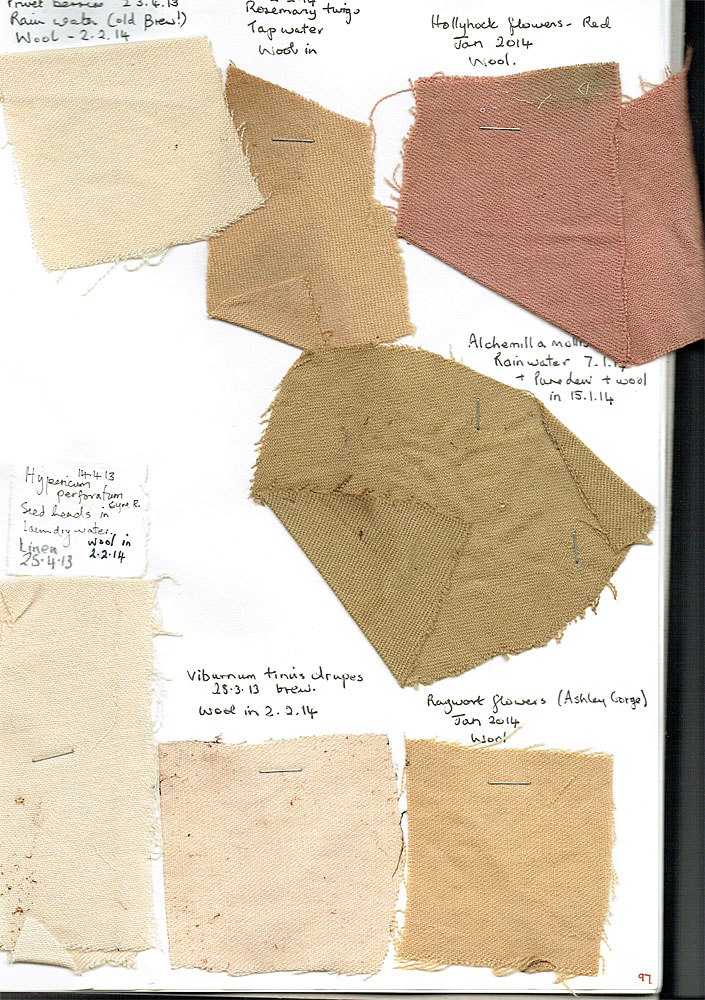
Before we departed I managed to do a few solar dyes.  Some of the colours from last summer were still in their dye pots, so I popped in swatches of woven wool – Viburnum tinus, Privet berries, and Hypericum perforatum seed heads.  I also tried Rosemary twigs – lovely smell!

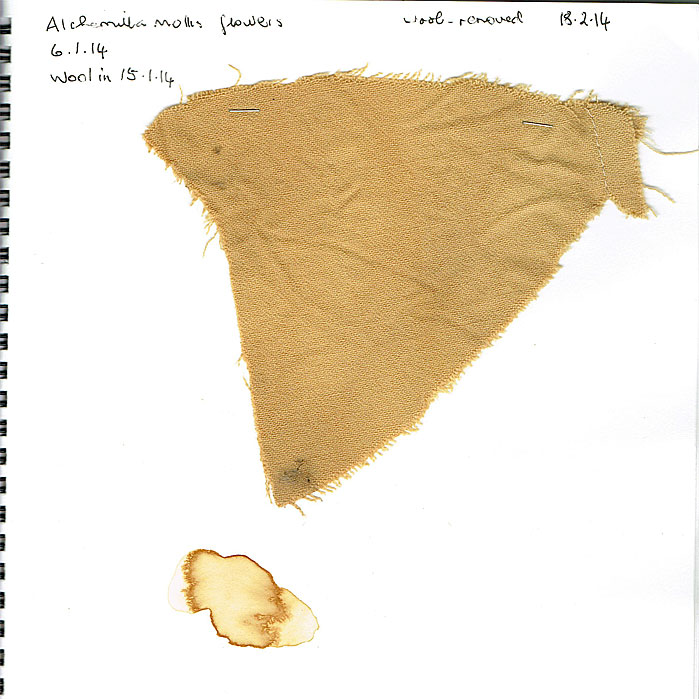
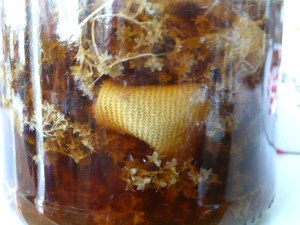
In early January I started a solar dye with flowers and another with leaves of Alchemilla mollis – the flower dye is below with a painted sample of the dye directly on the page.
Alchemilla-mollis flowers

In the dye jars, the yellow colour appeared almost immediately but I got a stronger colour from the  Alchemilla flowers.
A-mollis-flower-solar

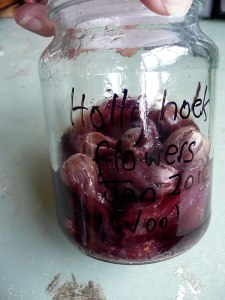
Another solar jar was gradually receiving – over a fortnight – red hollyhock flowers that fell off the plant.  Previously I have steamed the hollyhock flower heads onto silk, and the colour was a bright pink, quite different to the result on wool.
Hollyhock-solar


The dried swatches as in my test book:
Feb-solar-dyes

One of the last photos I took at the old house.  Althea that I grew from seeds.  Will start again.

Althea

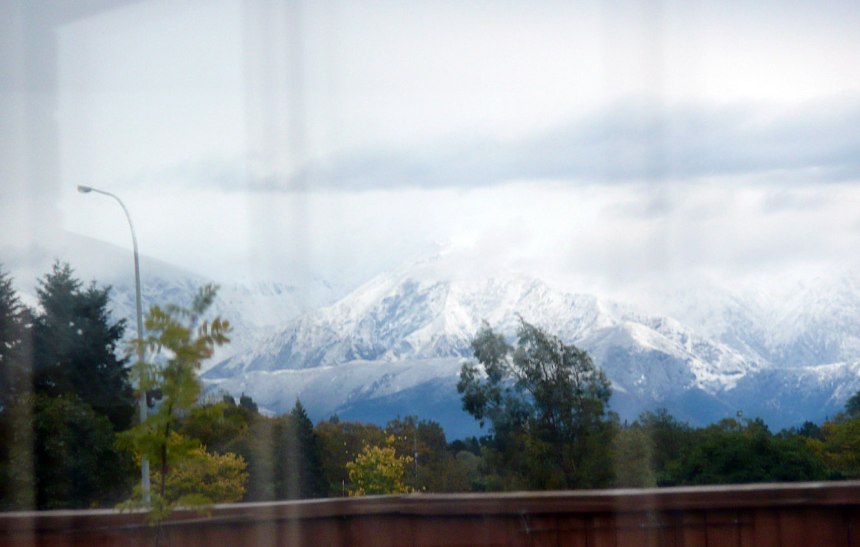
Snow in ‘summer’ along with high winds!   This is the view that greeted us a few days after we moved house.  Very dramatic welcome…
March-snow-wind

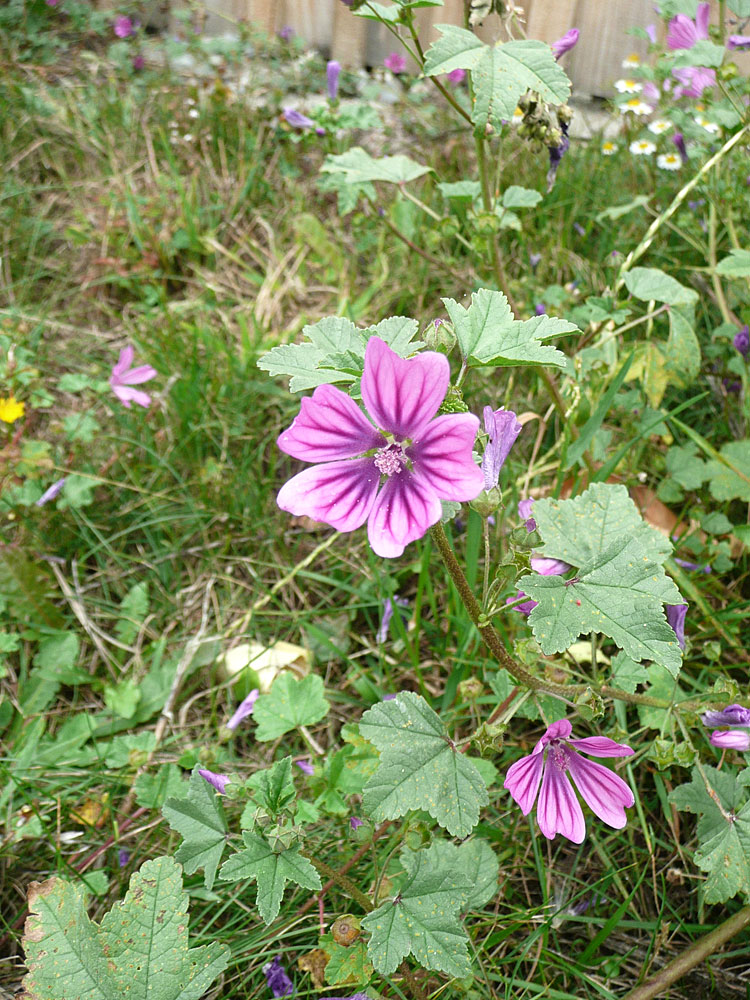
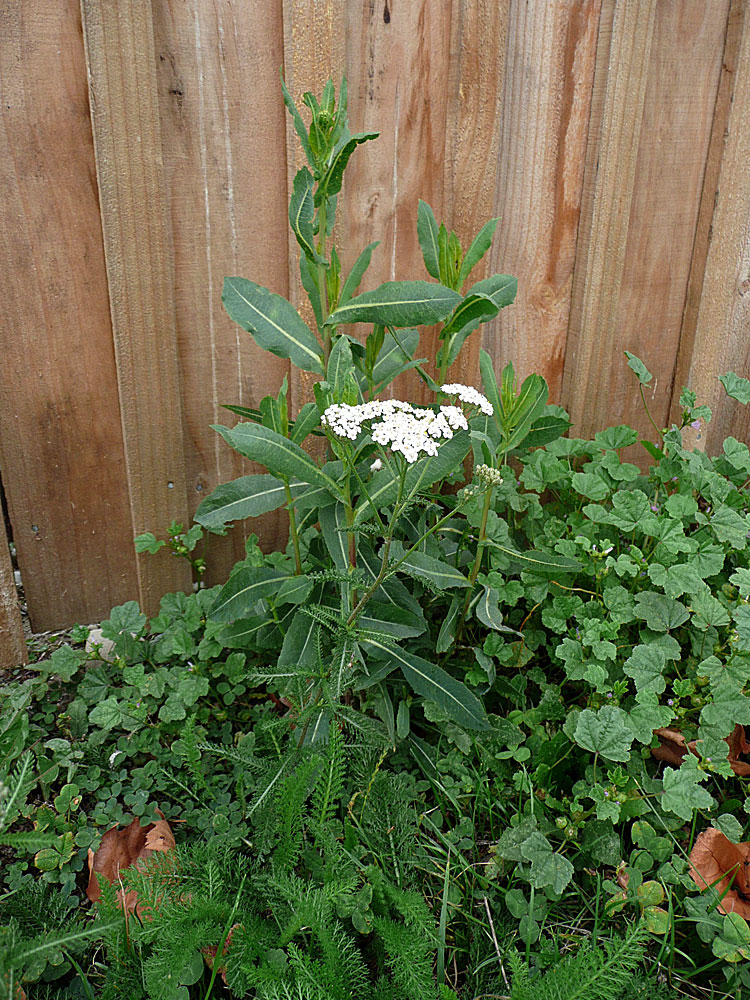
Our new house is just over one year old, like a doll’s house, and we have a garage full of stuff to be sorted, given away or reallocated somewhere.  There is a lovely patch of weeds down the road – some old friends and some new rather ferocious looking ones too!
Ferocious-weed

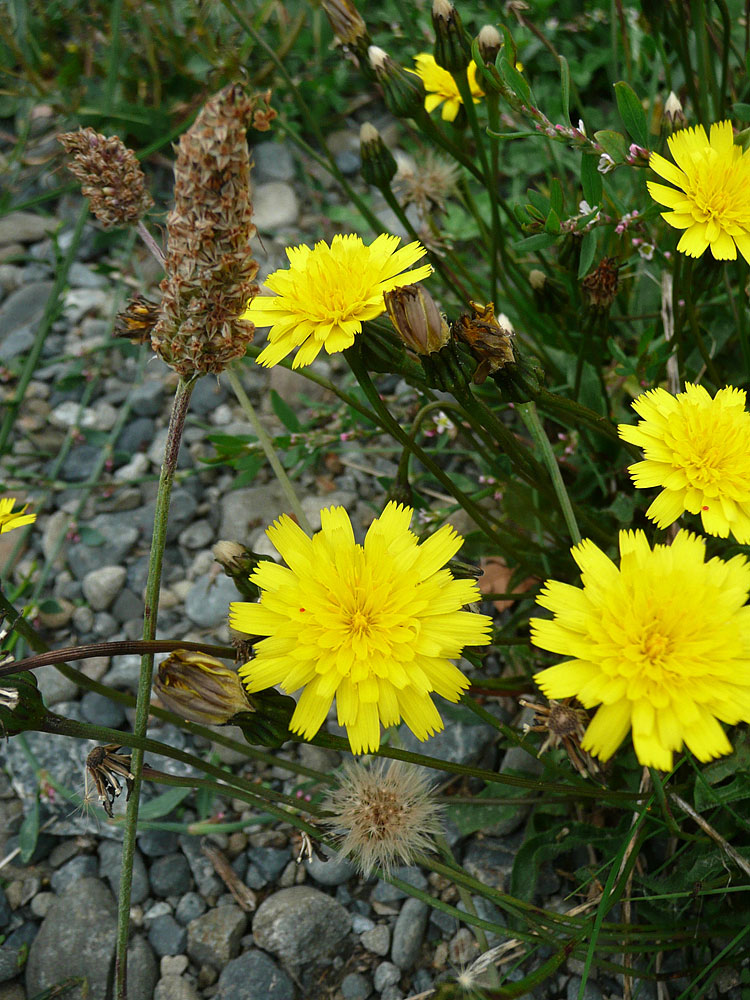
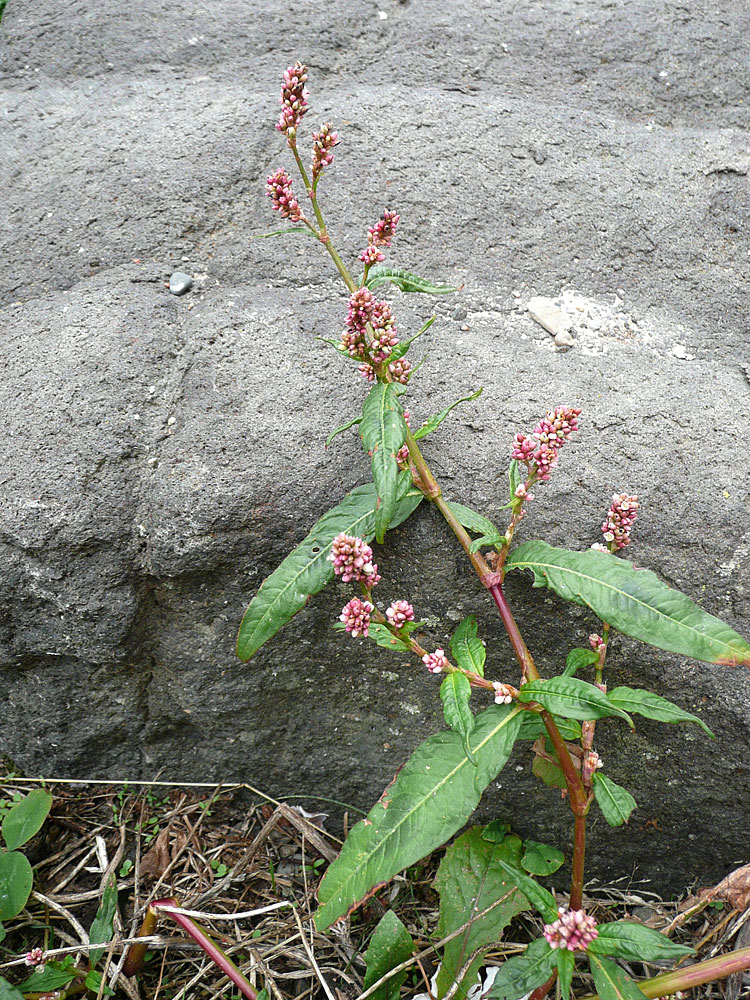
This knotweed is an old friend – and a walk in the park led me to some knotweed – Polygonum aviculare it may be – from which I have obtained a yellow.  So there are possibilities.  The knotweed below was growing by the footpath.  I have brought some of the prostrate polygonum from the old garden.
Friendly-weed

Mallow

weeds-fence

Yellow-with-plantain

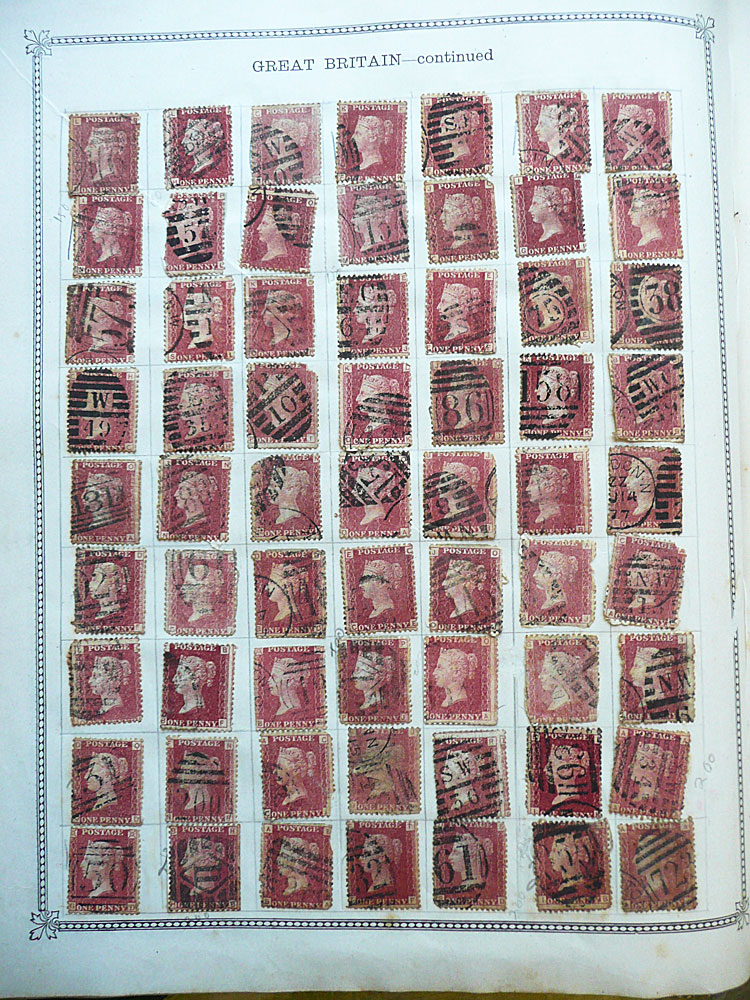
Finally, a sentimental note.  A move like this presents your belongings to you in a different light.  You find things you had forgotten, and other possessions take on a new life.  I happened to look through two Stanley Gibbons stamp albums that belonged to my father.  The books are large and heavy, and lots of the stamps are missing, but not on this page, however.  Towards the back of the book, this 15-year-old listed the number of stamps he had collected:  on 10 March 1929 he had 1315.  I read this on the 10 March 2014.
pennyred

Colours of Chance

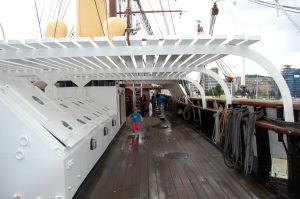
While in Dundee, Scotland, last year, we visited RRS Discovery, Robert Falcon Scott’s ship that sailed down to the Antarctic for the British Antarctic Expedition in 1901.  Discovery is now moored at the Discovery Museum on the River Tay.   Ernest Shackleton was also on this voyage and it was his first visit to the ice.  More information on the museum’s website:  http://www.rrsdiscovery.com
If you are in Dundee, it is well worth a visit!

DSC_0168 DSC_0171 DSC_0174

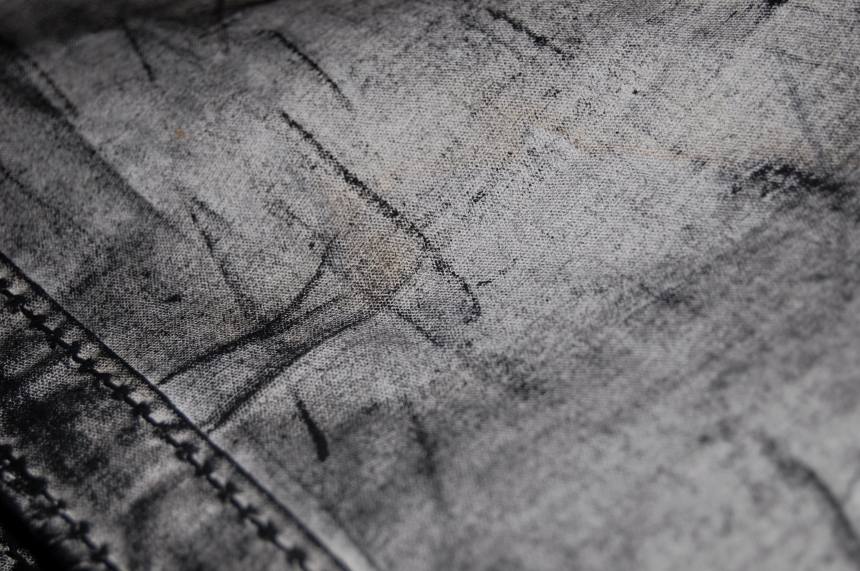
The ship was a great place for artists, and a few things caught my (pigment seeking) eye, especially these black marks which are marks left by coal on the canvas shute as the coal was being loaded onto the ship.

DSC_0183

DSC_0187

DSC_0184

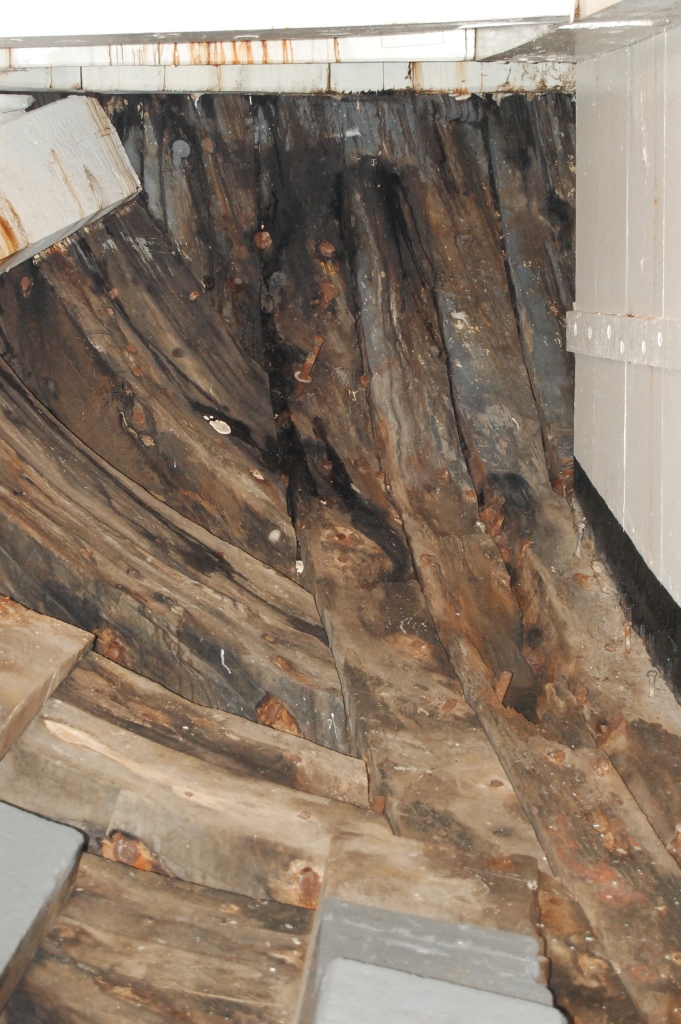
This ship has been restored, and they left a portion as it looked before this work was carried out.

DSC_0180

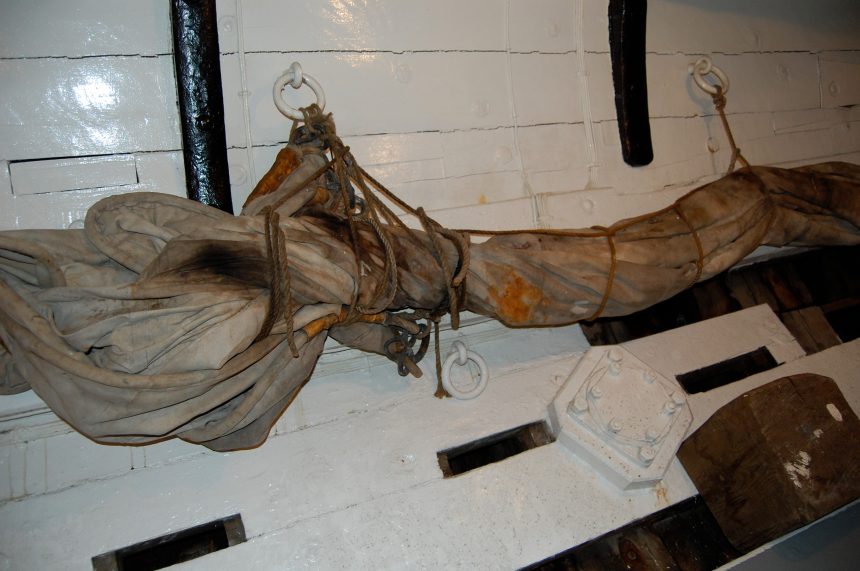
More stains and rust.

DSC_0176

DSC_0181

Colours from a Landscape

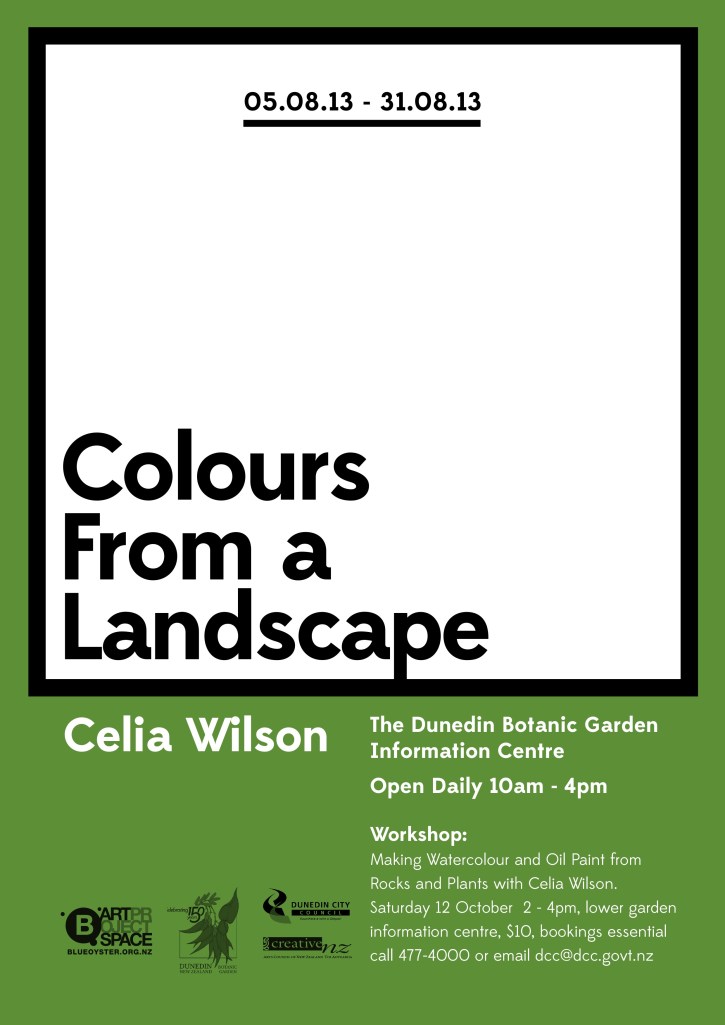
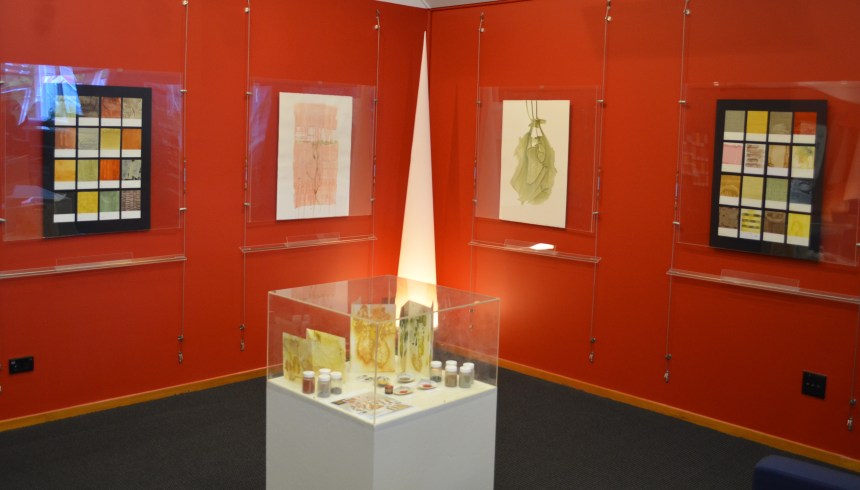
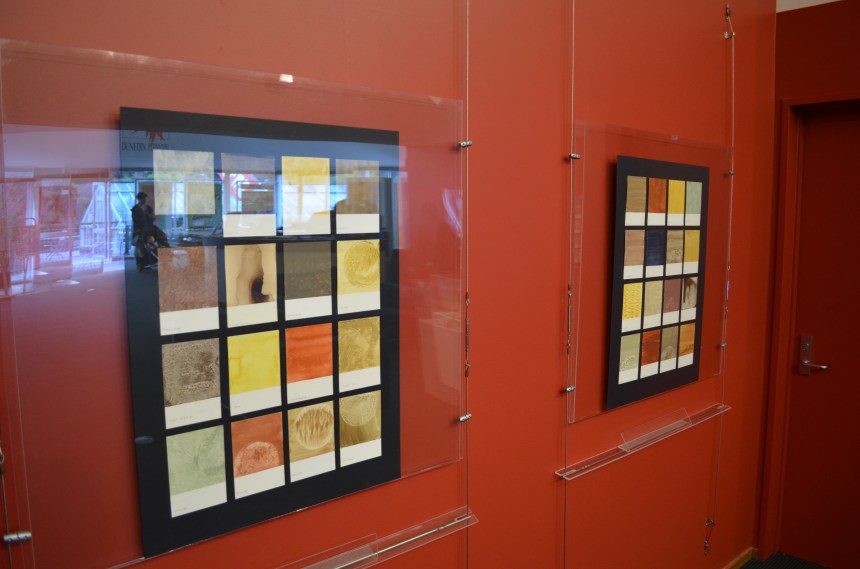
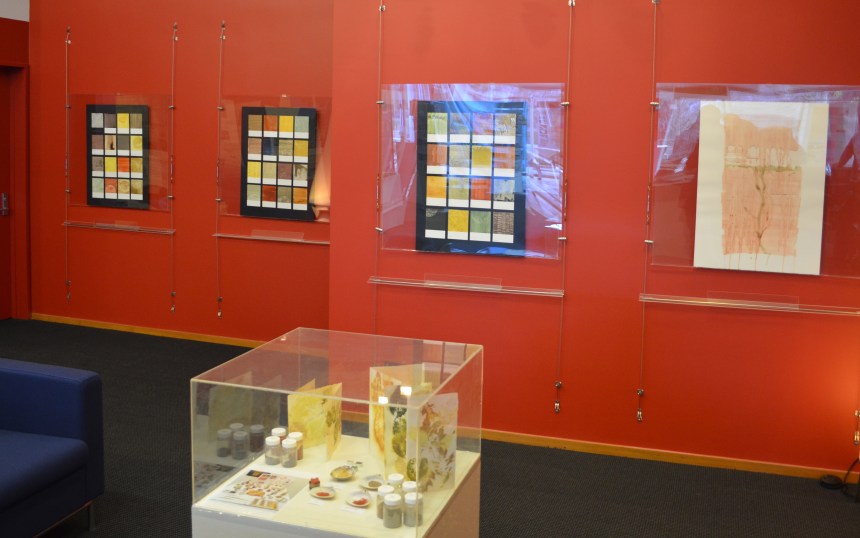
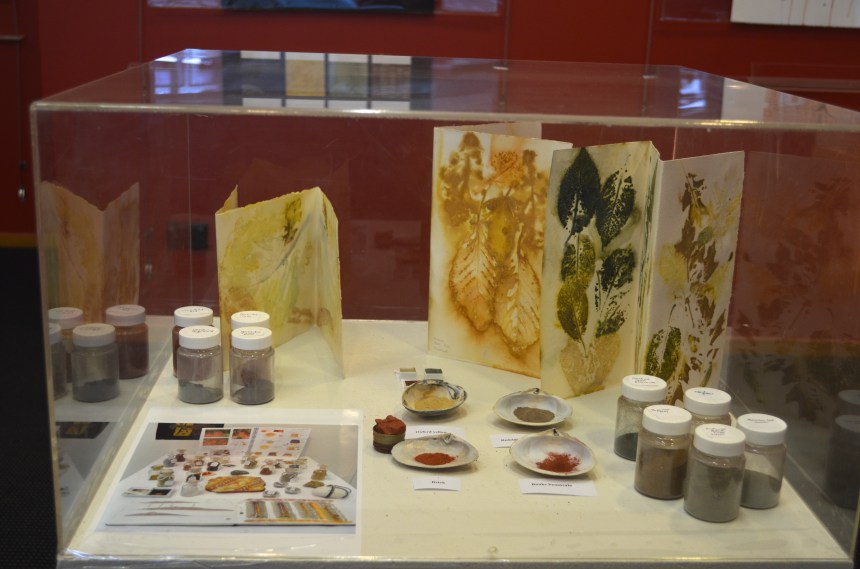
I am currently showing some pigment colour swatches at the Dunedin Botanic Gardens, and in October I am doing a workshop on making paint.   This exhibition was facilitated through the Blue Oyster Gallery in Dunedin.  Also included in the show are some natural pigments on paper – eco prints – and some raw pigment.  The two artworks on paper show colours from Waikari (green)  and Ashley Gorge (pink and green)  in North Canterbury.  Many thanks to Clare Fraser from the Dunedin Botanic Gardens who is in charge of the venue.  I think the colours look fantastic presented on black paper against the lovely red walls of the Information Centre!

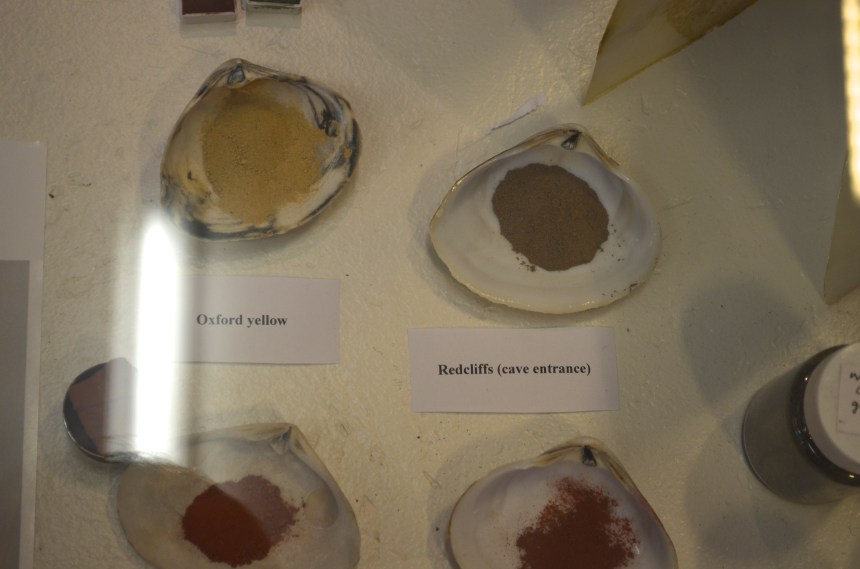
The pigment swatches each show a colour found at a specific location which is named on the swatch.

Image

Appearing below are some of the photos I received from Jaime Hanton, Blue Oyster Gallery, Dunedin, who kindly photographed the show and installed the work for me :

Dunedin Botanics 1

Dunedin Botanics 2

Dunedin botanics 3

Dunedin Botantics 4

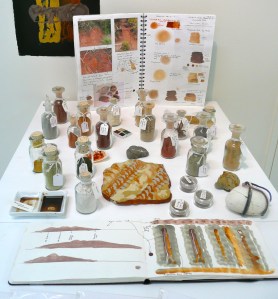
This is not my anticipated installation for this show as the initial selection was stolen.  My box was left on the pavement by the courier company and disappeared overnight.  The items in this box were some of those in the photograph shown in the display case, bottom left corner.  If, by any chance, they turn up, I would just love to have them back.  They represent five years research, experiment and recording.  I have given up hope of ever seeing them again, however, and will re-build as much of the information as I can…  Worse things happen, and I ‘count my blessings’.


P1160373


Dunedin Botanics 6

Shells were traditionally used for paint containers!

Steam and Solar Dyes – New Zealand Plants

In this post I collect together the New Zealand plants I have recently used in steam and solar dyeing.

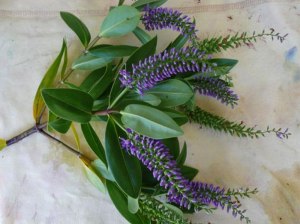
Hebe species.  Steamed bundles

Hebe-plant

Hebe flowers and leaves were laid out on opposite sides of two silk bundles, with hebe twigs for the core. After steaming the leaves produced yellow and the flowers a mix of blue and a grey-pink-brown as is shown in the smaller bundle below.  Although as the silk used was already dyed a pale ‘salmon pink’, this background colour does not look very pink in the photograph…

Hebe small silk

Good colours, but not much definition of leaf or flower shape, and I still had the heat too high causing damage to the silk as you can see at the top the image above.  The photograph below shows part of the larger piece of dyed white silk.

Hebe-large-silk

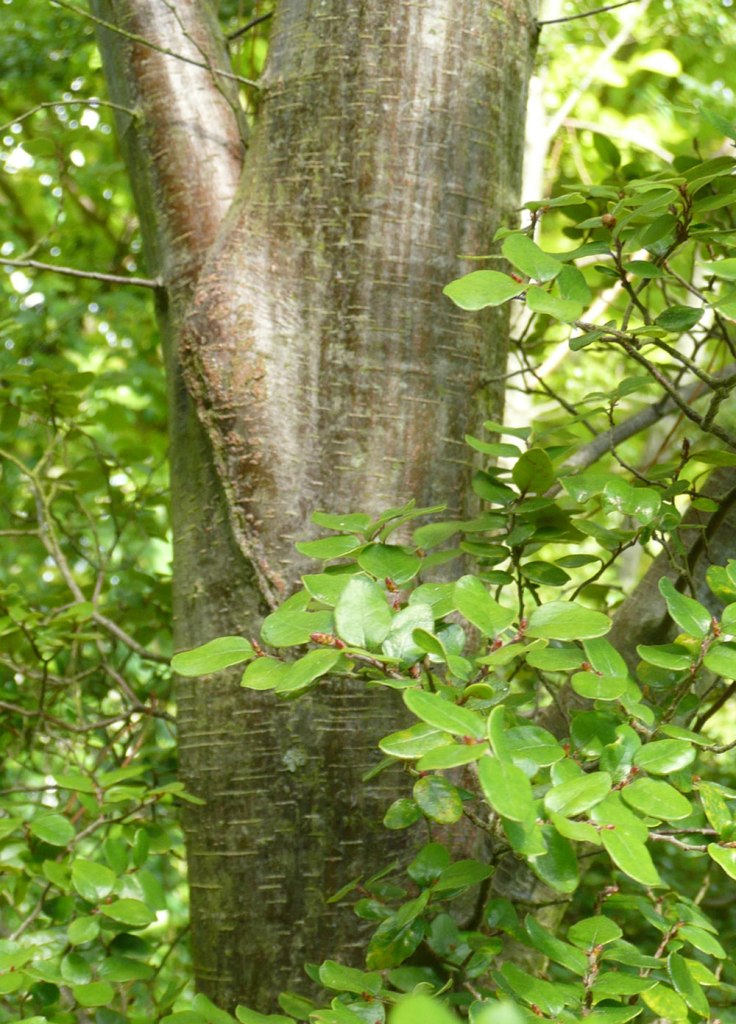
Beech Leaves – Nothofagus species.  Solar dye

Nothofagus

I placed the leaves in water in a large jar.  No colour emerged, so  I decided to simmer the leaves, but unfortunately damaged them by letting the water in the pot dry out…

In 1849, when the British settlement of Canterbury started in earnest, the area named Oxford  by the early surveyors was covered by a large forest – Harewood Forest, which has been described as ‘the most magnificent stand of virgin bush in Canterbury and unique because of its variety.  It originally covered 56,000 acres [22,662.40  ha] and was the magnet which attracted the sawmilling community from which the present town grew’  (Oliver A Gillespie, Oxford, the first hundred years).  The forest  was logged for timber for the growing settlement around Christchurch and was nearly destroyed in 1898 by a fire which swept through the area, fanned by the strong winds that occur in Canterbury.  The last sawmill closed in 1912.

I will repeat the solar dye at some point, as I am lucky enough to have these trees growing in the garden.  There are still clumps of the forest remaining close by – and we find seeds from these oases arrive via the birds and grow well in the undisturbed parts of the garden.

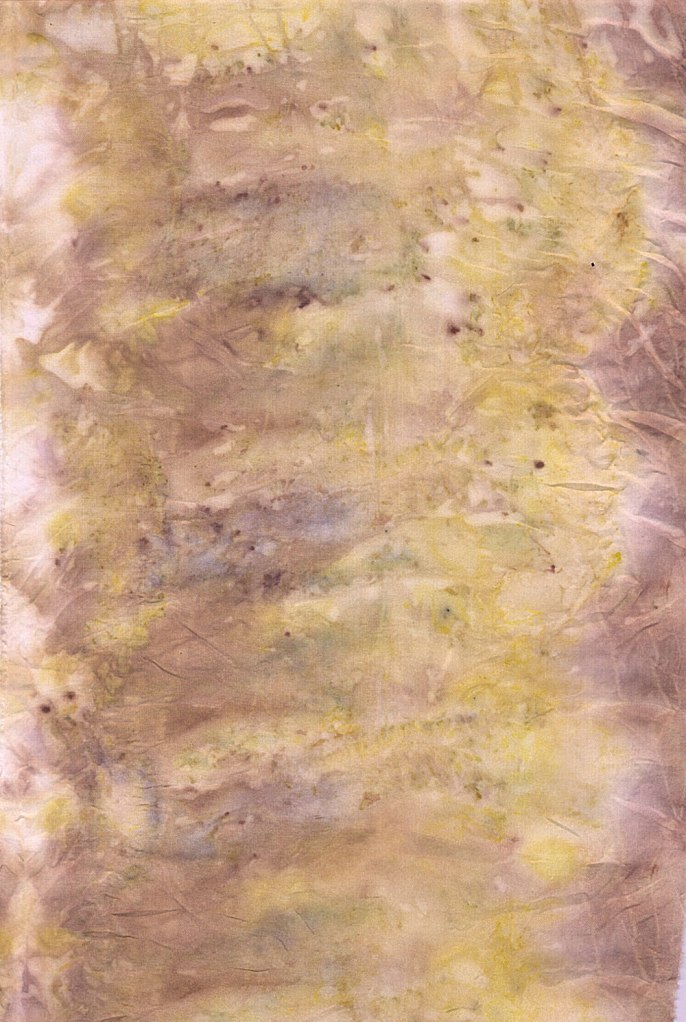
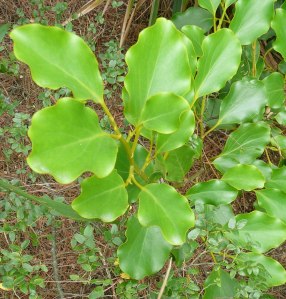
Kapuka – Griselinia littoralis.  Solar dye

Griselinea

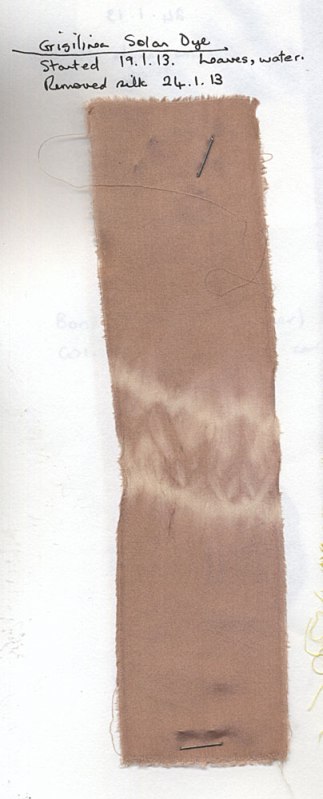
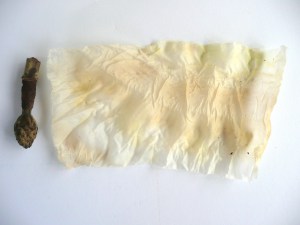
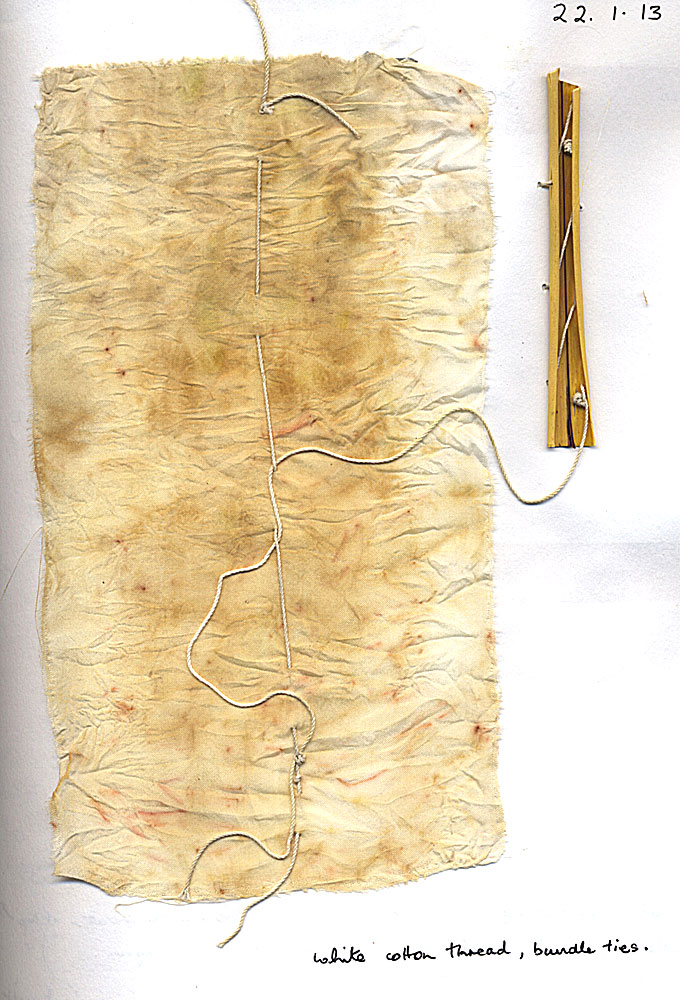
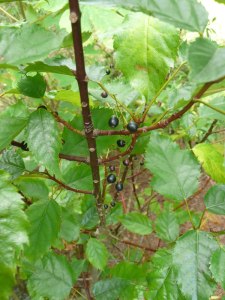
This tree is found in lowland and subalpine forest throughout New Zealand.  Griselinea has small flowers, which are green in the female and yellow in the male plants, and the berries are black when ripe.  For my test I used the green leaves which I cut up, and tied a knot in the alum pre-mordanted silk.  The berries are now on the trees, and ripen from March to June.

Griseliniesilksample

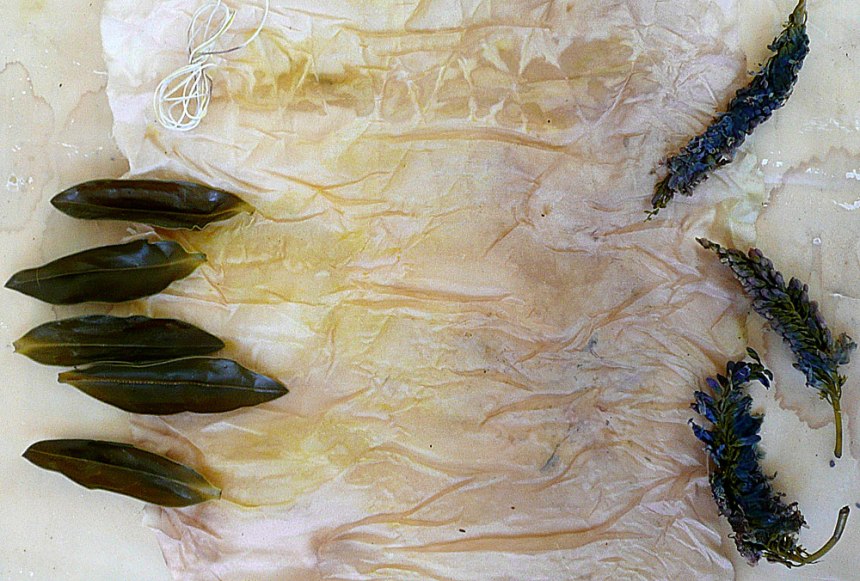
Wharariki, New Zealand Mountain or Coastal Flax Plant – Phormium cookianum.  

Steamed bundle and solar dye.

I think the flax plants in my garden are cultivars of P. cookianum.  The leaves have distinct colours – either green, yellow, pink and orange, or in combination, each plant being different.  The flowers are small and, characteristically for this plant, the seed pods hang downwards and are more or less twisted.  Our flax plants have not flowered yet this year so I wonder if they flower every year.  (See more details here :  <http://www.landcareresearch.co.nz/science/plants-animals-fungi/plants/ethnobotany/weaving-plants/information-sheets/harakeke-and-wharariki> )

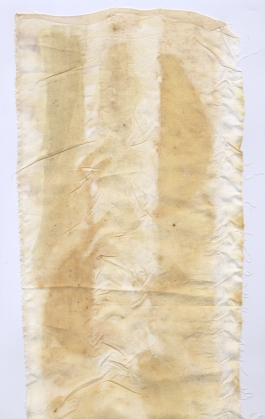
This piece of silk started life as a steamed bundle containing a fallen Magnolia bud, but very little colour came from this (here the silk is still wet).  Taking this silk I  rolled up a new bundle containing just yellow flax leaf pieces and put it on to steam with the Hebe bundles mentioned above.  The vein down the centre of the flax leaf left a good red mark on the silk.

P1170291

P-cookianum-silk

Makomako or Wineberry – Aristotelia serrata.  Steamed bundle and solar dye

 The plant is found throughout New Zealand in lowland and subalpine forest, especially in clearings.  The solar dye liquid has a sweet, wine-like smell.

Aristotelia-serrata

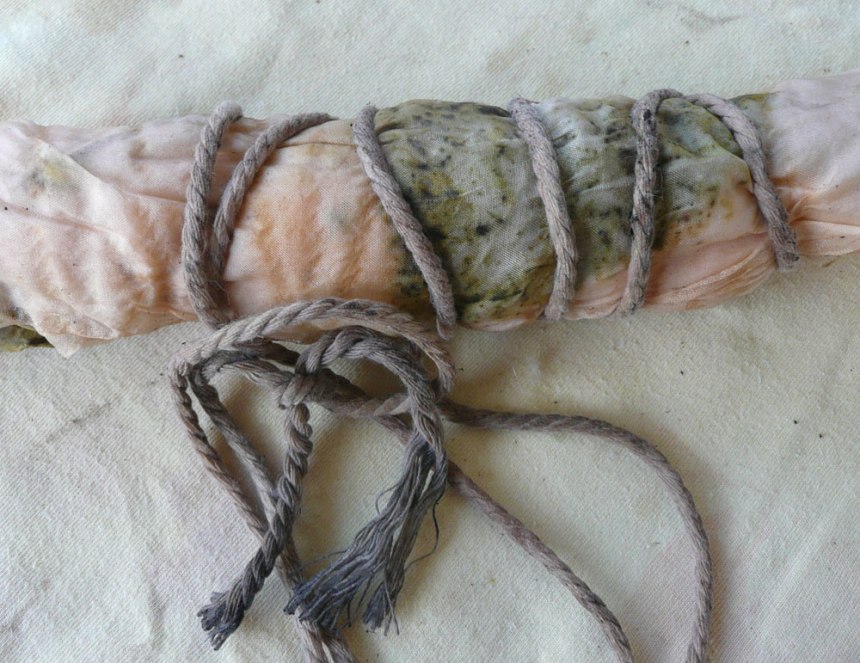
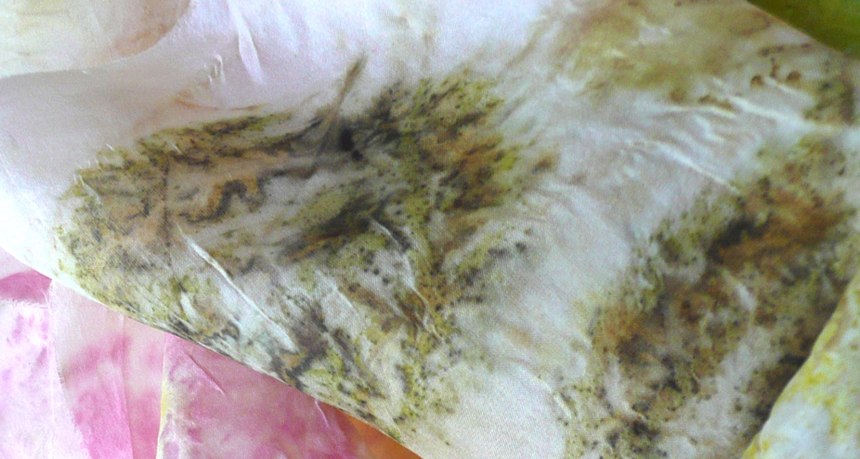
Incorporated into a steam bundle of mixed flowers and leaves, were some Flax, Wineberry and Griselinea leaves, and Hebe flowers.  The Wineberry leaves gave a good imprint.  This is seen in the two images below.  The purple-grey marks are from the leaves which are thin and translucent.  (The pink in the background of the second  image below is from hollyhock flowers.)

wineberrybundle

Wineberry

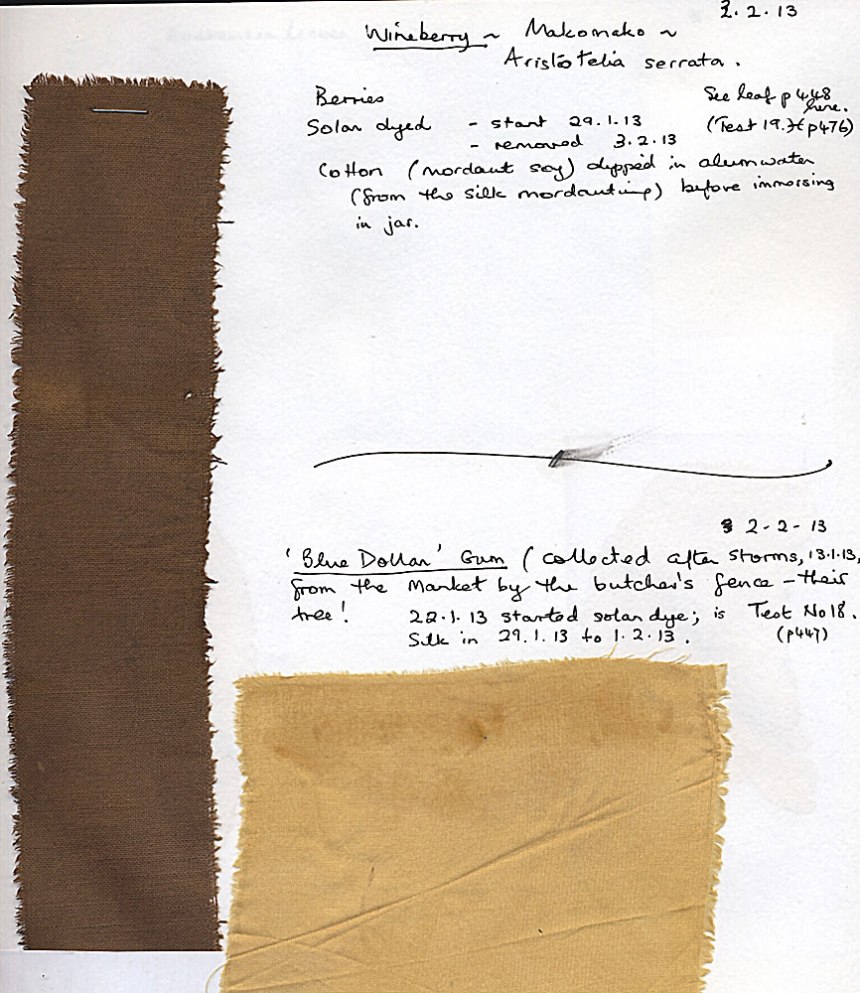
The berries, which are edible, are red when mature and black when ripe.  I picked black berries and solar dyed the cotton shown below.  The colour of the dye is very strong.  This entry in my workbook is shared with a eucalyptus solar dye.

Wineberry-solar

The Eucalyptus (I think it is blue dollar gum) shown above, leads nicely into my next post which I intend to be about my other solar dyes.

For information on the plants I referred to NZ Flowers and Plants in Colour by J. T. Salmon, edition published in 1986.  Some of the plant nomenclature has changed since then, but I have used the current plant names.  All plants come from the garden.

Solar dyeing – Hypericum

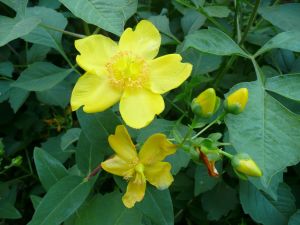
For one of my first solar dyeing experiments, I used St Johns Wort, Hypericum, from the garden. My plant is one of the many varieties of Hypericum.

St Johns Wort flower

On 6 January I placed the buds, leaves and flowers separately in three glass jars, filled with tap water (Oxford bore) and placed a weight on the top to keep the unmordanted cotton cloths submerged.

The following image is the dyed, scrunched up cotton from the jar that contained buds and two stones, one of which must have had a generous amount of iron in it as it introduced a black colour.

Hypericum buds

The resulting green, blue and black was very nice to see.  The cotton from this and the next jar was removed on 17 January.

The jar with the chopped up hypericum leaves contained a Waimakariri river stone to weigh down the leaves and three folded and tied cotton bundles with different contents.  In the photograph below, the top scrap of cotton was folded on its own.  The lower scrap enclosed more hypericum leaves and some Acacia melanoxylon bark.  The leaves in this bundle came through as a pale green-yellow, just visible in the image.  The thin strip on the right is 300 gsm Fabriano paper, folded and placed in the jar with the bundles.

Hypericum leaves

The third bundle containing flower buds is below.  The yellow buds did not seem to change the colour; I do not know where the grey marks came from!  Interesting that the iron caused such a different colour to appear in the first jar.

Hypericum

The third jar containing hypericum flowers and a piece of wire that I thought was copper was left until 28 January when I removed the cotton.  Some brighter traces of yellow appear, perhaps through contact with the wire.

Hypericum copper

On 19 January I started to record my solar dyeing tests and to date I have 35 of them.  No wonder I have not had a chance  to sit down at the computer.  The weather has been hot and mostly dry for about three weeks,  even now at 5.51 pm it is 27 degrees C in the studio (built as a greenhouse).  I recorded 47 degrees C one day on the shelf by the windows were I place my solar dye jars.  The garden is full of flowers and I could certainly never need to go out further afield in search of material for dyeing. I hardly know where to start.  I would prefer to concentrate on New Zealand native plants and have solar dyed with Harakeke the New Zealand flax plant – Phormium cookianum; Griselinea littorals; Hebe; and Wineberry – Aristotelia serrata.

I have been reading Richard Mabey’s book Weeds; How Vagabond Plants Gatecrashed Civilisation and Changed the Way We Think About Nature, published in 2010.  Chance and serendipity are rife here at the moment – I found this book in the library by chance – and I was also concurrently very curious about a weed that was new to me.  I eventually found this plant on the internet by using the search terms ‘tiny white flower weed’.  The plant is called Galinsoga parviflora and has the common names of Gallant Soldier or Potato Weed.  Well, it is growing in the vegie patch and appeared last season – near the potatoes.  Then I discover from the Contents that Mabey’s book  has a chapter entitled Gallant-soldier!   It so happens that this plant, a member of the daisy family, arrived at Kew Gardens in 1793 from Peru and was named after the ‘splendidly ennobled’ Spanish botanist Don Mariano Martinez de Galinsoga.  This plant has the tiny-est flower I have ever seen.  It escaped Kew Gardens in the 1860s and eventually found its way to my garden.

Another serendipitous moment arrived when I read in this book that in 1748 ‘a celebrated [British agricultural] improver,  William Ellis, who farmed at Little Gaddesden in the Chilterns […] was experimenting with different methods of weed control and pasture management’.  Ellis used clover as an effective way of controlling weeds. This nitrogenous crop could be ploughed in so was also a great cost saver as hand weeding would not be required.  I expect my ancestors from Little Gaddesden took to straw-plaiting to supplement their incomes, no longer being required to weed the Corn (wheat) fields.  Actually, we have also used clover as a weed suppressant – we have a bricked area that we despaired of – after two years hand weeding between the  bricks we once tried the chemical way but not really wanting to do this gave that idea up pretty fast (and it didn’t work really for the weeds came back quickly).  We finally decided to just mow it!  It works wonderfully, and is a haven for the bees as the clover is taking over.

Much to my comfort, Mabey also talks about Hypericum perforatum.  “Each leaf is covered in tiny transparent dots (the perforations of the Latin name…) and held up against the sky the sun’s rays prick through, like dapple in a springtime wood.”  A good connection with embroidery there…

This is miles away from eco-print and solar dyeing… and the dye from Galinsoga is a pale straw colour.

(Mis)Adventures in Eco Print 3

At last I seem to be getting somewhere with this colour transfer…

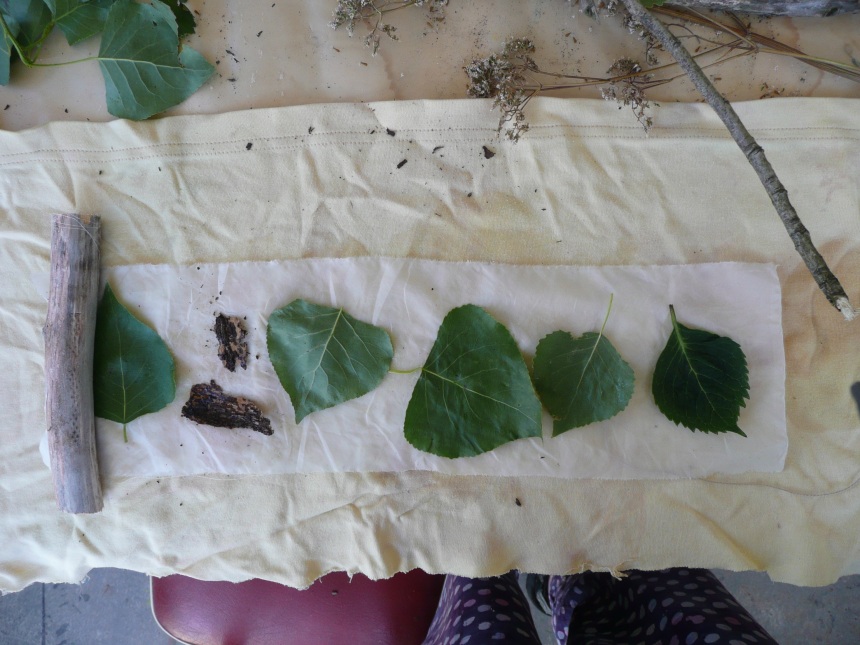
For this experiment I decided to try some other plants from the garden. I noticed that a hydrangea leaf when soaked in hot water even for a short time produced a lovely yellow. I collected some poplar leaves and small branches as the recent gales tore off a large branch from one of the shelter trees. We had to spend some time cutting up the large branch, and tidying up our neighbours’ paddock. So I thought to commemorate this, I would try the poplar leaves and twigs in a steamed eco-print.

Poplar branches

I modified my steaming process by using folded chicken wire in the bottom of the pot, which meant the lid fitted properly and so prevented too much steam escaping. The bundles were cotton with rice and alum mordant enclosing a poplar twig, bark and leaf, and silk soaked in alum enclosing poplar twig, bark and leaves plus one hydrangea leaf.

P1170125

P1170124

P1170157
Yellow dye was visible on the silk once the steaming started, but very little on the cotton bundle, so that colour must not have come from the hydrangea leaf.

Here is the dyed silk cloth unwound.

P1170160

And a close up of the imprint.

Poplar print

The cotton bundle was a little disappointing, plenty of yellow and a pale tan colour plus some nice marks left by the (previously used) cotton thread for tying. I think the yellow must have come from the lichen on the bark. The poplar leaf is only just visible at the foot of the fabric, the green leaf point just to the left of the piece of cotton thread.

Poplar cotton

Eco Printing on Paper

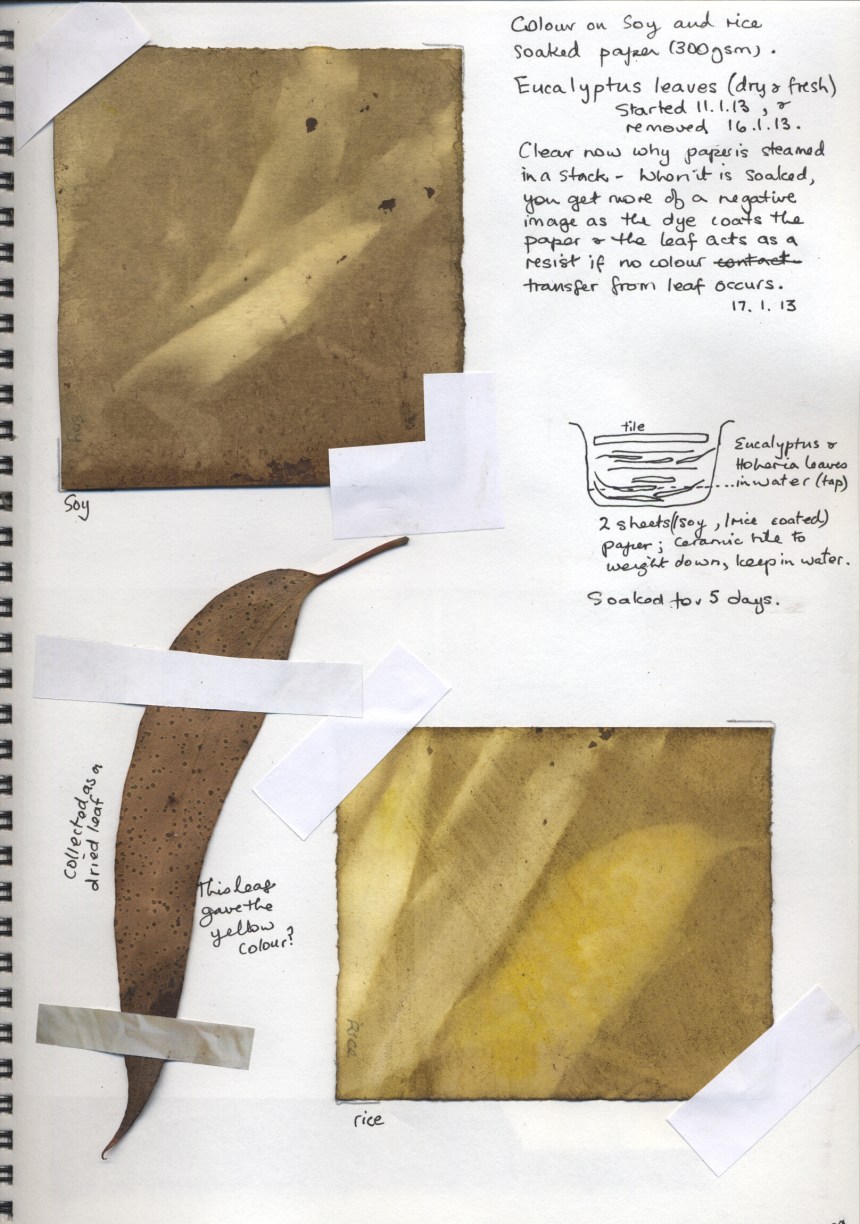
As part of a series of tests for printing plant colour on paper, I put paper and eucalyptus and hoheria leaves in between two pieces of paper in an ice cream tub, added water and laid a ceramic tile and stone on the top to submerge the contents.

Eucalyptus on paper

Tub and contents prior to soaking.Tub

(Mis)Adventures in Eucalyptus Eco Printing (2)

Testing eucalyptus on silk and cotton again.

Eucalyptus leaves

Last week I collected some more dried, fallen, eucalyptus leaves from the same tree as before.  You can see what beautiful colours these dried leaves have.  The green leaf on the left by the twig was a fresh leaf blown down by the recent north-west gales.  These leaves were placed on dampened, un-mordanted silk and rolled up in close contact with the cloth.  The eucalyptus twig formed the core of the bundle which was bound with cotton knitting yarn.

I made three more silk bundles with eucalyptus leaves, the smallest one was rolled up on itself with no eucalyptus twig in the centre. Two cotton bundles were also steamed.  I used some more of the cotton fabric as in the first tests, but this time it was mordanted with soy milk.  One of these cotton bundles contained only a small stem of daphne leaves and pink-red flower buds.

eco  bundles

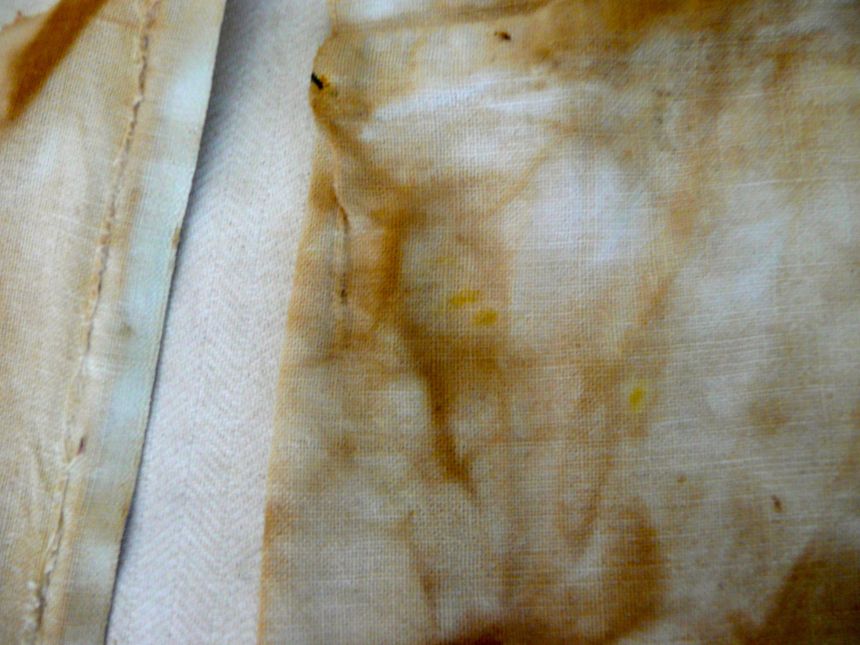
I used the colander as a steamer basket with the pot lid to cover.  I steamed the bundles for one hour as this basket arrangement was not very air tight.  At one point the water nearly dried up, and I think the temperature in the pot became too hot as the silk fabric on the outer layer along one side of the largest bundle is stiff and ‘fused’ together.  One cotton bundle also showed signs of heat damage as well.

I finally managed to get more colour on the fabric pieces!  Still not what I would have expected, as is shown by the large silk bundle pictured below (left).

Lge silk bundle

This is the small silk bundle. Colour from the leaves and bark has been taken up by the silk quite well.

Silk e eucalyptus

This is the soy mordanted cotton fabric.  The bundle contents were daphne leaves and flower buds, and an eucalyptus twig core.  The cotton has absorbed quite a lot of colour.

Daphne on cotton

The following day I had another go… A post to come soon.

Hapa-zome on paper

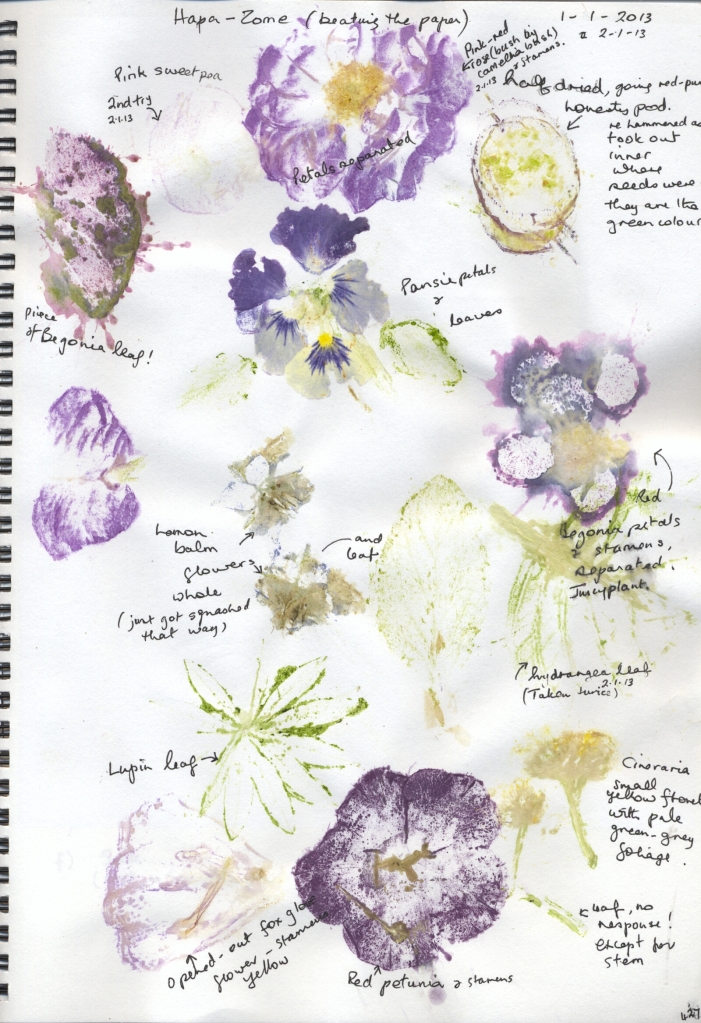
Hapa-zome  is a Japanese word meaning ‘leaf dye’ and was given to a technique for transferring plant image and colour on to fabric by beating the colour into the material  (as mentioned by India Flint in her book Eco Colour).  Here I have transferred it directly into my workbook (acid free 110gsm cartridge paper).  The plant juices managed to go right through three pages of the workbook, the first page being the one receiving the hammer hits, while this page shown below being the one in the middle and where I laid the flowers and leaves  – you cover the plant with a card or paper while beating.  It’s quite a violent process, I thought; I did not really enjoy it – but there was a hot nor’wester wind blowing that day.  The reds turned to a purple after a while.  The pansy flower is the most successful print with mostly true colour.  The red begonia flower and leaves were bursting with colour, but that turned to purple, pink and blue eventually, the green leaf juice remaining green.  A great exercise, with instant results!  Definitely worth persevering with. Different papers may produce a different colour result.

Hapa-zome workbook page