(Mis)Adventures with Eucalyptus eco prints

Plunging in with eucalyptus and silk.

In early December 2012, I started to try using eucaplytus leaves on silk and cotton fabric.  I went down the road to where a gum tree planted by Mrs White in the late 19th century towers above all other trees.  I collected dried, fallen leaves and fresh-when-cut leaves; see pods; bark; twigs from the prunings by the tree frog machine that took place a fortnight earlier.  Using India Flint’s method on page 264 of her book Second Skin, I rolled up in the silk the leaves etc around a bark covered twig for the core of the bundle of fabric.
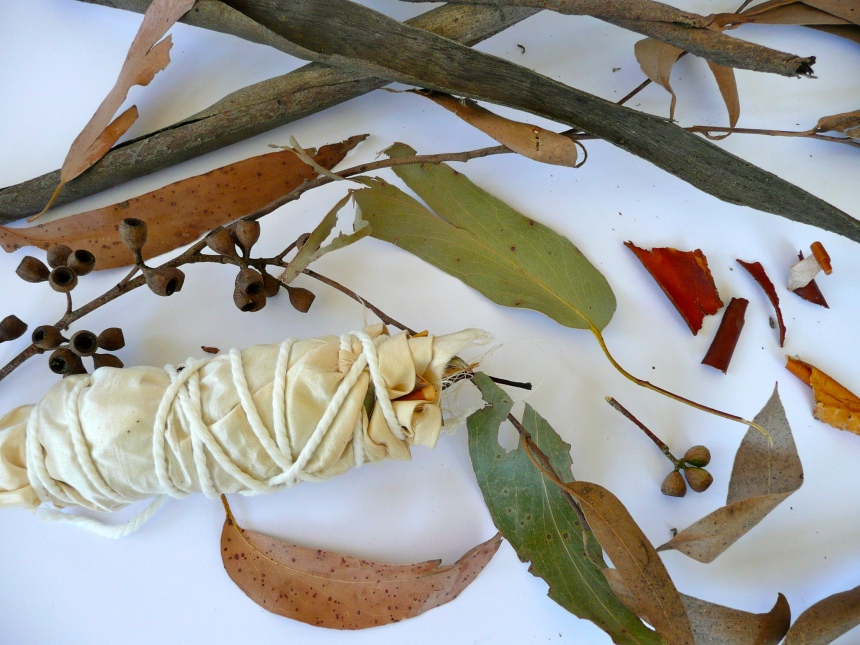
First silk bundle

In a stainless steel pot I simmered the following for 30 minutes:

One bundle of leaves, bark twig, seed pods all tied up with a polyester piping cord.  An extra piece of eucalyptus bark; extra eucalyptus leaves; coil of aluminium wire 1 mm dia x 170 mm long; a piece of aluminium foil 80 mm x 200 mm; a used tea bag; tap water from kitchen, with a top up from laundry tap as necessary (untreated Oxford town bore water, no chlorine).

I was a bit nervous nothing would happen.  I was correct!  Well, something did happen, but not what I desired.  This is typical art progress!

After 30 minutes I turned off the heat and left it until the next day.  Without  removing all the cord, I had a peek to see what was happening when the bundle was cool.

First silk bundle

Apart from the resist created by the cord and plant material, very little colour came through from the eucalyptus, the whole piece being dominated by the dye water, as far as I understand.  I also wondered if this material was, in fact, silk.  I have had it for about twenty years and it was an old piece when I was given it.

Undaunted, you might say, and buoyed up by India Flint’s Eco Colour, I researched and read the internet – more very useful information from Alice Fox in the UK,  Wendy Feldberg in Canada and Cassandra Tondro in the USA  – thanks SO much for this.  I re-read the information to sort it all out in my mind into an ordered format so that I could at least intend experimenting in a reasoned fashion and record the tests in my workbook.  I made ash water from the wood burning stove ash, and then got jars of copper, alum, rhubarb and iron water underway.

The ash water had been strained through an old cotton pillow case, so I thought I would put this mordanted fabric in a hot dye and used the left-over silk bundle eucalyptus brew.  This still contained the leaves, aluminium foil and bark, and I also put in some Sequoiadendron giganteum bark from the garden as well (another tree planted early on in Oxford’s history) and a small dash of the rust & vinegar water I had used in my earlier paper experiments (just for good measure).

The cotton bundle contained an old rusty nail as core, lemon balm leaves and  one eucalyptus leaf at the end – all tied up with the cord previously used.
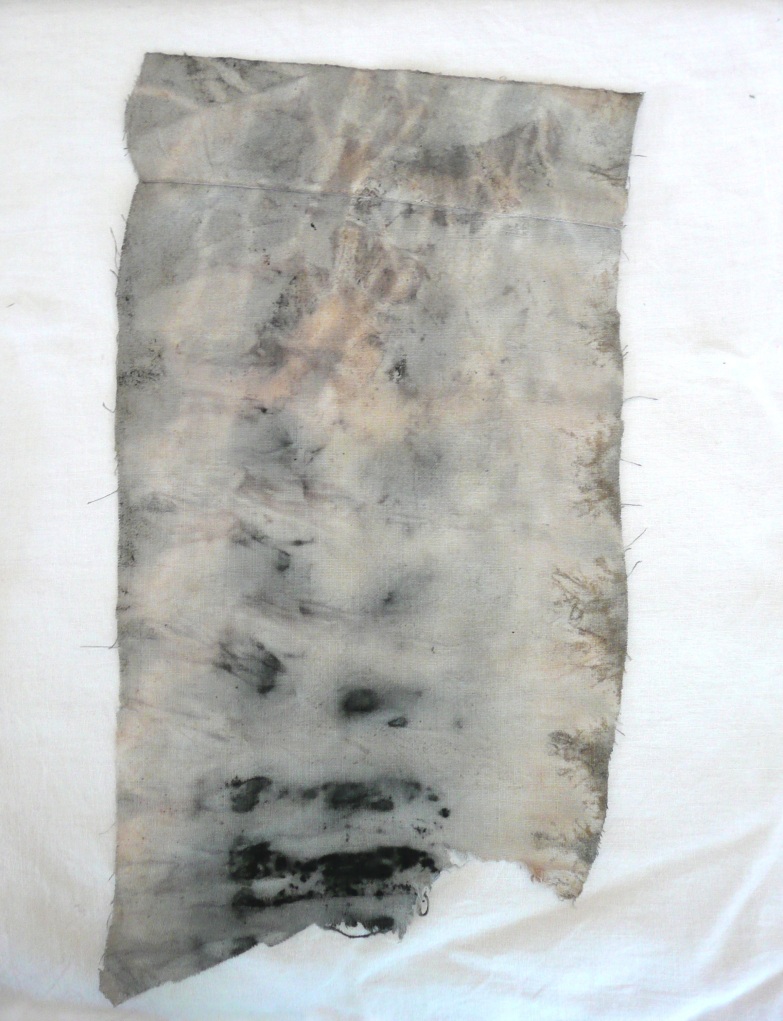
Eucalyptus cotton iron

I also put in a sheet of paper, concertina folded, enclosing another eucalyptus leaf, and held together with two rusting bulldog clips. Later I added another folded sheet of ordinary printing paper.

Euc thread Bond

Euc fold

As the experts will know, the water got very black!  I did not record how long I left the contents heating, but must have been about under an hour.

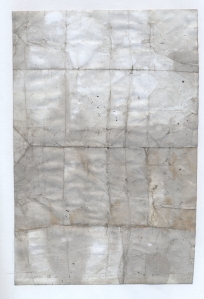
The results:  the cotton dyed fabric is above showing the black marks from the nail, and I think the eucalyptus leaf is showing at the top where I laid it across the hemmed fabric.  The two paper experiments are the smaller images – the bulldog clip marks are seen in the left hand image.
Hapa-zome on paper

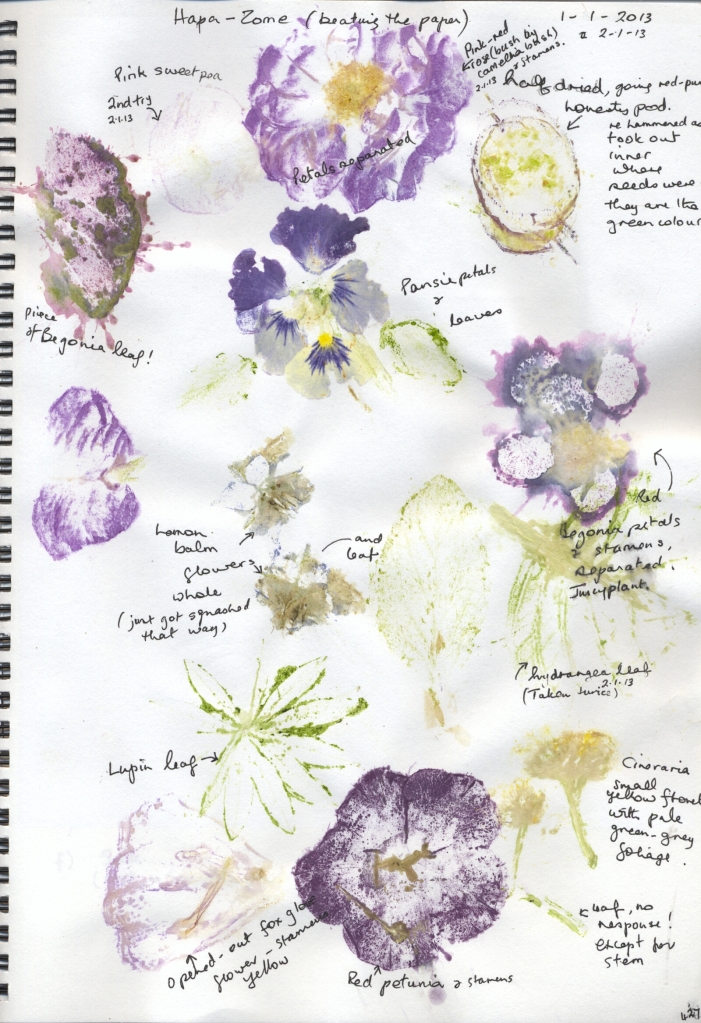
Hapa-zome  is a Japanese word meaning ‘leaf dye’ and was given to a technique for transferring plant image and colour on to fabric by beating the colour into the material  (as mentioned by India Flint in her book Eco Colour).  Here I have transferred it directly into my workbook (acid free 110gsm cartridge paper).  The plant juices managed to go right through three pages of the workbook, the first page being the one receiving the hammer hits, while this page shown below being the one in the middle and where I laid the flowers and leaves  – you cover the plant with a card or paper while beating.  It’s quite a violent process, I thought; I did not really enjoy it – but there was a hot nor’wester wind blowing that day.  The reds turned to a purple after a while.  The pansy flower is the most successful print with mostly true colour.  The red begonia flower and leaves were bursting with colour, but that turned to purple, pink and blue eventually, the green leaf juice remaining green.  A great exercise, with instant results!  Definitely worth persevering with. Different papers may produce a different colour result.

Hapa-zome workbook page

Plant prints on paper

As it is 1st January 2013, and I am having a ‘holiday’ today, thought I would start the year with a post. These are some of my recent experiments on printing plant images and colours on paper (360 gsm watercolour paper).

I used diluted vinegar and a few pieces of rusty iron and layered plants and paper, weighted it all down with some of my rock collection and w a i t e d. I made sure the paper was damp – well quite wet really!

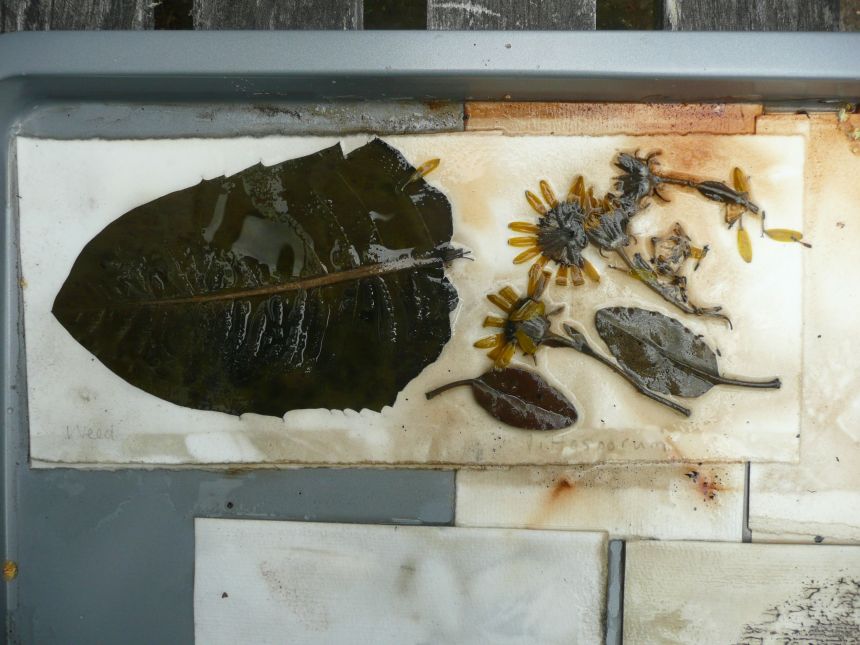
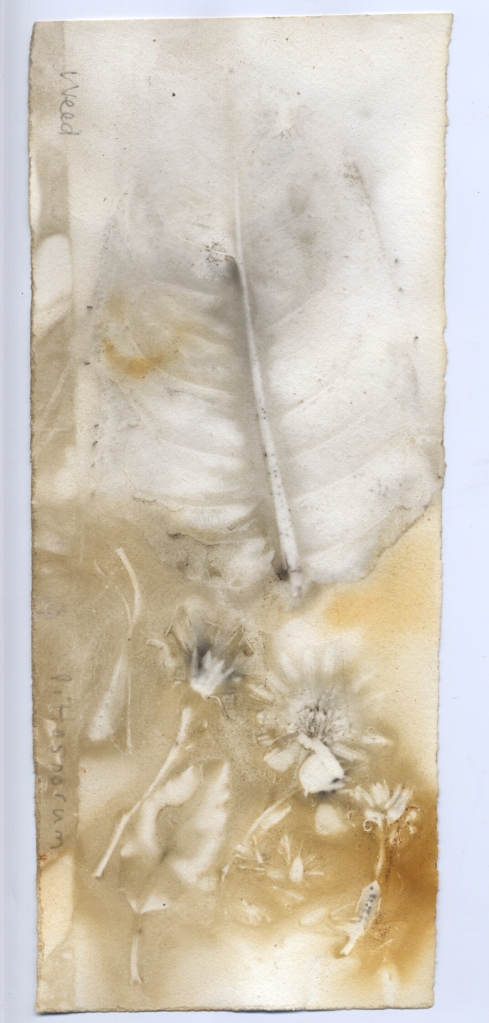
Here are the before and after images.  The before being before I took the leaves and flowers off the paper. The first two images show part of a dock leaf and pittosporum flowers and leaves. Not much transfer of plant colour.

Dock leaf and pittosporum leaves and flowers

Dock leaf and pittosporum flowers

The next two images are of lemon balm leaves, aquilegia flowers and another unidentified leaf (plant has a beautiful blue flower ‘cone’  see below).  The plant material was pressed between a folded piece of paper.  Some of the plant colour from the aquilegia has transferred to the paper (see the left hand impression).  These are, to me, ghosting images, formed by the plant material resisting the water which has been coloured by the rust and the dust off the stones weighing the paper down.  They are delicate images and I was really pleased with them as some of my first attempts.  I now have India Flint’s book, Eco Colour, so now that the Christmas season is over I will be able to concentrate on eco printing – well, in between all the other household duties…  And, my freezer has found a new raison d’être!

I wish everyone a bountiful and successful 2013.

Lemon balm leaves, aquilegia flowers

Lemon balm and  aquilegia

Now follows an image of the blue flowered bush – if anyone knows what it is, please let me know!  I used one of the pointed leaves.

Blue flowered plant

Botanical Pigments

Exploring pigments from plants… ephemeral colours, like the blooms or leaves themselves.

Have attempted to transfer plant colours to paper.  The paper I used was acid free Fabriano Artistico, 300 gsm, as well as other types of paper.  The orange gazania petals made no impression, but the small pansies, the snapdragons, the black nemophila, and the elderberry leaf all left a mark of colour behind. Of course the rust worked, as did the onion skins, the black mould on the runner bean pod and the coffee… Here below are some of the results:

Here is another page of colour taken from red snapdragon and  blue pansy flowers and a lemon balm leaf along with other unrecorded plants.  The paper here was the inside of the cover of a pad of Bockingford acid and lignin free 300 gsm paper, so this cover sheet it may be acid free as well?

Snapdragon, pansies, lemon balm

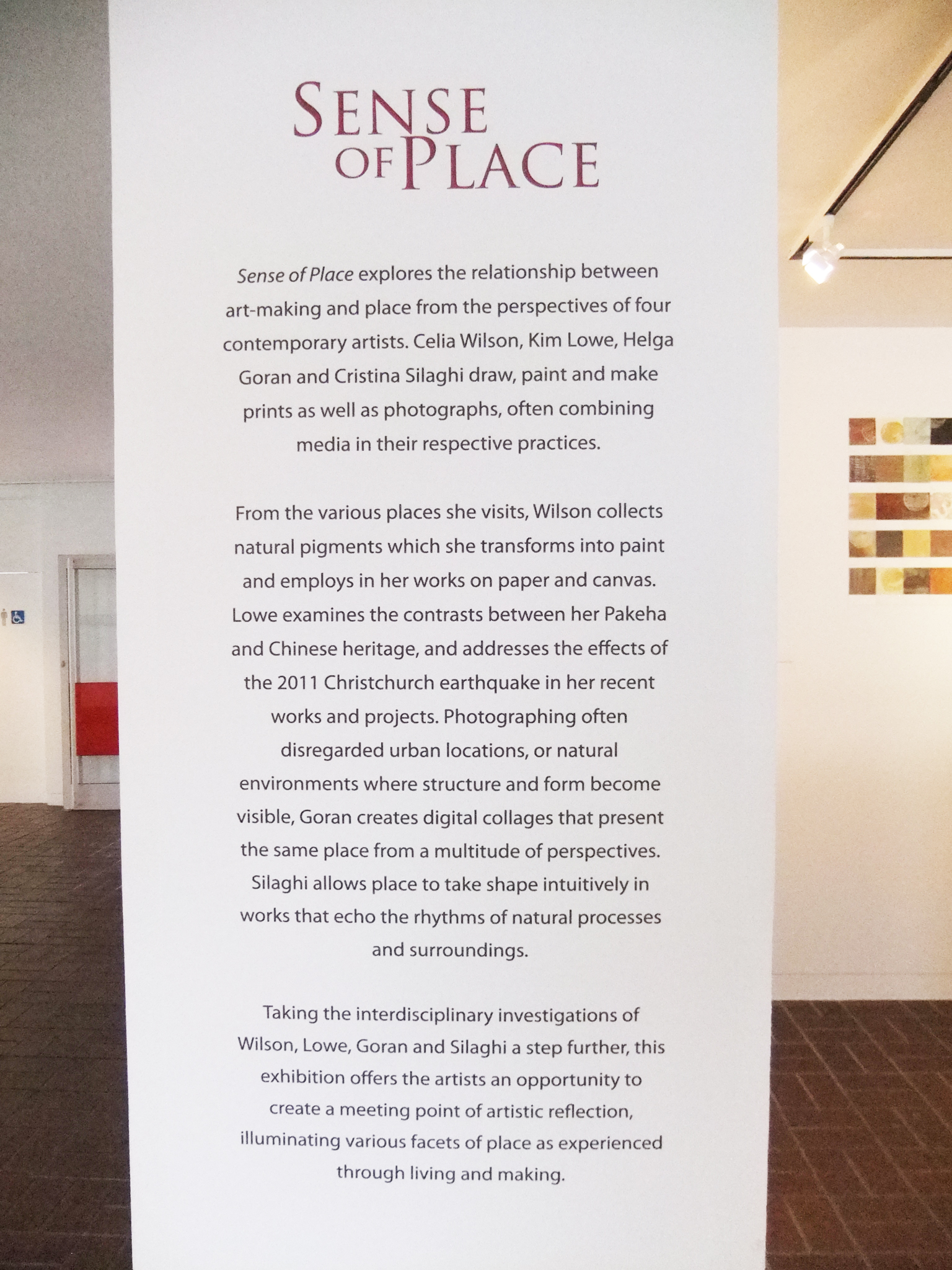
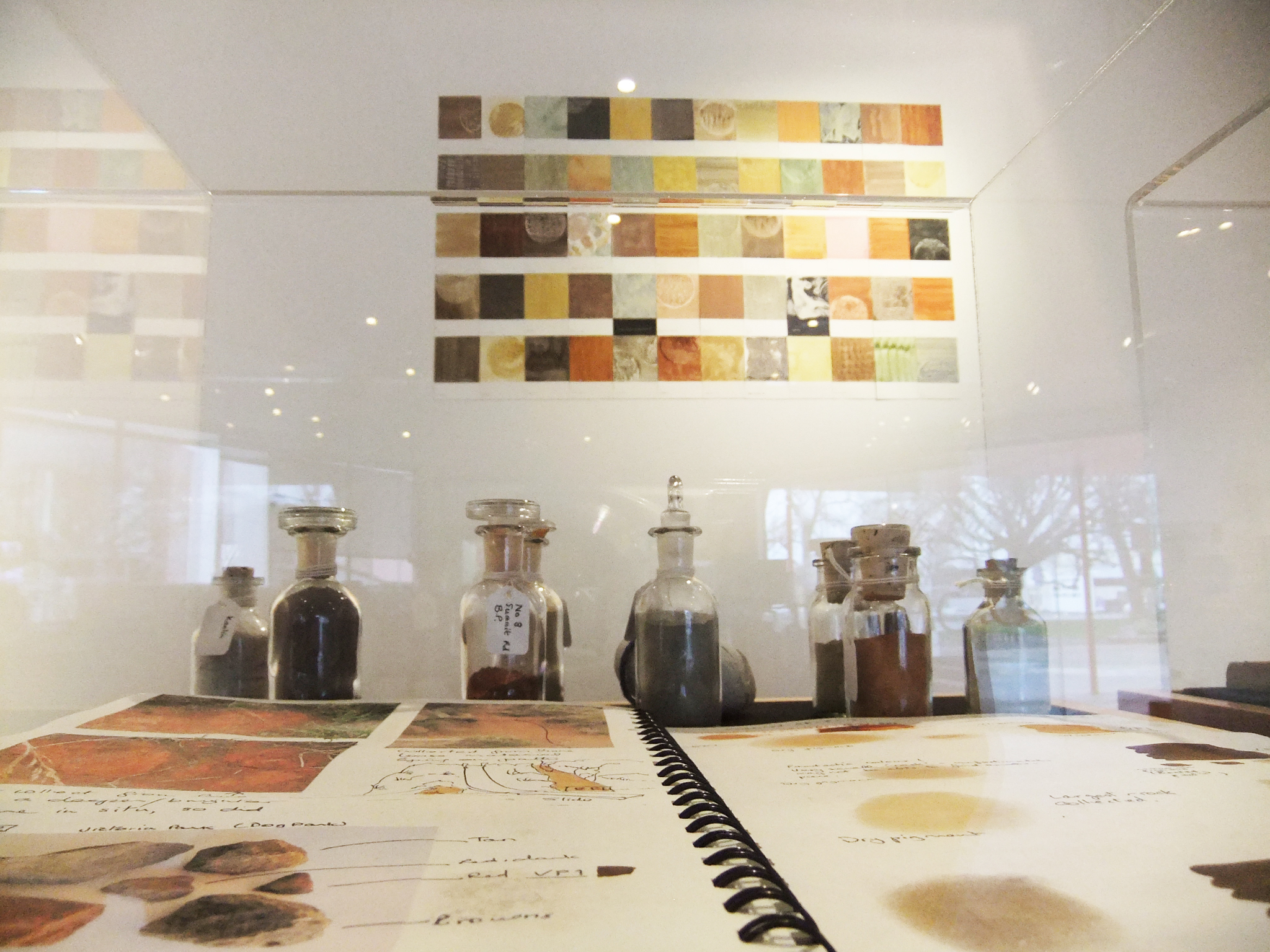
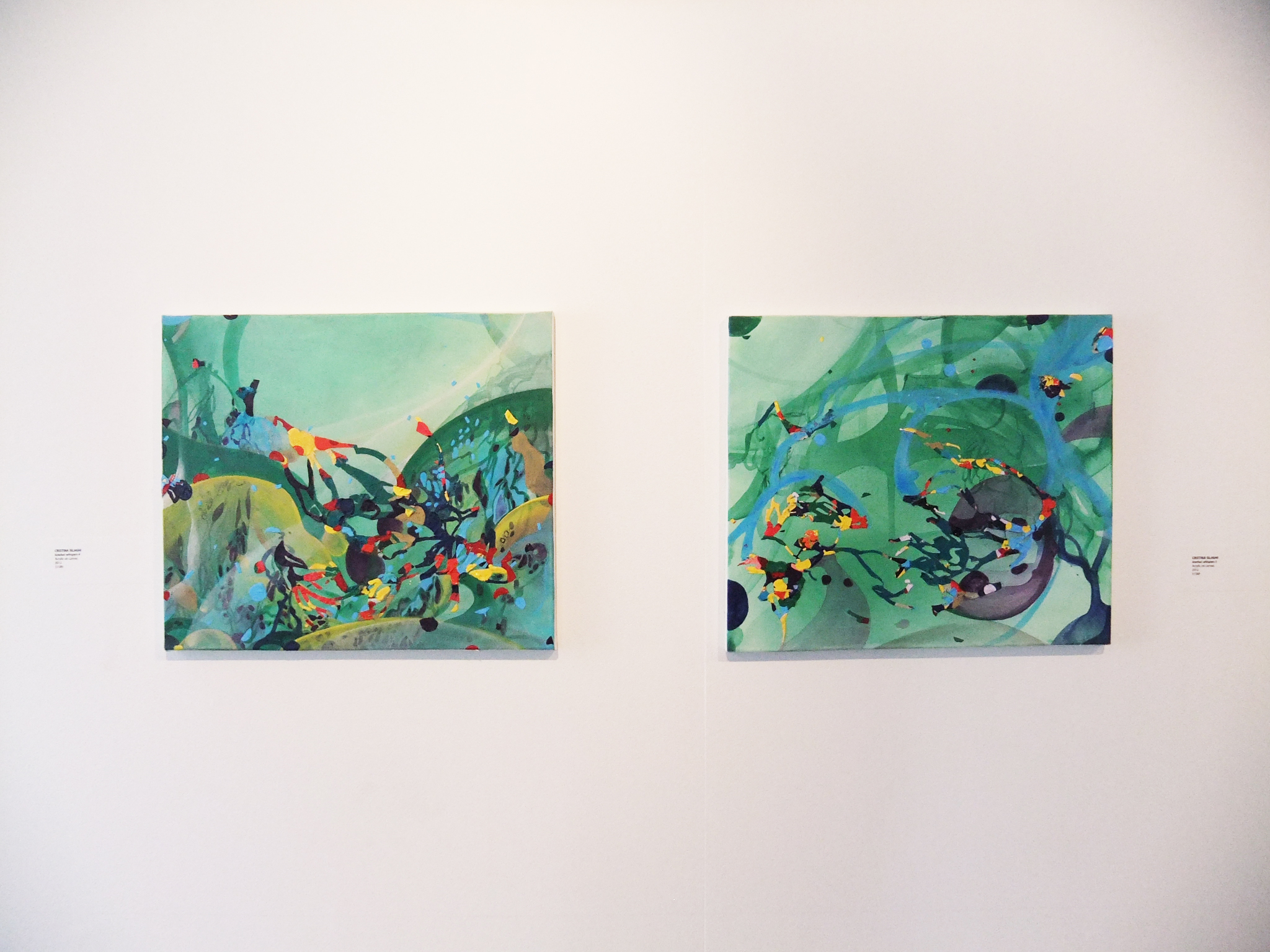
“Sense of Place” at the Hastings City Art Gallery

This exhibition with Cristina Silaghi, Helga Goran and Kim Lowe took place from 28 July to 9 September 2012. I will upload photographs fairly soon. See the Hastings City Art Gallery Facebook page of 3 August on how to win a chocolate fish! I am glad somone did – well done to Julie King, the winner!  The gallery’s  main exhibition hall is showing “A Micronaut in the Wide World: The Imaginative Life and Times of  Graham Percy” until 23 September – a great, lovely, witty, charming exhibition which I found fascinating.  The detail below is from one of my paintings from 2008.

Okains Bay Road No 5 pigment in watercolour medium

Paint making workshop at the Papakura Art Gallery, Auckland

Image

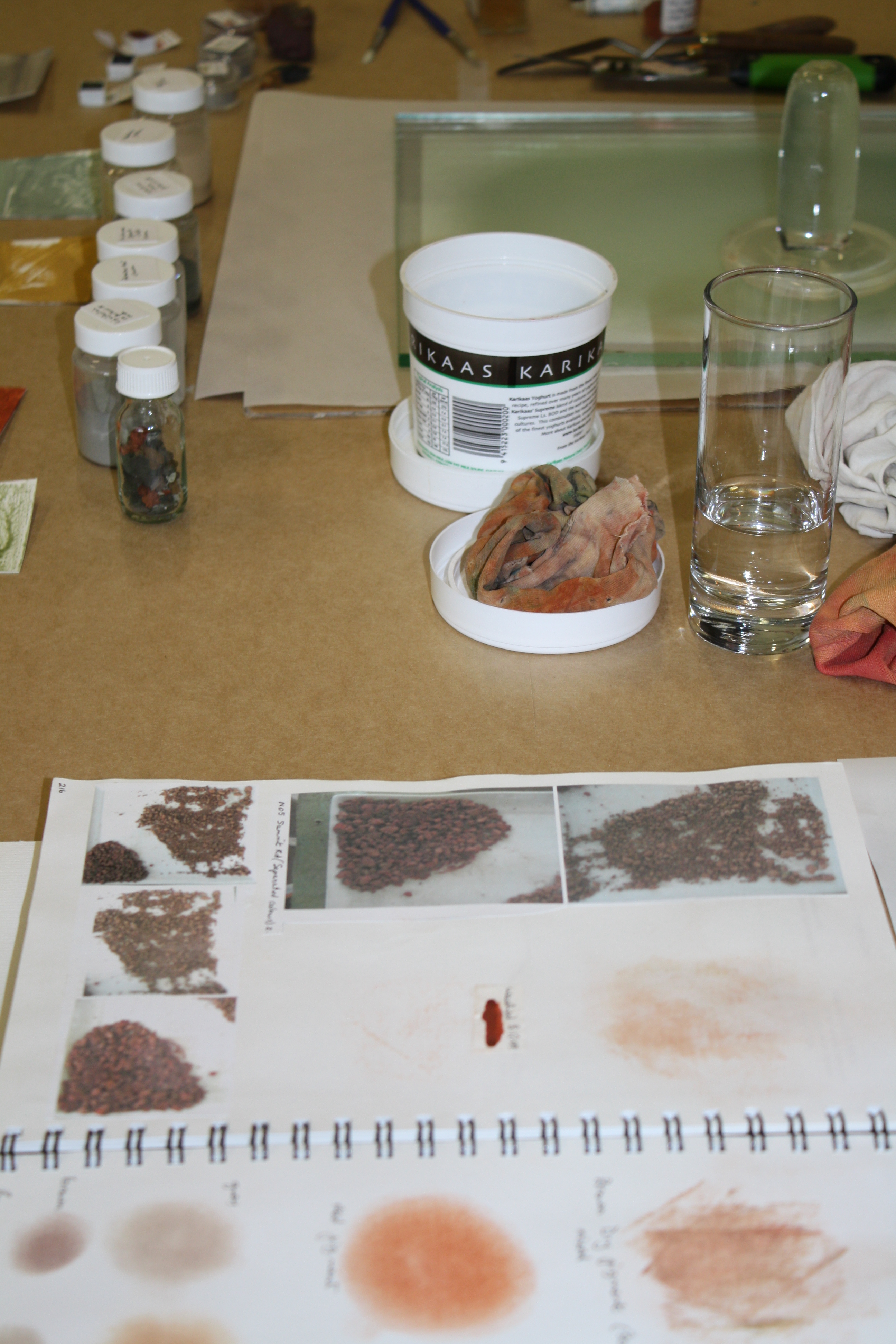
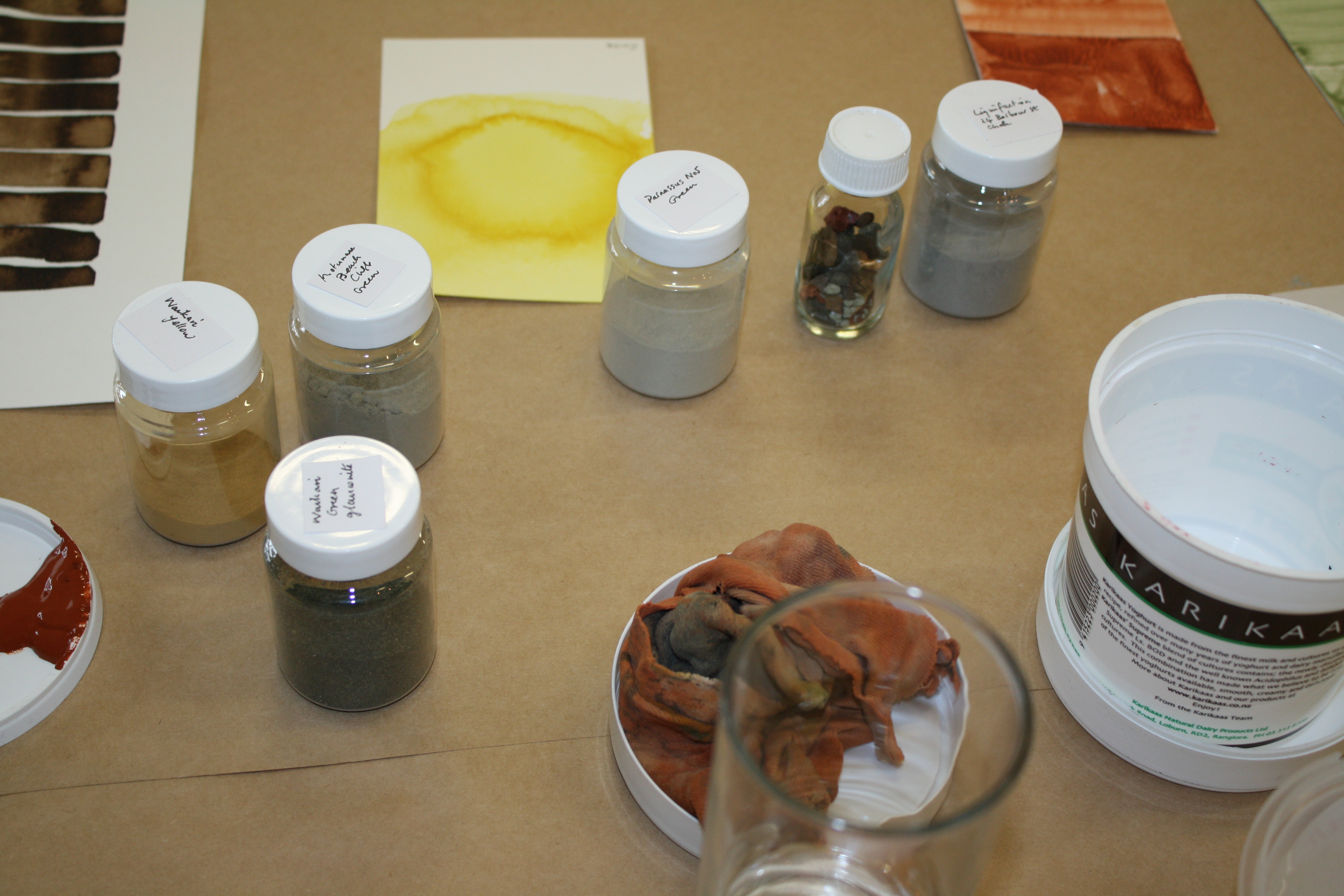
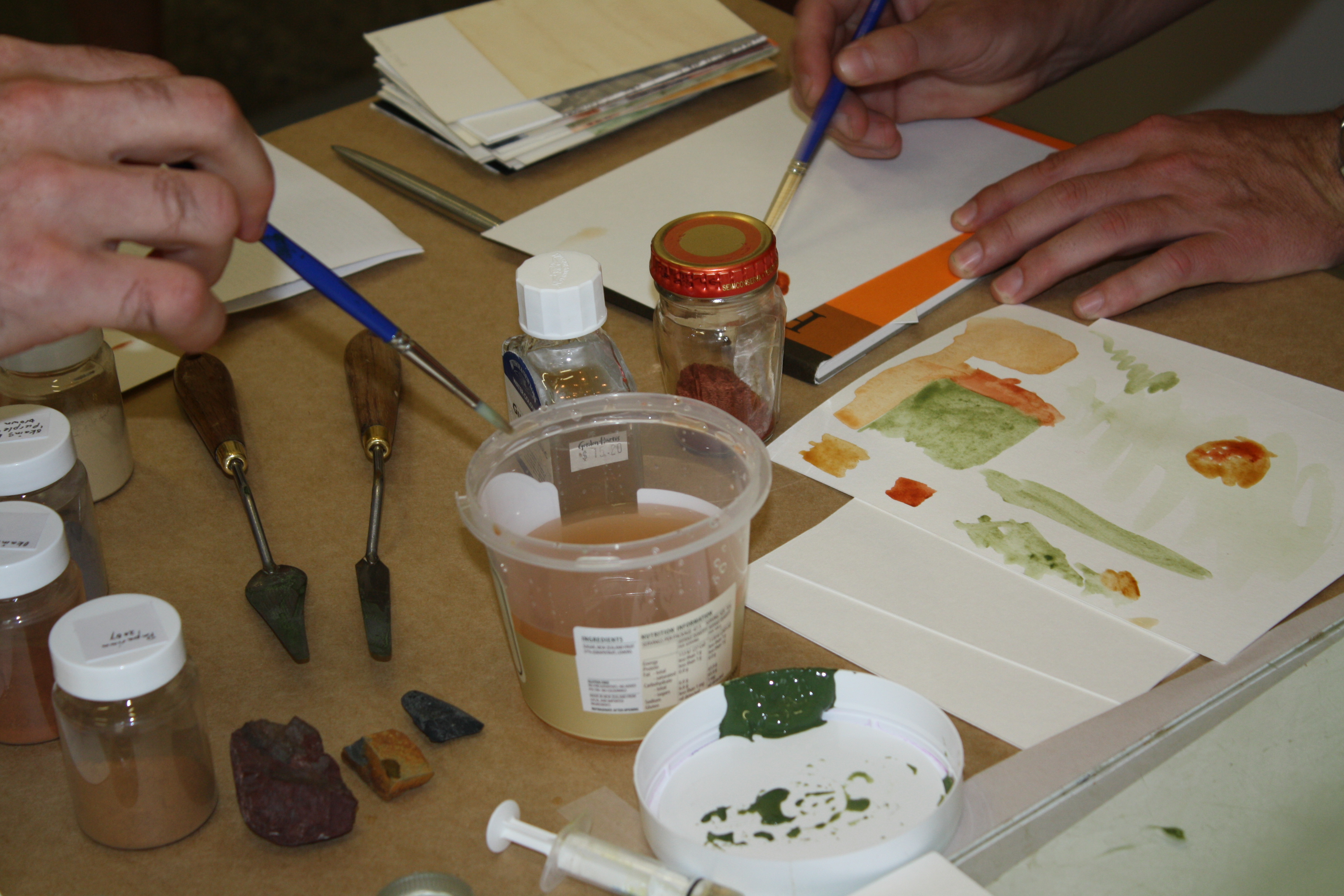
During the current exhibitions Colour of Distance and What’s on Your Plate at the Papakura Art Gallery, I had the marvellous opportunity to hold a workshop on paint making from locally found pigments.  Three different colours were made during the workshop, and I brought many colour swatches made from Canterbury mineral and organic pigments for attendees to see and touch.

In the photo above, the What’s on Your Plate artwork just to the right and behind me on the wall, caught my attention because it shows a tin can label that lists many of the items that are produced from by-products of the petroleum industry.  I read through them all, hoping to see ‘pigments’ listed – but it wasn’t  –  probably round the back of the can!  One of the reasons that started my interest in making paint was that so many colours are derived from oil.

Image

Image

Image

Image

Image

Image

Many thanks to Tracey Williams and Kate Hart of the gallery for the use of these photos taken during the workshop.

Colour of Distance is the latest group show by Cristina Silaghi, Helga Goran, Jocelyn Mills, Kim Lowe and myself, and it closes on the 7th April.

For more information and photos of these two exhibitions at the gallery,  visit their Facebook page via this link:  Papakura Art Gallery .

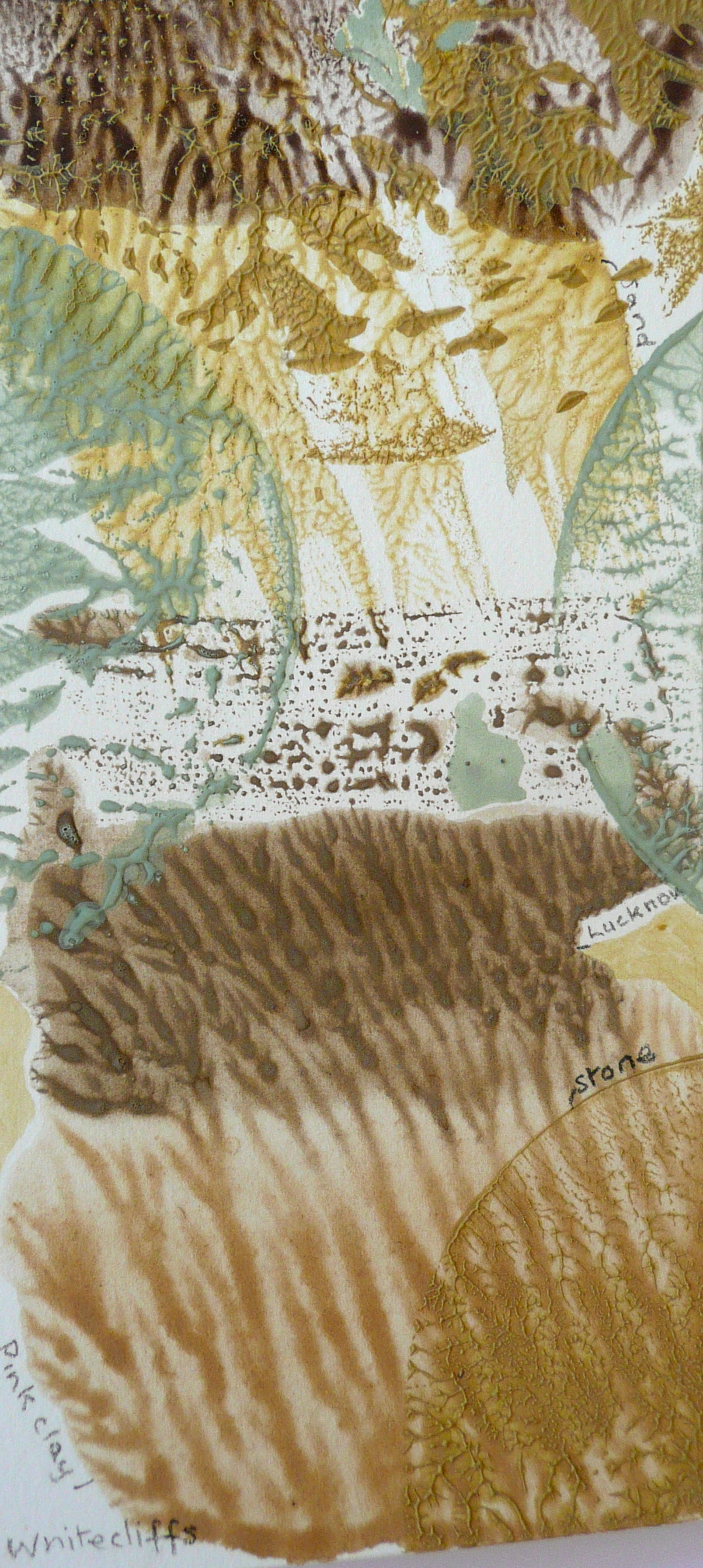
Whitecliffs Pigments

A selection of colours from Whitecliffs, in the Selwyn district of Canterbury.  The pigments are from rocks and clays that were used for pottery and glazes by my good friend June Inch, a potter, dyer and visual artist.  However, the dark purple-brown pigment at the top is from the Okains Bay area of Banks Peninsula.

I now have a selection of watercolours for sale on my Felt site at www.celiawilson.felt.co.nz

Okains Brown

I’m pleased to say that my paint making is getting better – not that there was a problem, but the paint was shrinking quite a lot as it dried.  Not surprising really as this is what clay does when it dries out.  I am an artist, not a chemist, so it is a trial and error process, especially as every pigment reacts differently.  I can now say that my half-pans of paint look more like the ‘real’ (commercial) thing.

I wrote an essay on locally found pigments for my last year at university.  I was motivated in this research because I feel we take artists’ paint for granted!  I just accepted that these colours come out of a tube or a pot, without a second thought of their origins.  Then I realised, these paints are made overseas from materials themselves imported from other places, and I became curious about what pigments might be found in New Zealand.

A painting’s main constituent – paint – and how paintings are physically made is not usually considered in art history or art theory but, of course, to a painter the paint, consciously and subconsciously, is of prime importance, as it is central to the act of painting.  The painting material itself also provides the artwork with context, subject matter, psychological content and visual stimulation.  I feel it is an overlooked component.  A painting’s material presence is often overlooked, partly because we are so used to viewing images in print or on the screen.  There is much on the subject of paint for conservation practices, and advice about art materials and techniques on the internet and in manuals, but a conversation on the ‘material memories’ (James Elkins, What Painting Is: How to Think About Oil Painting, Using the Language of Alchemy, 1999) contained in and shown by the paint or the act of painting is not usually considered.

If a painting, both in its subject matter and in its materials, is regarded as a repository of history, current circumstances – economic, environmental and ethical – encourage me to investigate the possibilities of using locally found pigments as an alternative or companion to commercial, imported pigments and paints.  The experimental use of these pigments will provide information as to how such material itself performs, in most cases unlike commercial paint which offers (thankfully!) large quantities of paint of uniform consistency and pigment distribution.  My use of relatively unrefined pigments has produced some exciting effects.

I find that locally found pigments each have an intrinsic or essential character.  The wish to explore and exploit these idiosyncratic qualities, specific qualities and problems, is perhaps seeking to return to individuality or a rejection of bland uniformity.  I started to experiment with ocherous and clay based paint in order to research the different optical effects (for example, chroma intensity or gloss or matt surfaces) and handling properties of paints, and to maximize the granulation and flocculation effects of some pigments in water-based mediums.

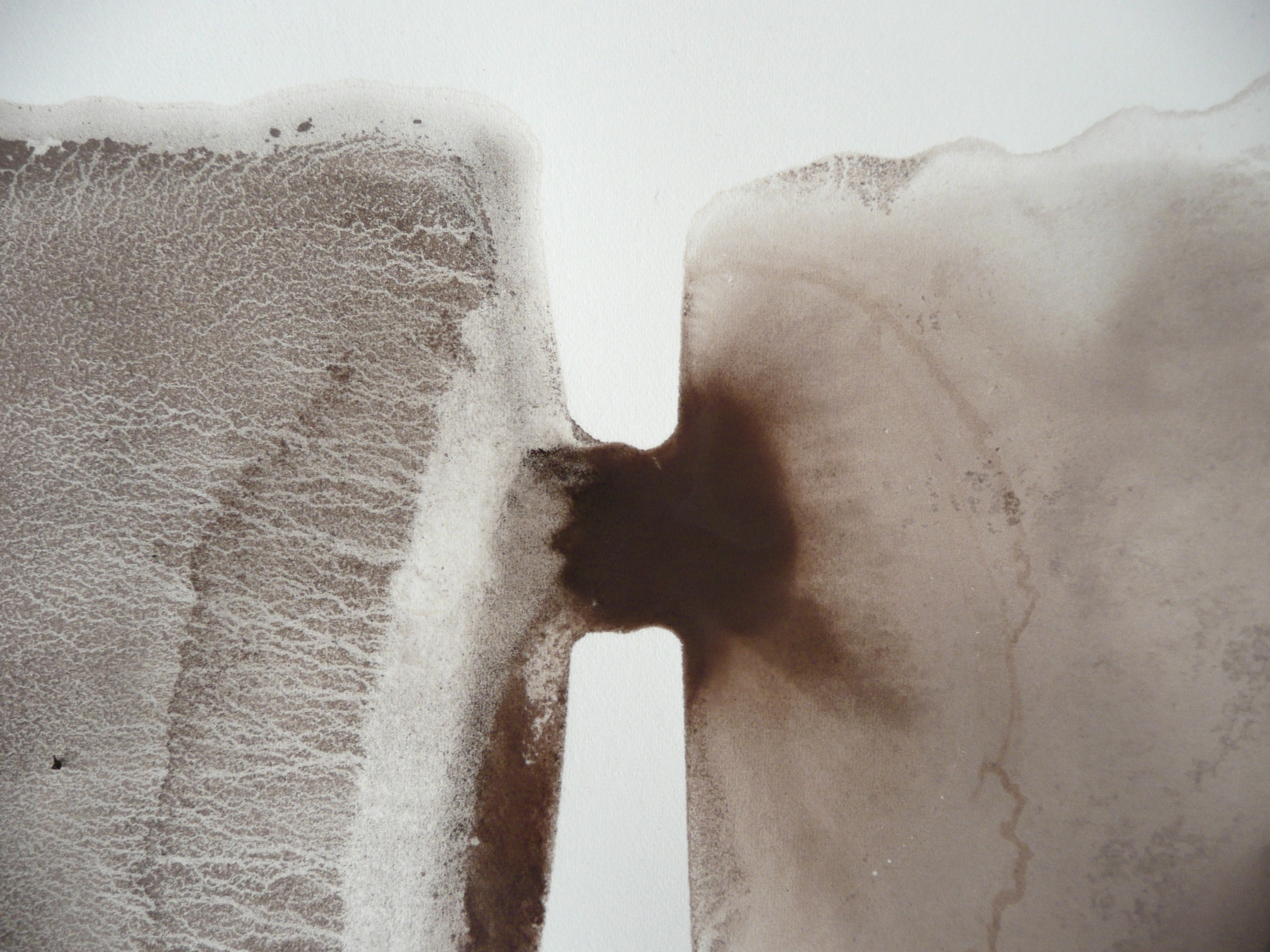
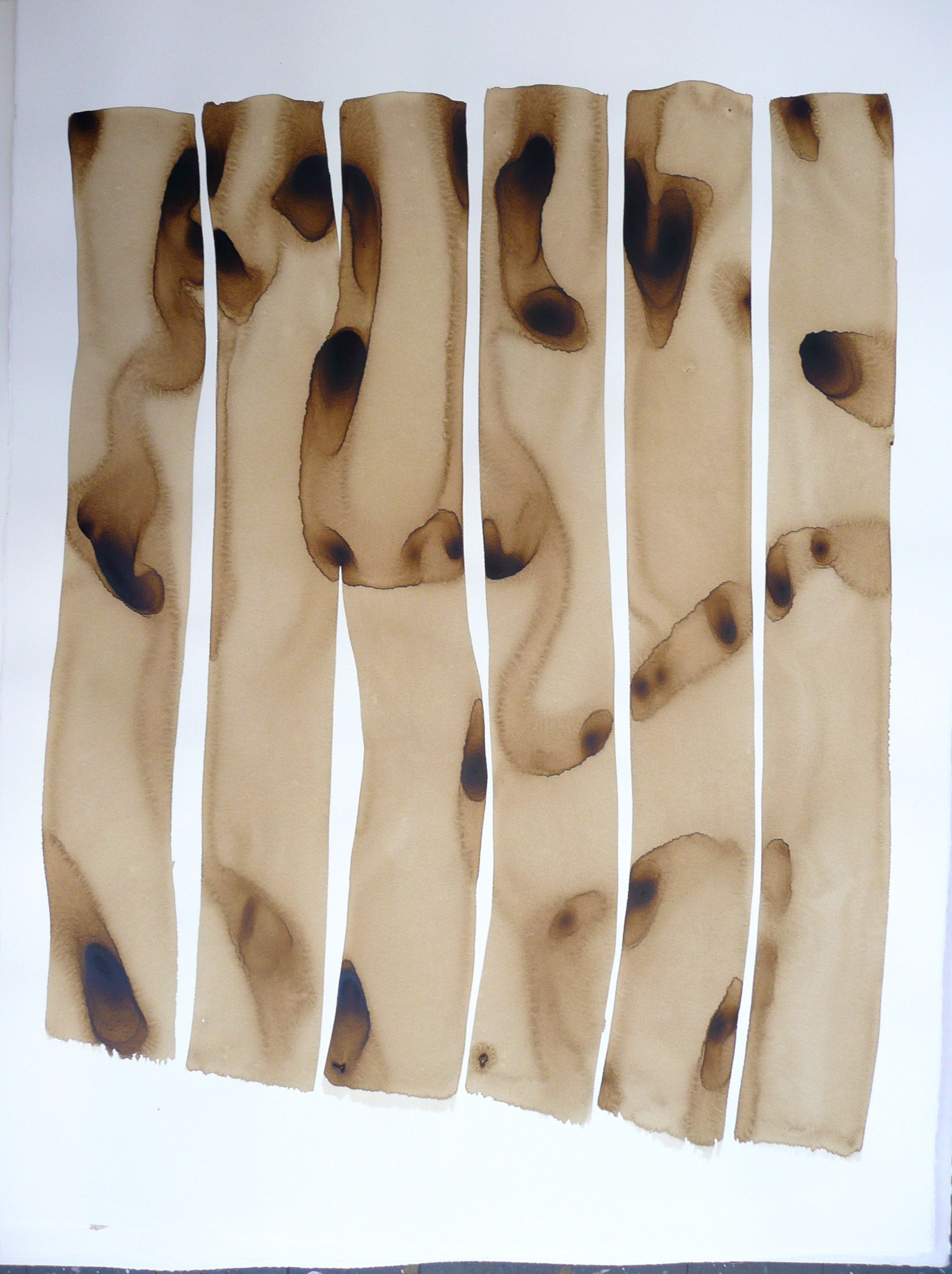
I also experiment with plant based paint.  The same granulation effect occurred (though with much finer particles).  Here, for example, the colour extracted by water from the empty seed cases of Phormium tenax – Harakeke or the New Zealand flax plant.  The texture and colour of this dry paint varied, and in places where the paint pooled, the dark areas of colour produced a sheen on the surface of the dry paint.  (This P. tenax liquid contains no added substances and should probably be called a toner.)  Also, the paint dispersed and dried differently from commercial paint by showing varied pigment dispersal and paint body per batch of paint.  The artwork thereby inadvertently and indirectly reveals a new aspect of the plant and, in the artwork, the plant has a new lease of life.

Phormium tenax – Harakeke, organic pigment (toner), paper, 76 x 56 cm, 2008. In private collection.

And, if you got through all that  –  have a great painting day!