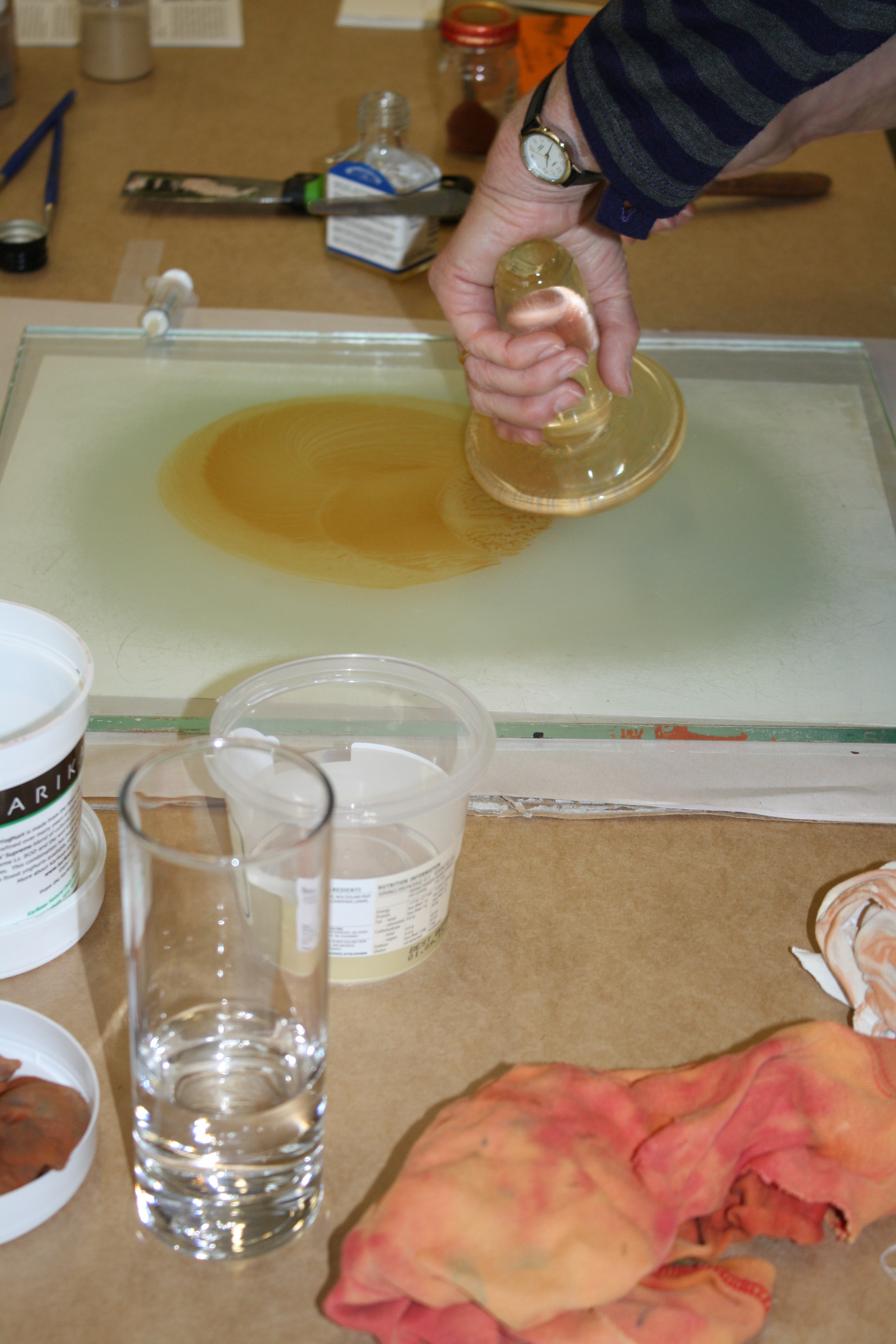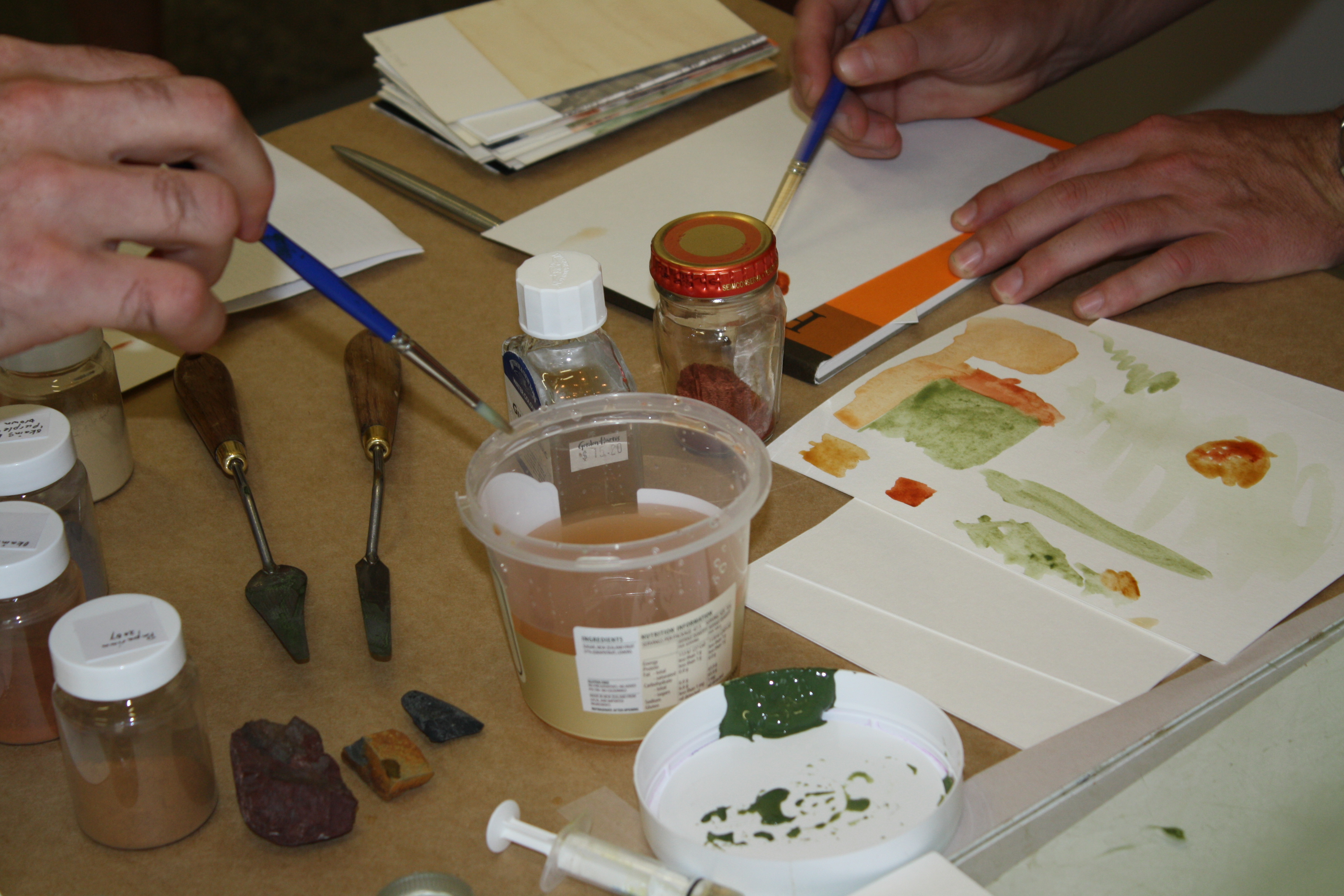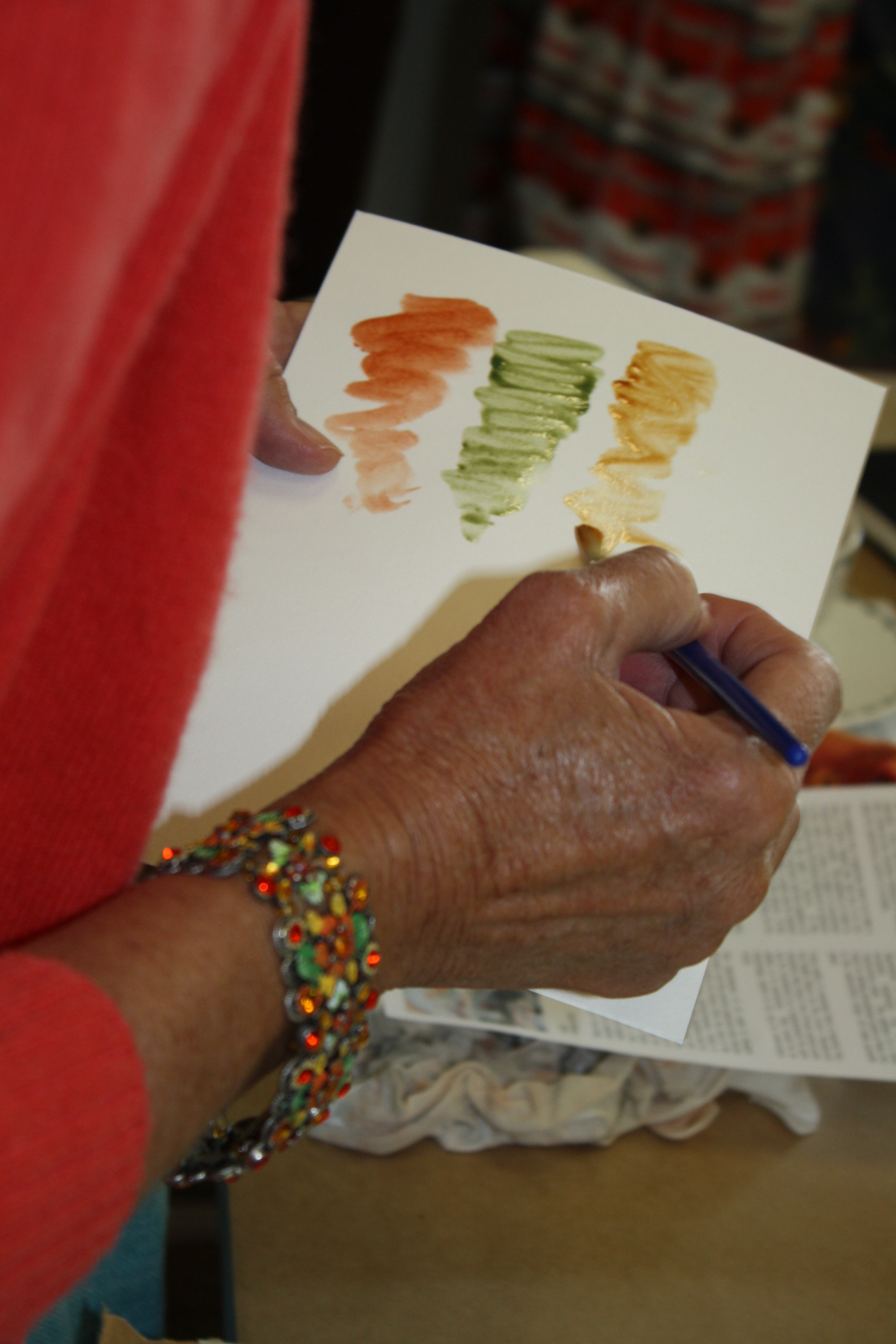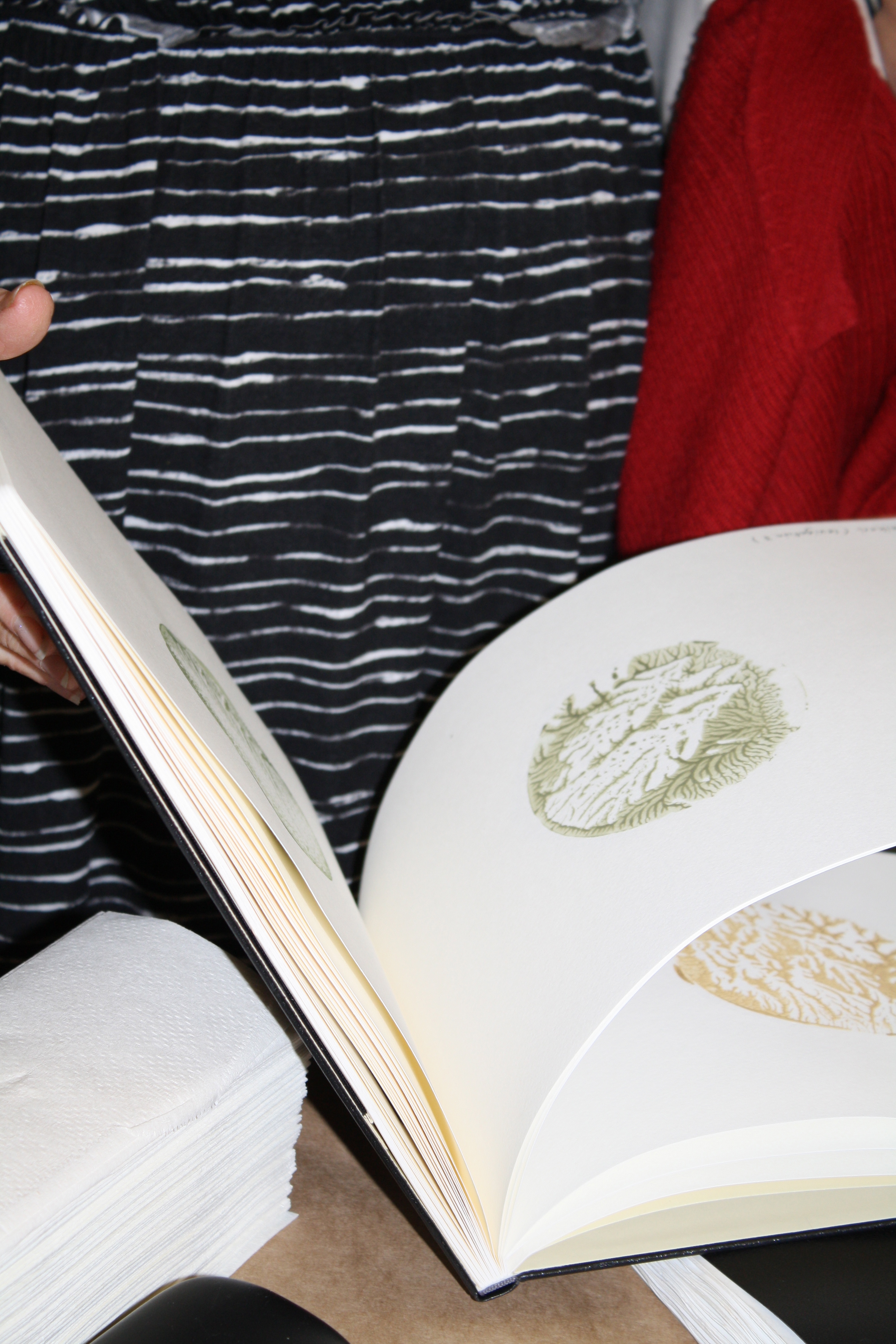
Paint making workshop at the Papakura Art Gallery, Auckland

Image

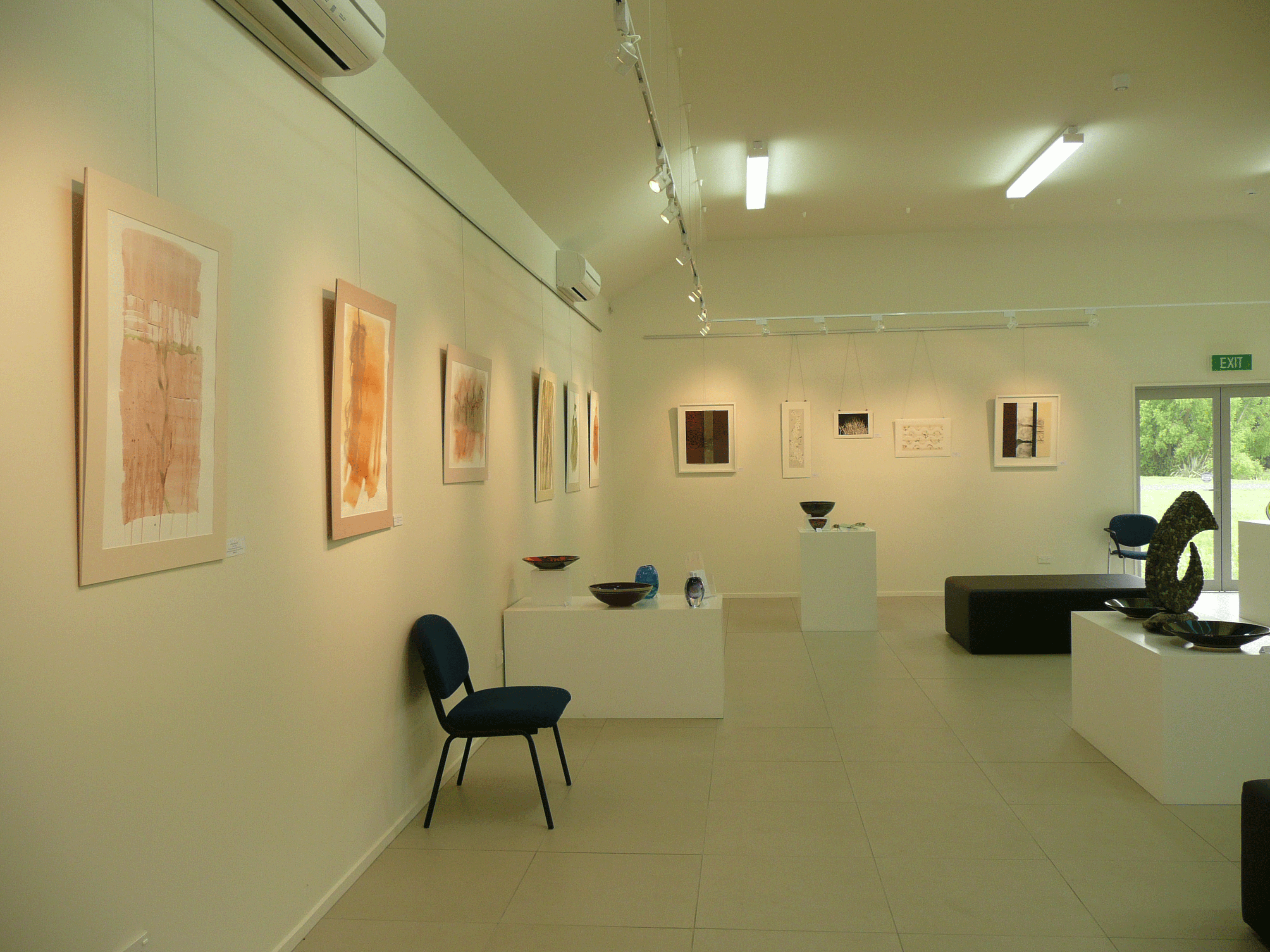
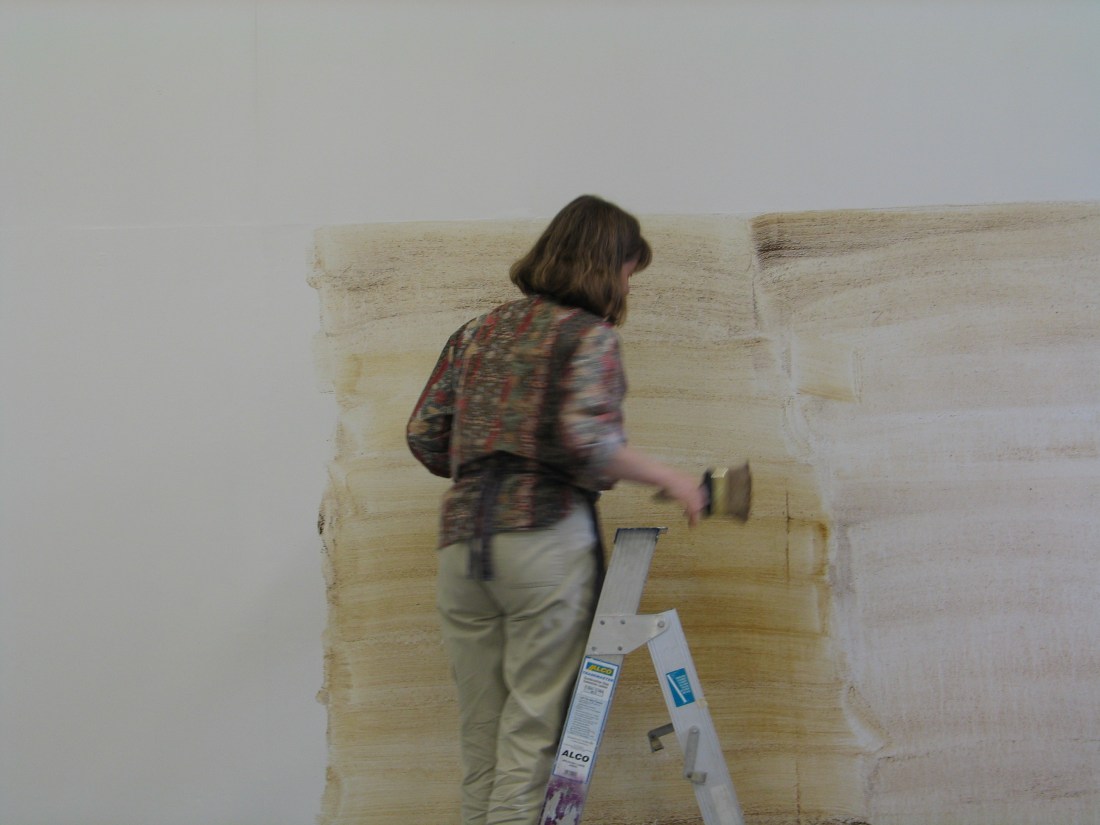
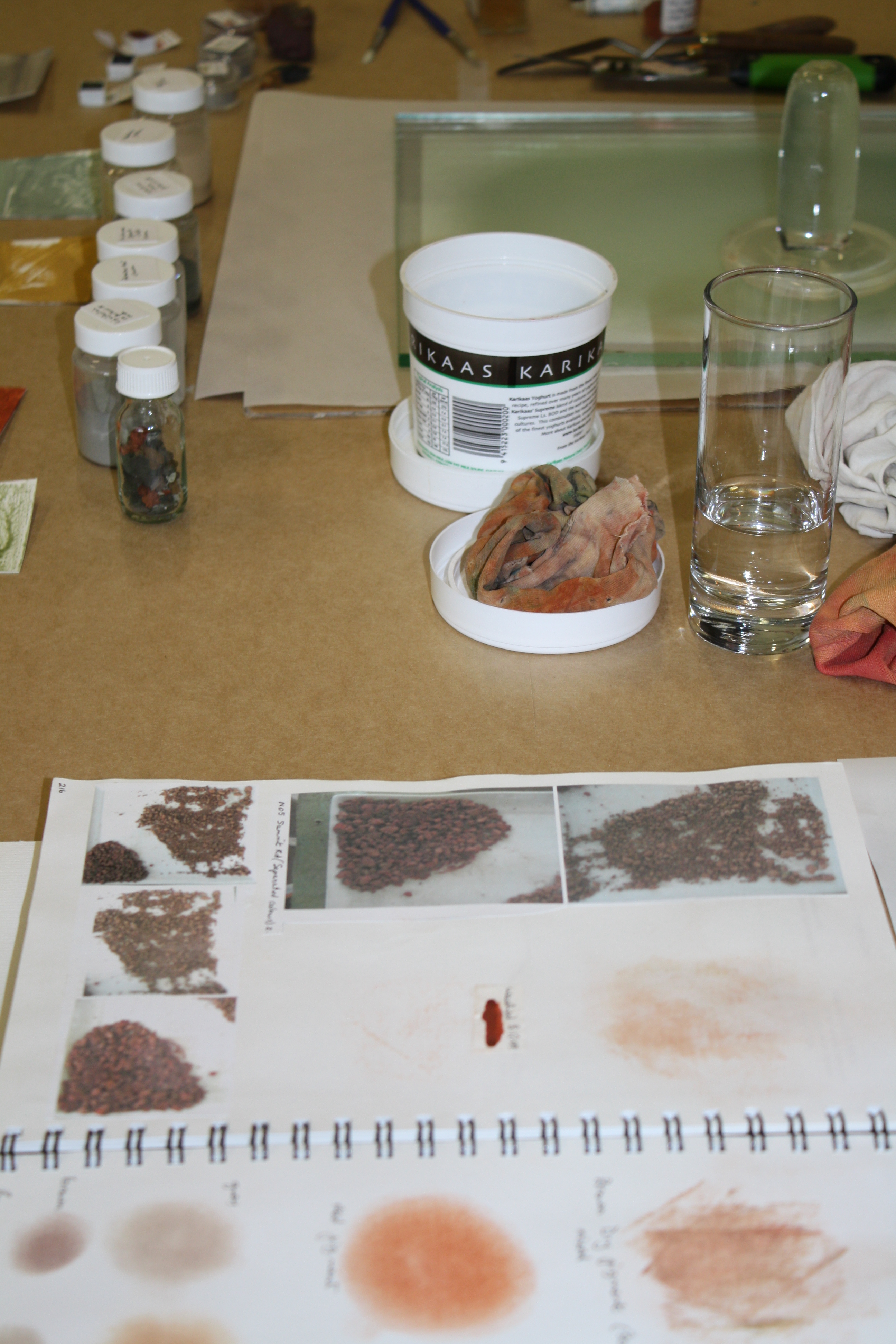
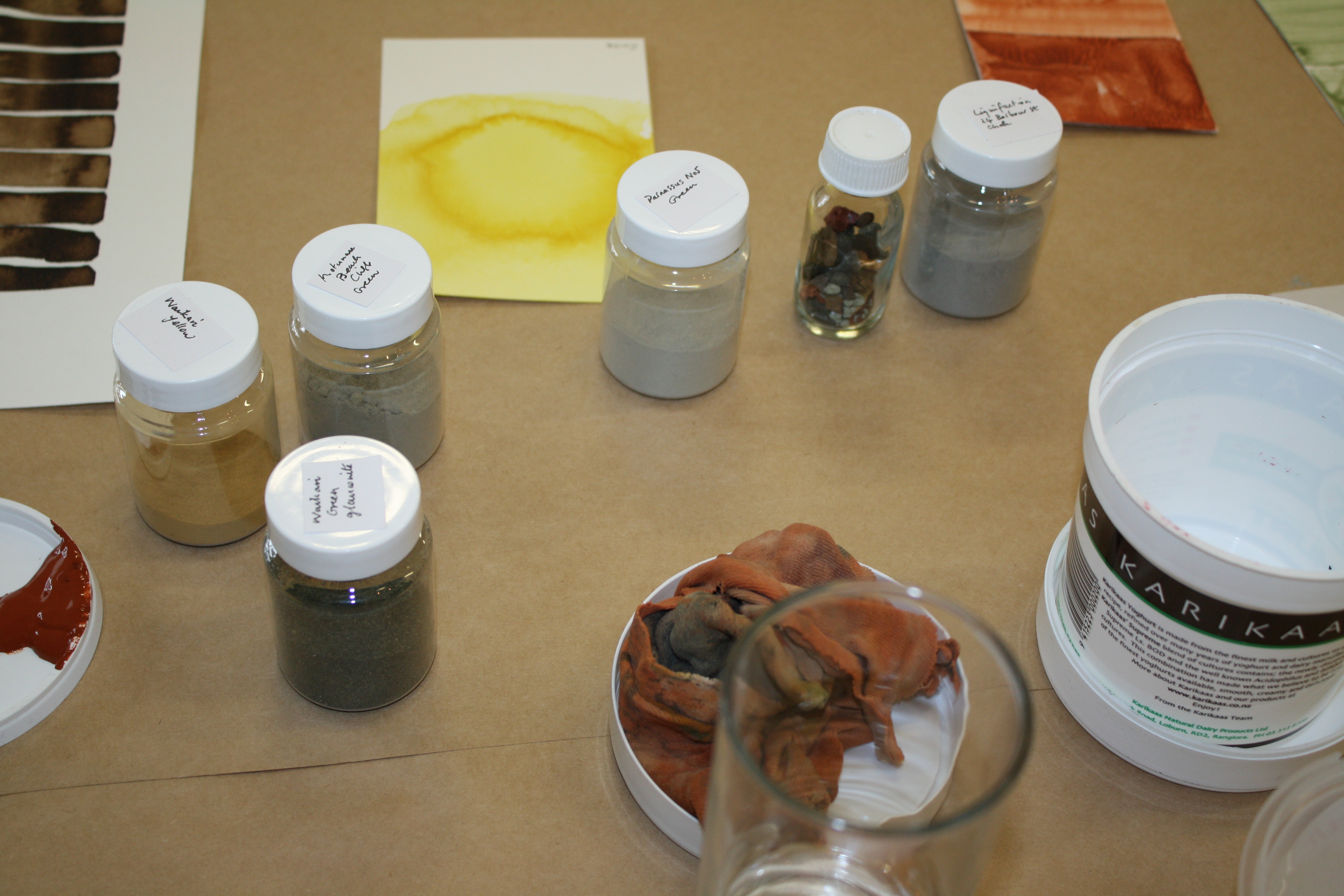
During the current exhibitions Colour of Distance and What’s on Your Plate at the Papakura Art Gallery, I had the marvellous opportunity to hold a workshop on paint making from locally found pigments.  Three different colours were made during the workshop, and I brought many colour swatches made from Canterbury mineral and organic pigments for attendees to see and touch.

In the photo above, the What’s on Your Plate artwork just to the right and behind me on the wall, caught my attention because it shows a tin can label that lists many of the items that are produced from by-products of the petroleum industry.  I read through them all, hoping to see ‘pigments’ listed – but it wasn’t  –  probably round the back of the can!  One of the reasons that started my interest in making paint was that so many colours are derived from oil.
Image

Image

Image

Image

Image

Image

Many thanks to Tracey Williams and Kate Hart of the gallery for the use of these photos taken during the workshop.

Colour of Distance is the latest group show by Cristina Silaghi, Helga Goran, Jocelyn Mills, Kim Lowe and myself, and it closes on the 7th April.

For more information and photos of these two exhibitions at the gallery,  visit their Facebook page via this link:  Papakura Art Gallery .

Whitecliffs Pigments

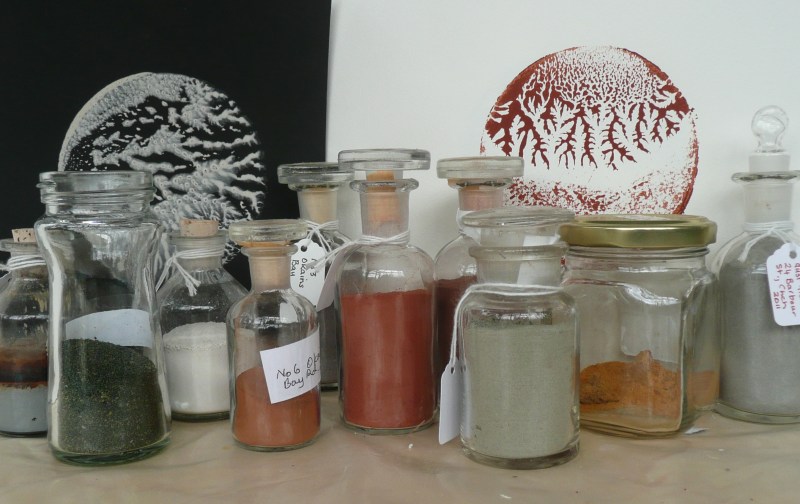
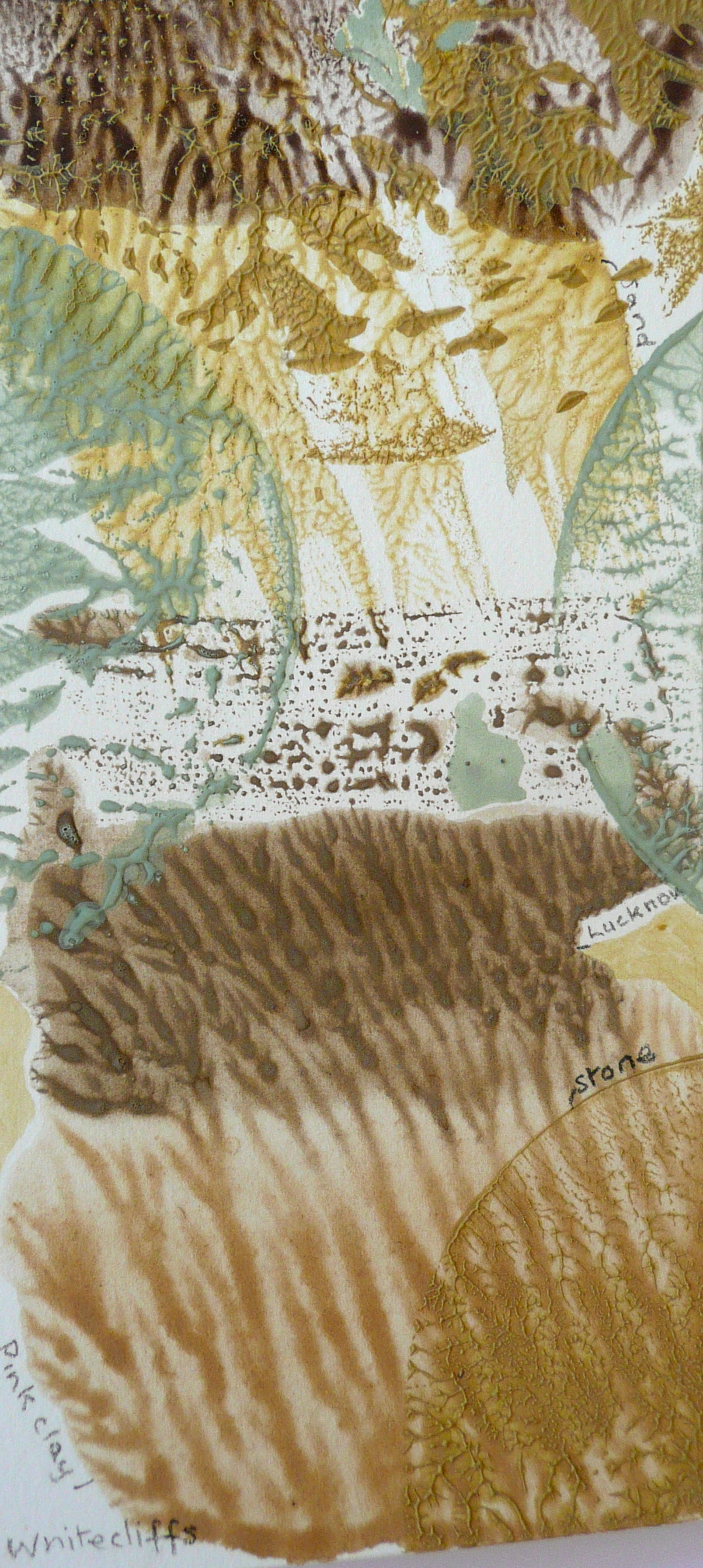
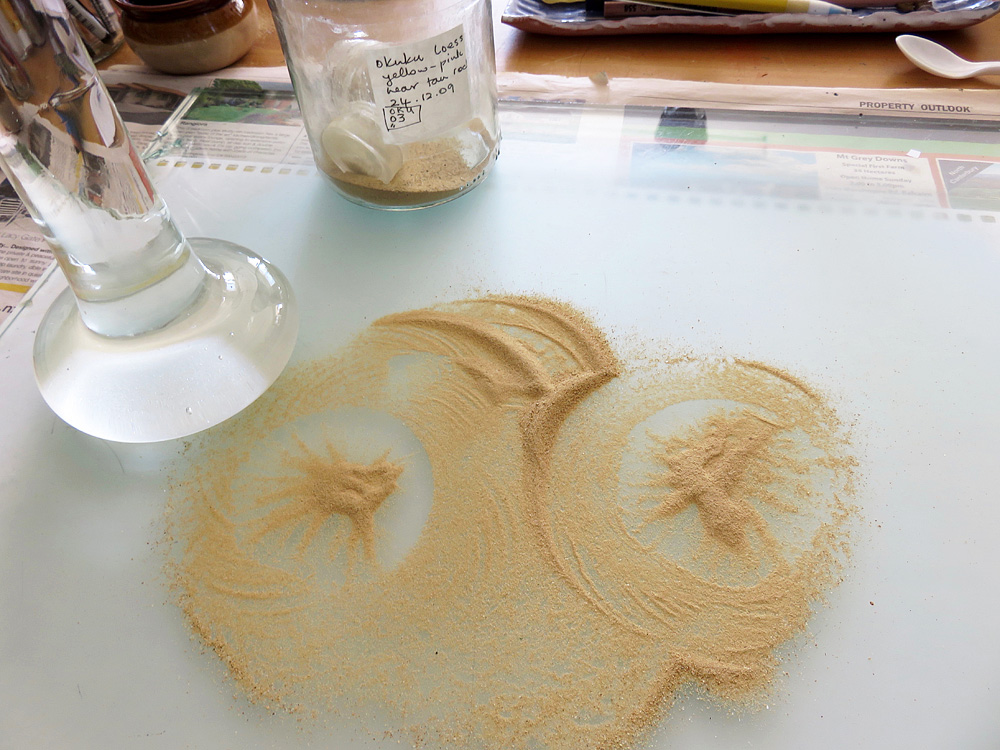
A selection of colours from Whitecliffs, in the Selwyn district of Canterbury.  The pigments are from rocks and clays that were used for pottery and glazes by my good friend June Inch, a potter, dyer and visual artist.  However, the dark purple-brown pigment at the top is from the Okains Bay area of Banks Peninsula.

I now have a selection of watercolours for sale on my Felt site at www.celiawilson.felt.co.nz

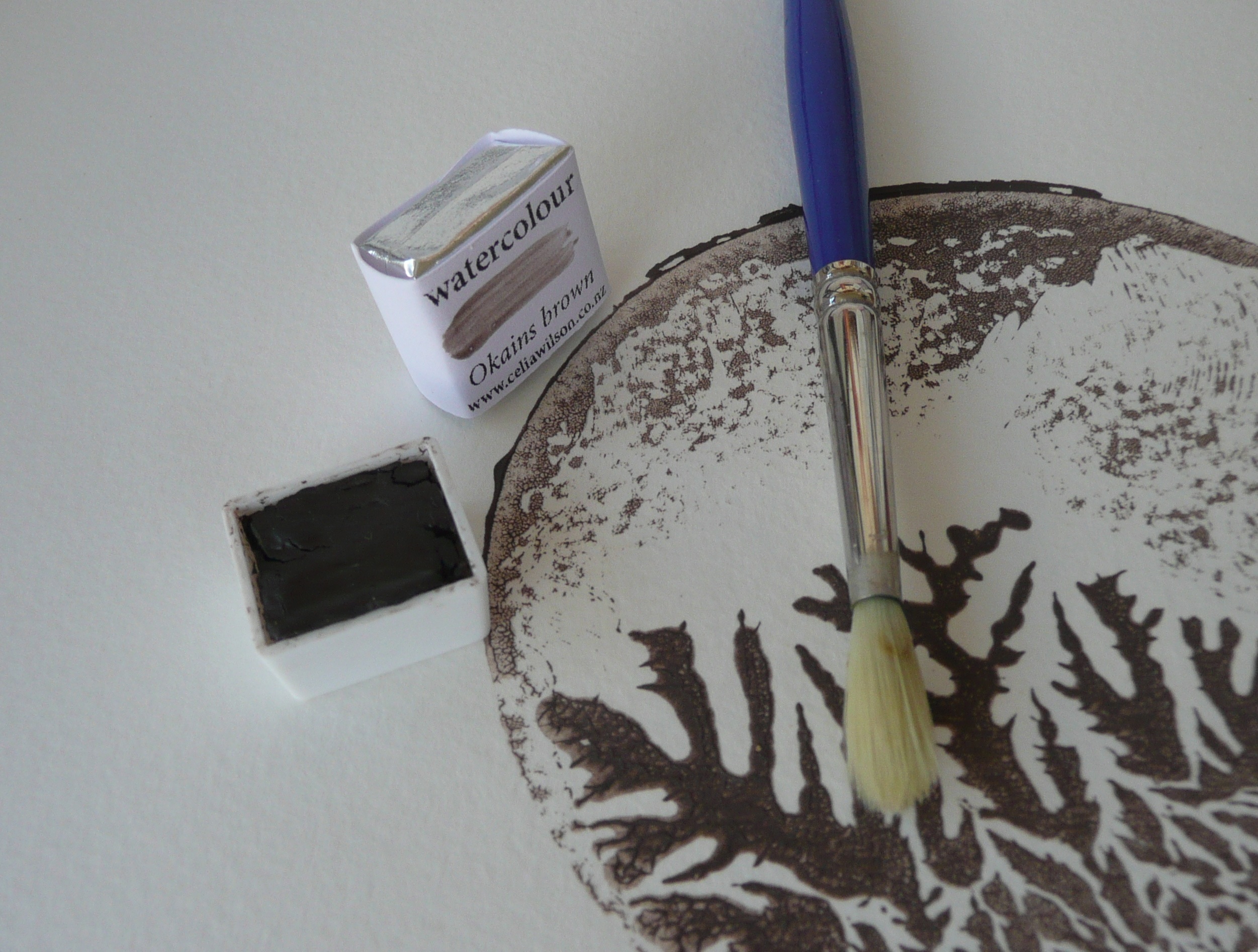
Okains Brown

I’m pleased to say that my paint making is getting better – not that there was a problem, but the paint was shrinking quite a lot as it dried.  Not surprising really as this is what clay does when it dries out.  I am an artist, not a chemist, so it is a trial and error process, especially as every pigment reacts differently.  I can now say that my half-pans of paint look more like the ‘real’ (commercial) thing.

I wrote an essay on locally found pigments for my last year at university.  I was motivated in this research because I feel we take artists’ paint for granted!  I just accepted that these colours come out of a tube or a pot, without a second thought of their origins.  Then I realised, these paints are made overseas from materials themselves imported from other places, and I became curious about what pigments might be found in New Zealand.

A painting’s main constituent – paint – and how paintings are physically made is not usually considered in art history or art theory but, of course, to a painter the paint, consciously and subconsciously, is of prime importance, as it is central to the act of painting.  The painting material itself also provides the artwork with context, subject matter, psychological content and visual stimulation.  I feel it is an overlooked component.  A painting’s material presence is often overlooked, partly because we are so used to viewing images in print or on the screen.  There is much on the subject of paint for conservation practices, and advice about art materials and techniques on the internet and in manuals, but a conversation on the ‘material memories’ (James Elkins, What Painting Is: How to Think About Oil Painting, Using the Language of Alchemy, 1999) contained in and shown by the paint or the act of painting is not usually considered.

If a painting, both in its subject matter and in its materials, is regarded as a repository of history, current circumstances – economic, environmental and ethical – encourage me to investigate the possibilities of using locally found pigments as an alternative or companion to commercial, imported pigments and paints.  The experimental use of these pigments will provide information as to how such material itself performs, in most cases unlike commercial paint which offers (thankfully!) large quantities of paint of uniform consistency and pigment distribution.  My use of relatively unrefined pigments has produced some exciting effects.

I find that locally found pigments each have an intrinsic or essential character.  The wish to explore and exploit these idiosyncratic qualities, specific qualities and problems, is perhaps seeking to return to individuality or a rejection of bland uniformity.  I started to experiment with ocherous and clay based paint in order to research the different optical effects (for example, chroma intensity or gloss or matt surfaces) and handling properties of paints, and to maximize the granulation and flocculation effects of some pigments in water-based mediums.

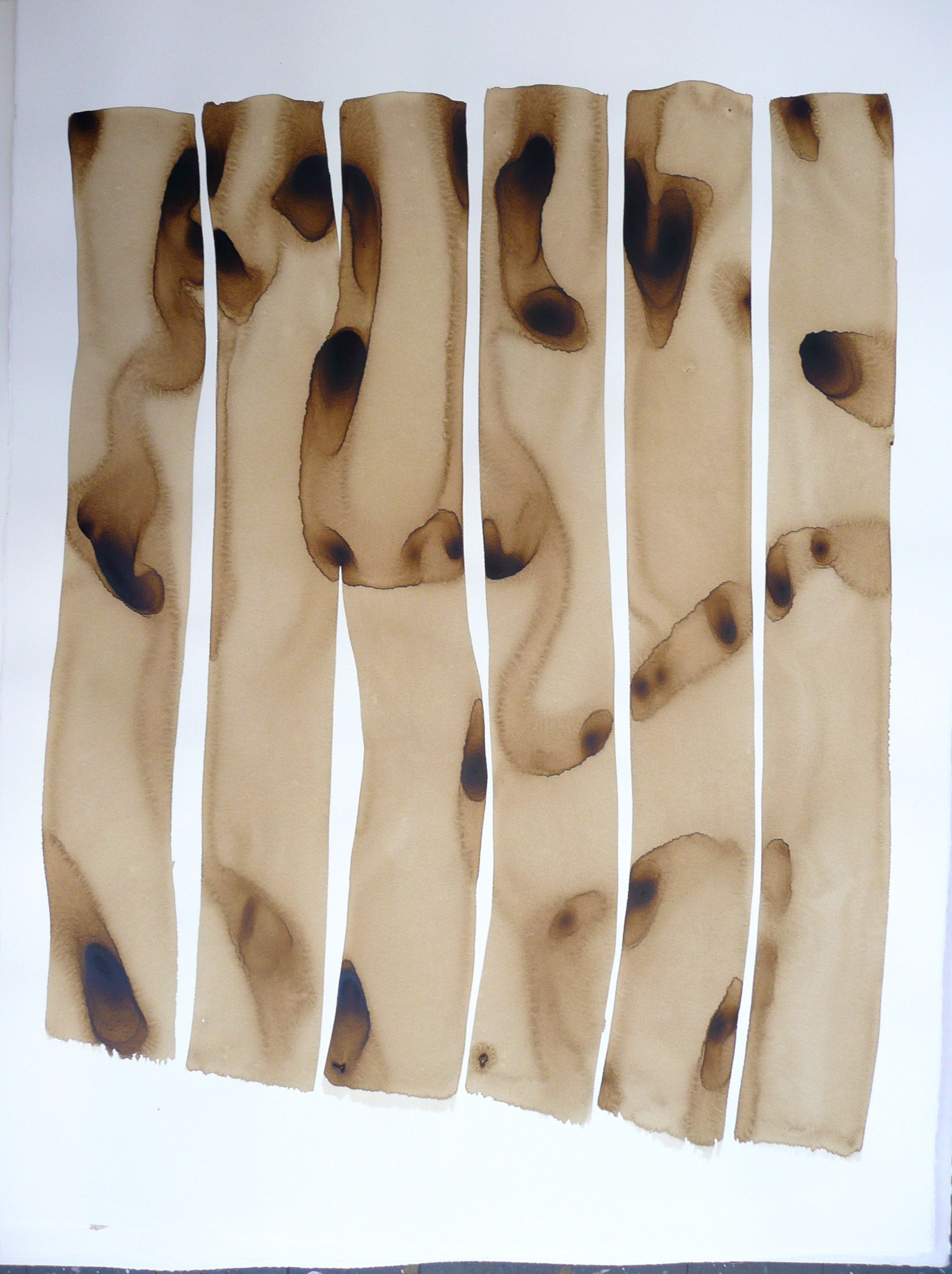
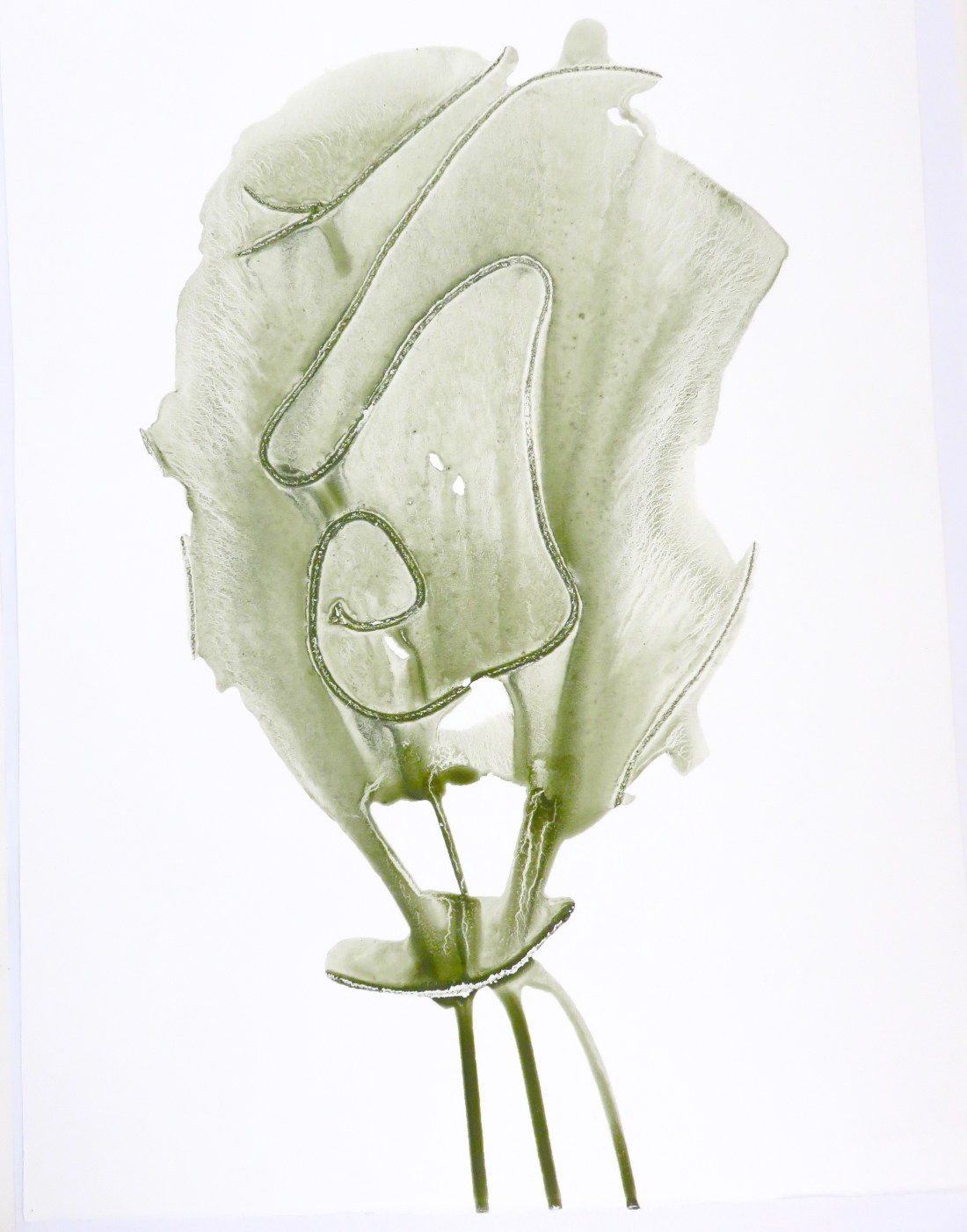
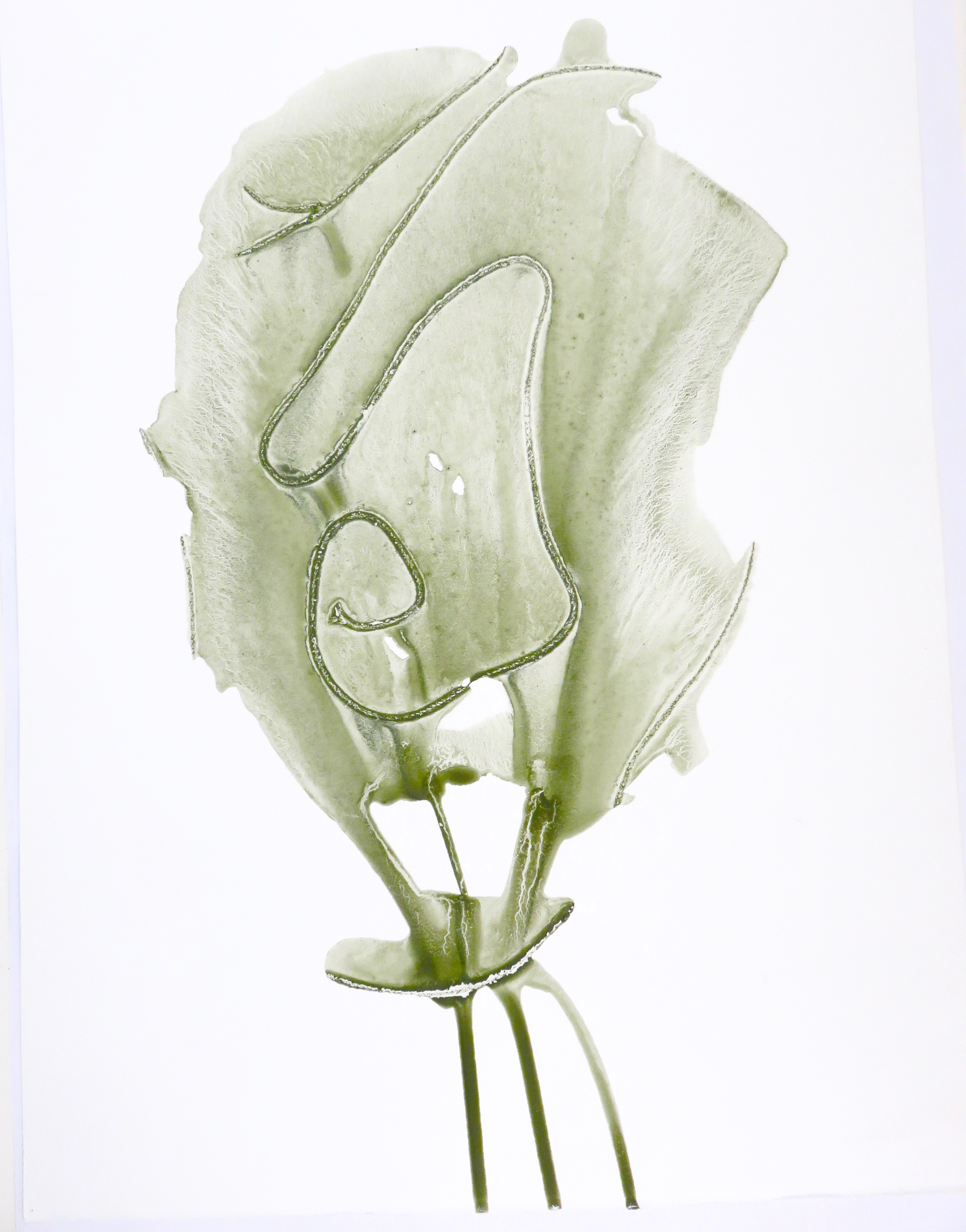
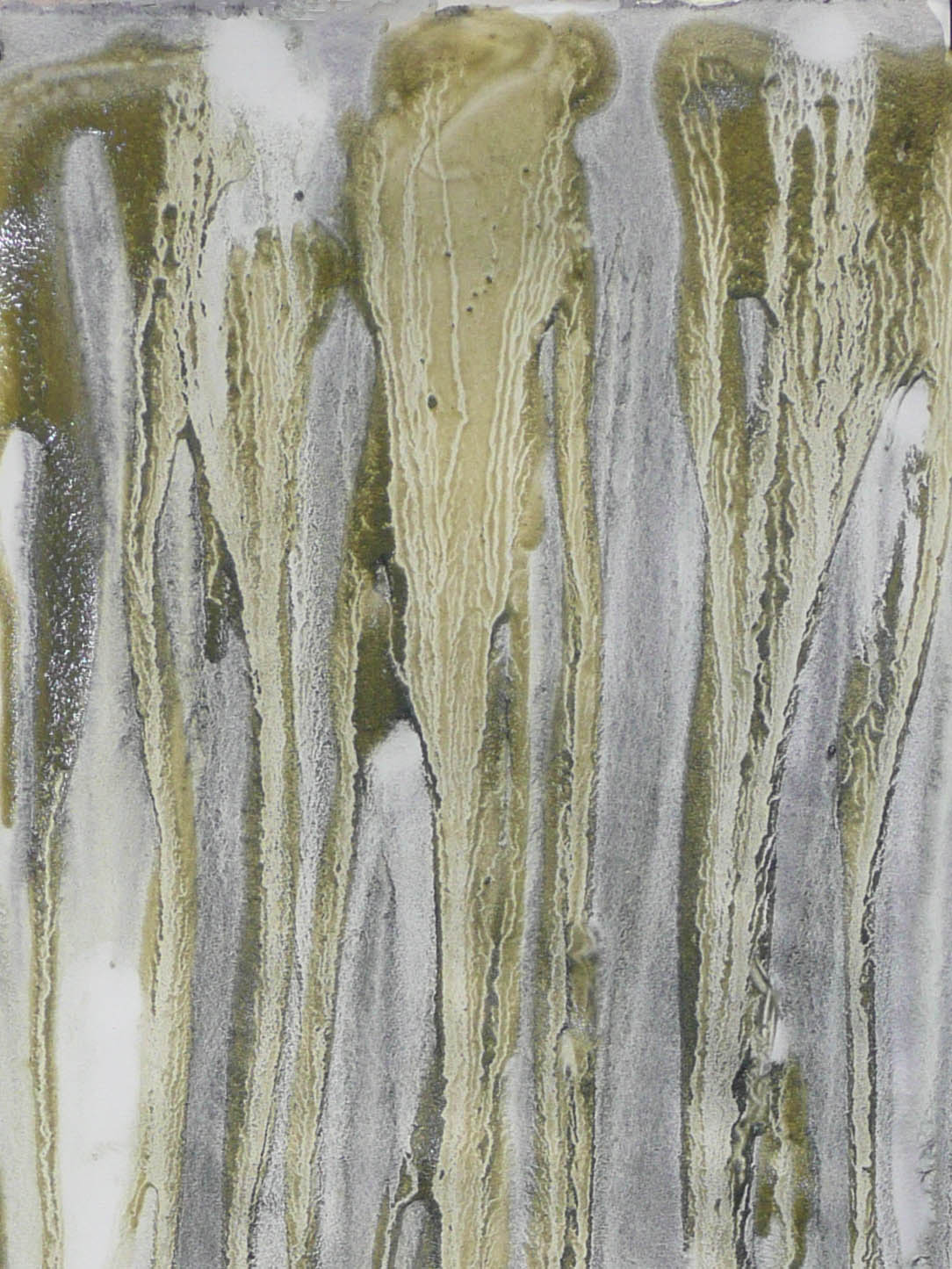
I also experiment with plant based paint.  The same granulation effect occurred (though with much finer particles).  Here, for example, the colour extracted by water from the empty seed cases of Phormium tenax – Harakeke or the New Zealand flax plant.  The texture and colour of this dry paint varied, and in places where the paint pooled, the dark areas of colour produced a sheen on the surface of the dry paint.  (This P. tenax liquid contains no added substances and should probably be called a toner.)  Also, the paint dispersed and dried differently from commercial paint by showing varied pigment dispersal and paint body per batch of paint.  The artwork thereby inadvertently and indirectly reveals a new aspect of the plant and, in the artwork, the plant has a new lease of life.

Phormium tenax – Harakeke, organic pigment (toner), paper, 76 x 56 cm, 2008. In private collection.

And, if you got through all that  –  have a great painting day!

Okains Brown

I’m pleased to say that my paint making is getting better – not that there was a problem, but the paint was shrinking quite a lot as it dried.  Not surprising really as this is what clay does when it dries out.  I am an artist, not a chemist, so it is a trial and error process, especially as every pigment reacts differently.  I can now say that my half-pans of paint look more like the ‘real’ (commercial) thing.

Image

I wrote an essay on locally found pigments for my last year at university.  I was motivated in this research because I feel we take artists’ paint for granted!  I just accepted that these colours come out of a tube or a pot, without a second thought of their origins.  Then I realised, these paints are made overseas from materials themselves imported from other places, and I became curious about what pigments might be found in New Zealand.  

A painting’s main constituent – paint – and how paintings are physically made is not usually considered in art history or art theory but, of course, to a painter the paint, consciously and subconsciously, is of prime importance, as it is central to the act of painting.  The painting material itself also provides the artwork with context, subject matter, psychological content and visual stimulation.  I feel it is an overlooked component.  A painting’s material presence is often overlooked, partly because we are so used to viewing images in print or on the screen.  There is much on the subject of paint for conservation practices, and advice about art materials and techniques on the internet and in manuals, but a conversation on the ‘material memories’ (James Elkins, What Painting Is: How to Think About Oil Painting, Using the Language of Alchemy, 1999) contained in and shown by the paint or the act of painting is not usually considered.

If a painting, both in its subject matter and in its materials, is regarded as a repository of history, current circumstances – economic, environmental and ethical – encourage me to investigate the possibilities of using locally found pigments as an alternative or companion to commercial, imported pigments and paints.  The experimental use of these pigments will provide information as to how such material itself performs, in most cases unlike commercial paint which offers (thankfully!) large quantities of paint of uniform consistency and pigment distribution.  My use of relatively unrefined pigments has produced some exciting effects.

I find that locally found pigments each have an intrinsic or essential character.  The wish to explore and exploit these idiosyncratic qualities, specific qualities and problems, is perhaps seeking to return to individuality or a rejection of bland uniformity.  I started to experiment with ocherous and clay based paint in order to research the different optical effects (for example, chroma intensity or gloss or matt surfaces) and handling properties of paints, and to maximize the granulation and flocculation effects of some pigments in water-based mediums.  

I also experiment with plant based paint and the same granulation effect occurred, though with much finer particles, as was found with the colour extracted from the empty seed cases of Phormium tenax – Harekeke or the New Zealand flax plant.  The texture and color of the dry paint varied, and in places where the paint pooled, the dark areas of color produced a sheen on the surface of the dry paint.  (This P. tenax liquid contains no added substances and should probably be called a toner.)  The paint dispersed and dried differently from commercial paint by showing varied pigment dispersal and paint body per batch of paint.  The artwork thereby inadvertently and indirectly reveals a new aspect of the plant and, in the artwork, the plant has a new lease of life.

And, if you got through all that  –  have a great painting day!

Nascent paint manufacture!

I usually make my paint and straightaway use it to make a painting.  I’ve been making watercolour paint to sell, but it’s not as easy as you would think!  The moisture in the paint evaporates, of course, but shrinks and leaves cracks as it does so.  I see from Studio Art Supplies (Auckland) that the Schmincke company takes ages to complete the process of filling pans of paint, letting the layers dry before adding another.

Watercolour paint is great, it is revivable after going dry and solid – you can use every last little scrap of it.  That’s good as it takes a while to grind the pigment down to powder and then use the muller to incorporate the pigment into the gum arabic vehicle. Another exciting thing about making paint is the way the finished paint colour suddenly appears whilst you are making it and the pigment becomes fully dispersed in the vehicle.

The various colours definitely have a psychological effect!  I find browns boring, the crystal-clear glauconite green beautiful, and the reds elating.  I just wish I could find a good blue, but as we all know from art history, its an elusive (and therefore expensive) hue.

I’ll keep battling on, trying to understand how the different pigments dry, and hopefully have a few half pans ready.  Thanks for the photos, Andrew!

Image

Image

Forms of Attention exhibition 2010

Gallery views of the  Forms of Attention  group exhibition by Helga Goran, Kim Lowe, Cristina Silaghi and Celia Wilson, at the Arts in Oxford Gallery, Oxford, North Canterbury, held during 24 October to 21 November 2010.  Click on the link above to see the Forms of Attention catalogue.

.

Natural pigments for an art practice

My (current) interest circles around the earth and organic pigments of the North Canterbury region of the South Island of New Zealand.

Copyright © Celia Wilson 2021. All rights reserved, may not be reproduced without prior permission except for reference or educational use.