Catching Up

Have not had the time to post much in the past couple of years. So here goes…

Clay, in one form or another seems to keep popping up in my artworks.
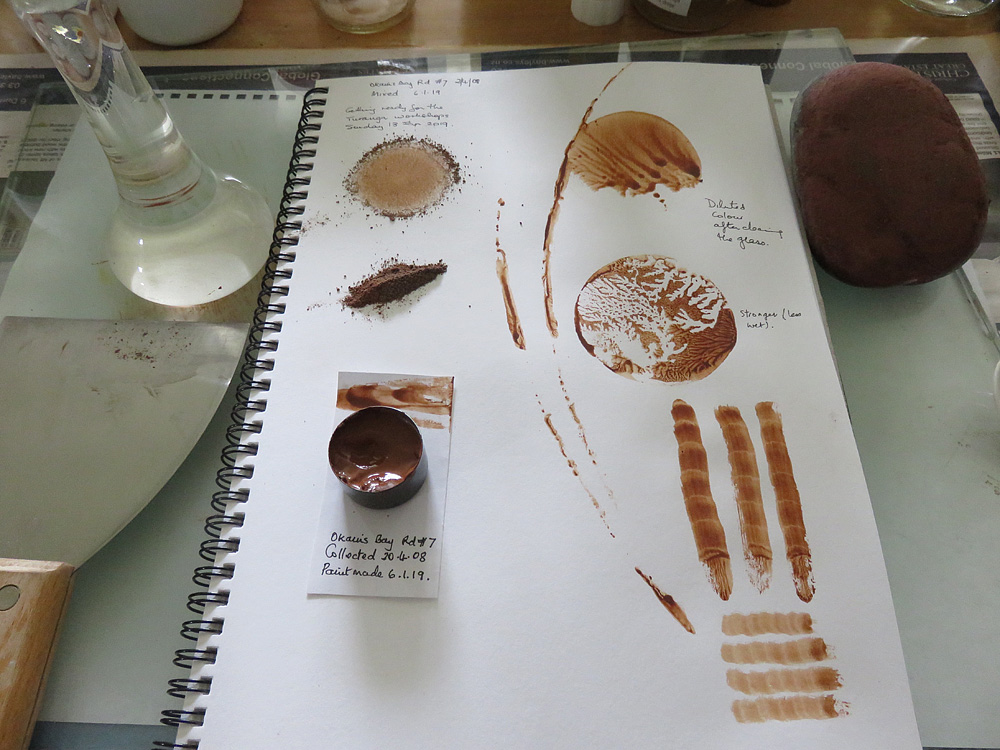
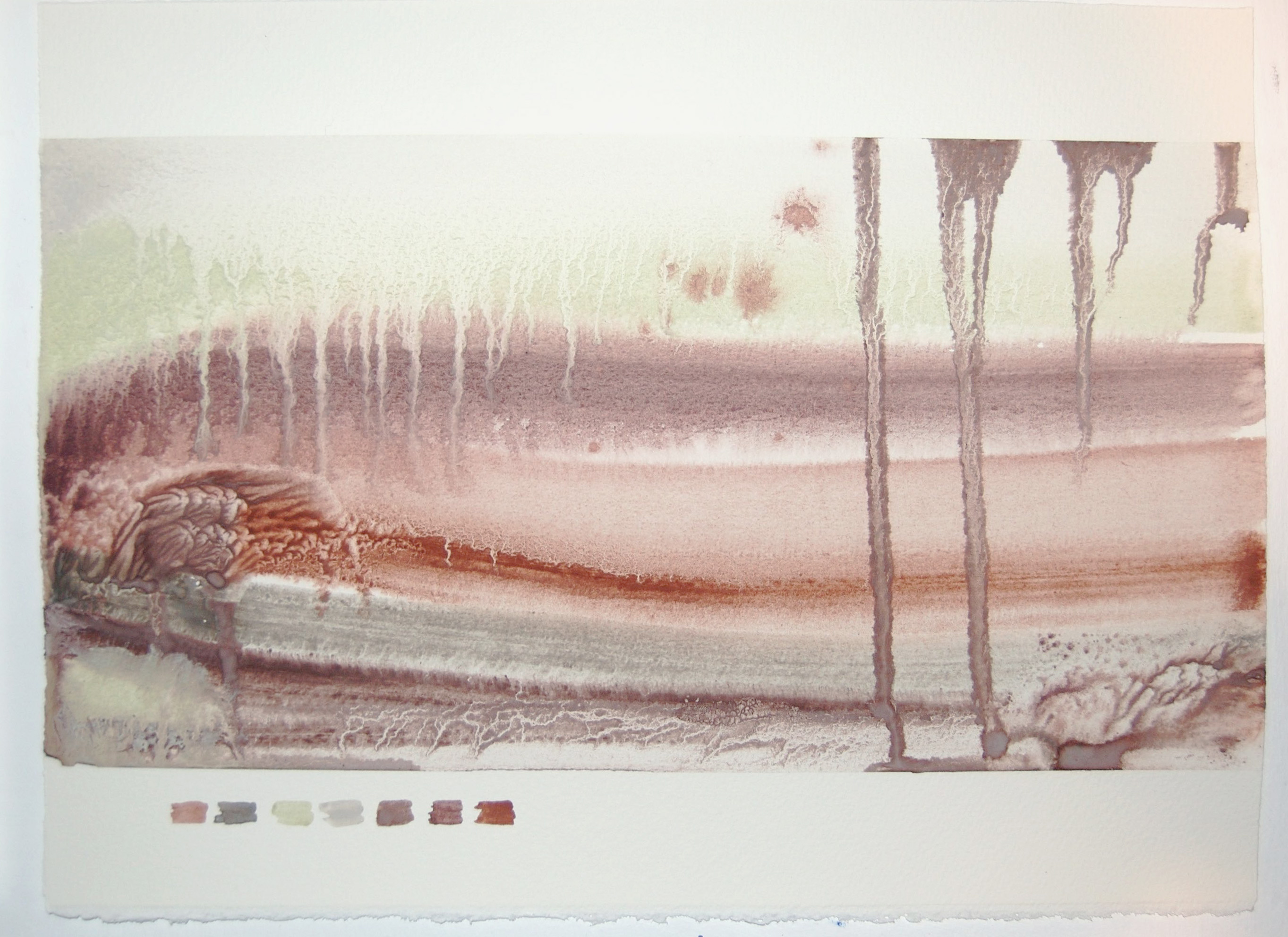
Here I was getting ready for the Turanga library workshops in January. Some of the tools of the trade, including at the top right my first muller in 2007 – a stone with one flat side to it. You can still see the colour of the last pigment that was ground with it – it worked ok, but you can get a finer powder using the glass muller to finish the process. I used a concrete tile as the grinding base. I now use a stone pestle and mortar to initially grind the shattered rock or clay. Making paint is the art process I seem to want to return to. To see what colour will appear during the printmaking process.

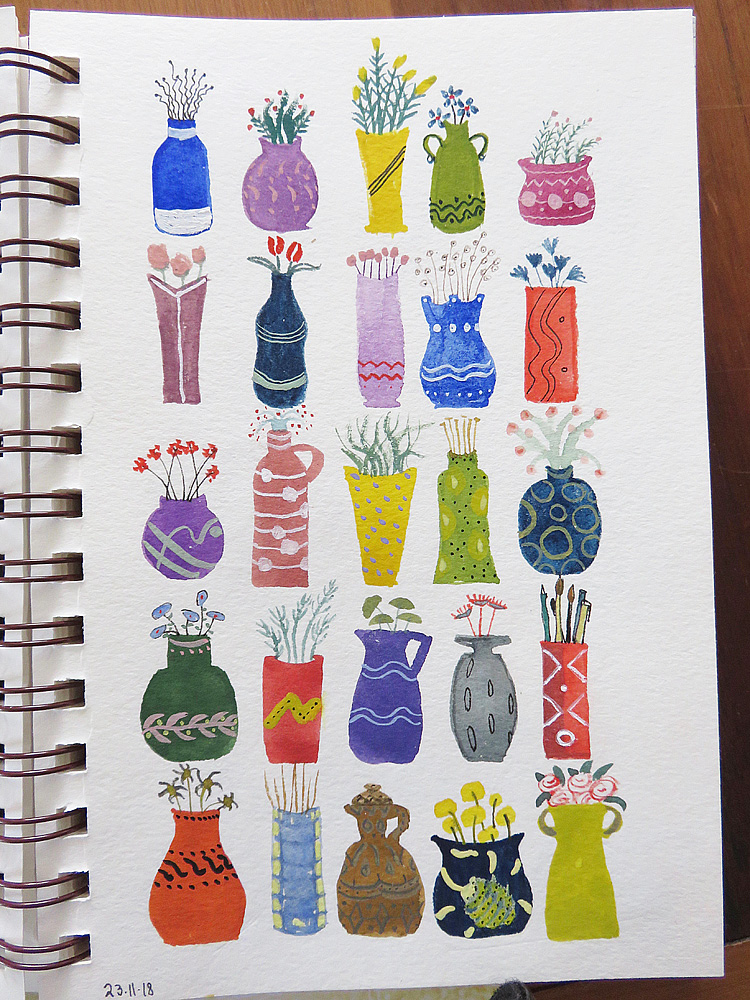
Pot and vessel shapes are another obsession. I like the quirkiness of painting images of ceramic pots in my clay-based paints.
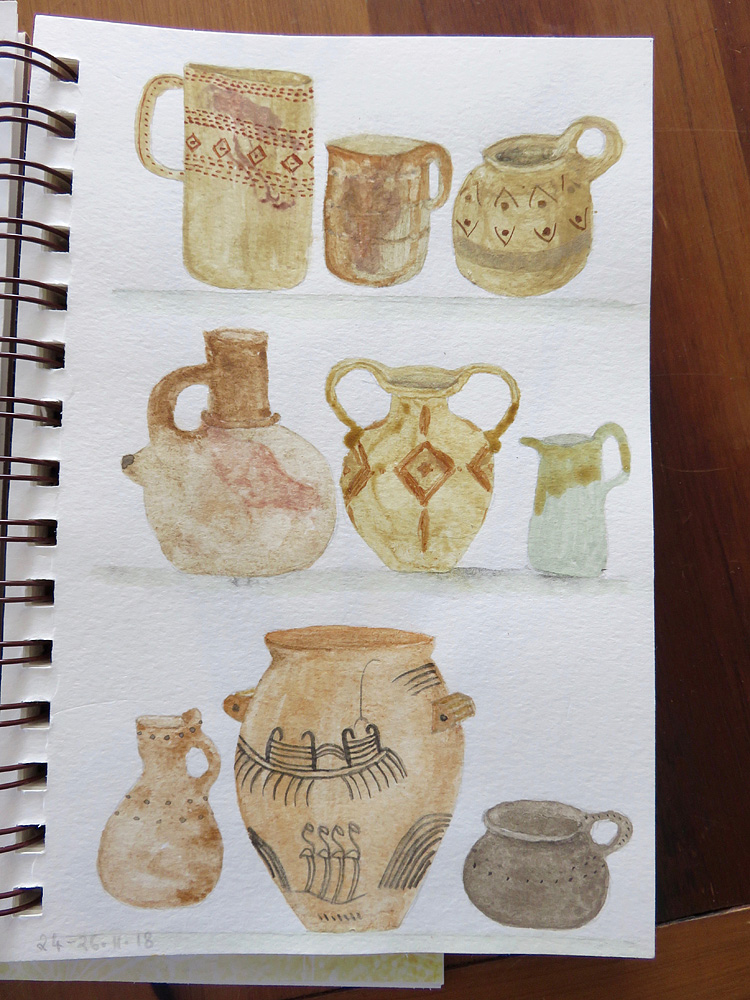
But I do also use ‘ordinary paint’ – see what happens when I follow one of Peggy Dean’s Skillshare classes! (‘Discover your creative style’.)
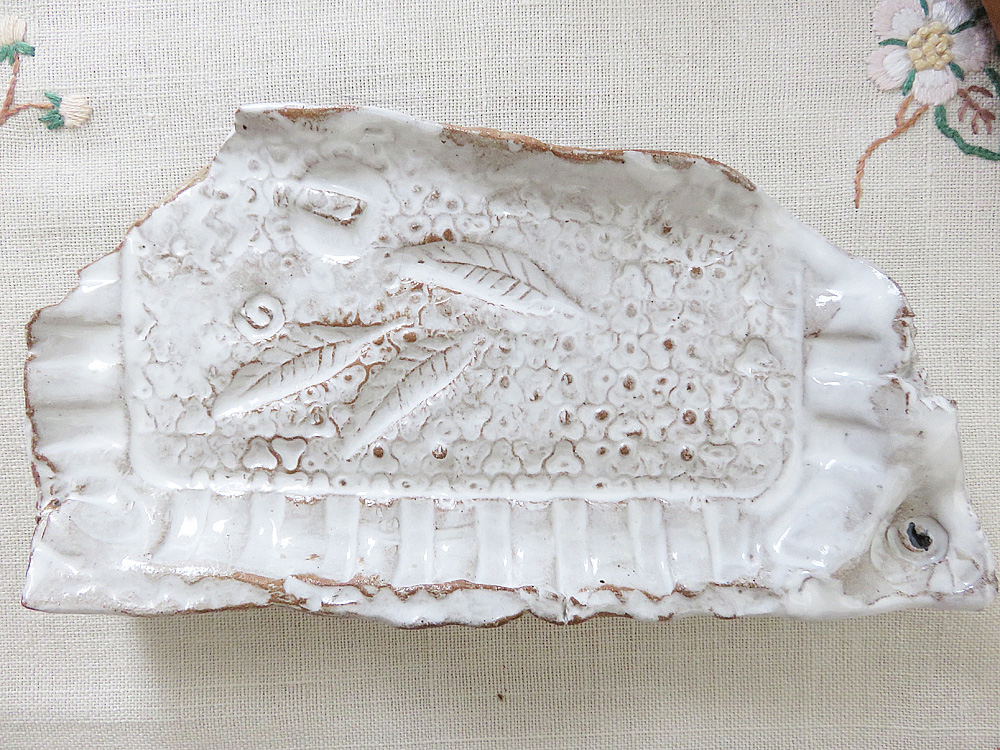
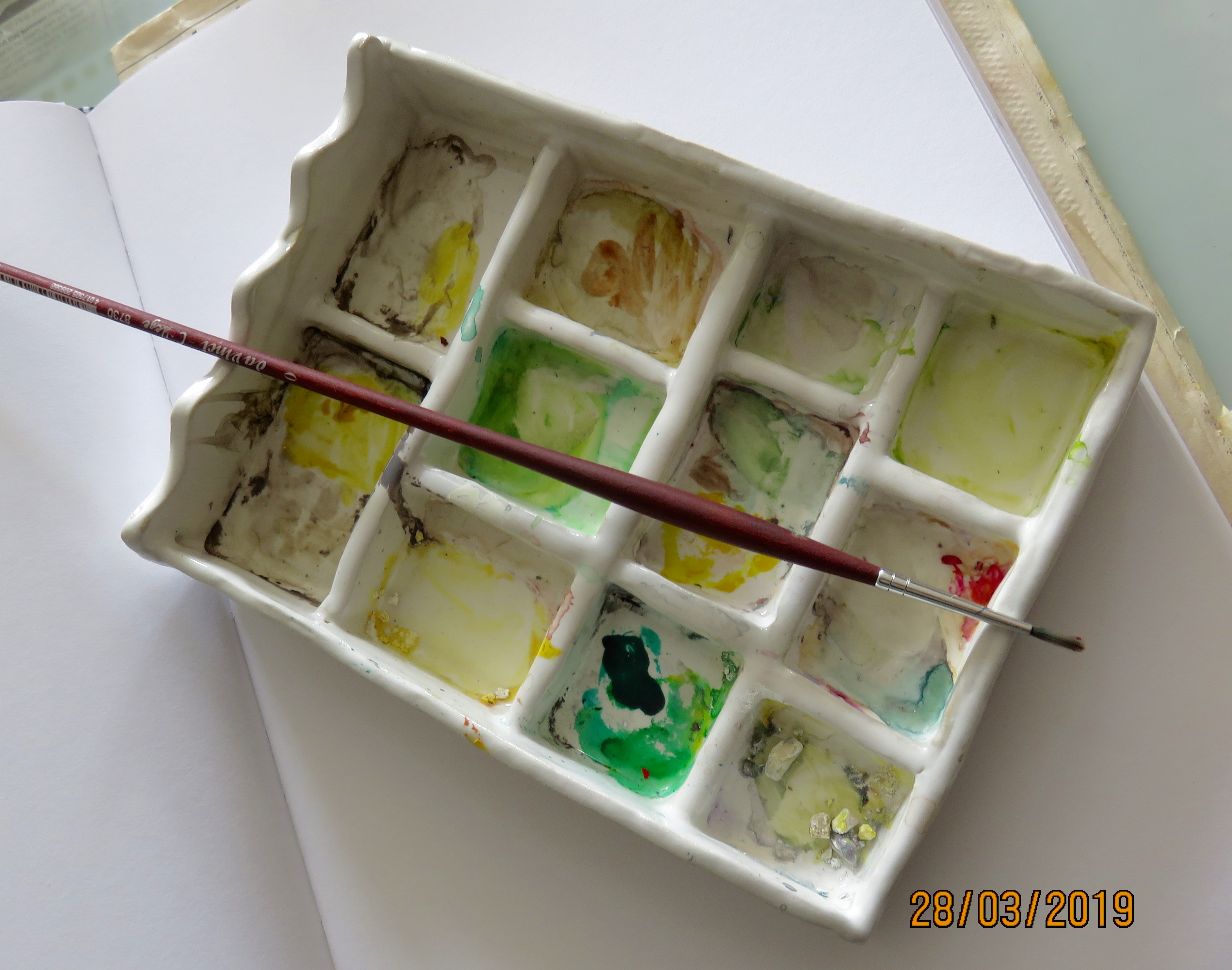
But there’s more… like actually making ceramic objects which I have been doing over the past year with Ruth Stanton McLeod’s guidance. It is a tray, not a pot this time however.
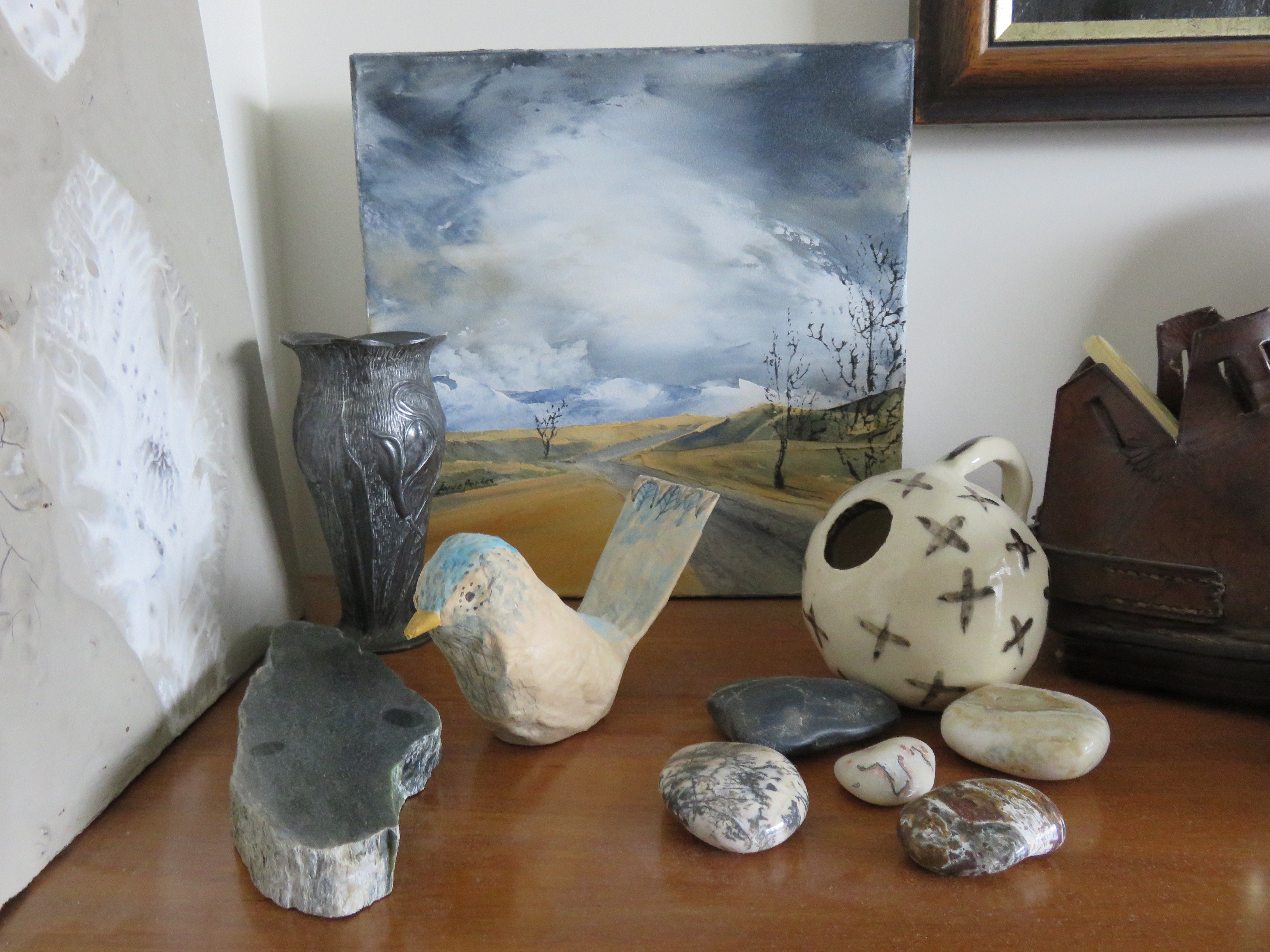
A few objects in front of Janie Porter’s landscape painting: My daughter’s papier maché bird; a horse’s leather shoe (used in Victorian times to protect the grass when grass cutting being done, so I was told); pebbles and a slice of rock; an art nouveau pewter pot; and one of my first ceramic pots. On the left is more Oxford chalk and clay watercolour on board.

Below is a rock (kindly given to me and collected by my dear friend June Inch) from near the top of Mt Oxford – and the paint. The colour comes through as a little too green in the photograph, and I’ve tried to correct it …
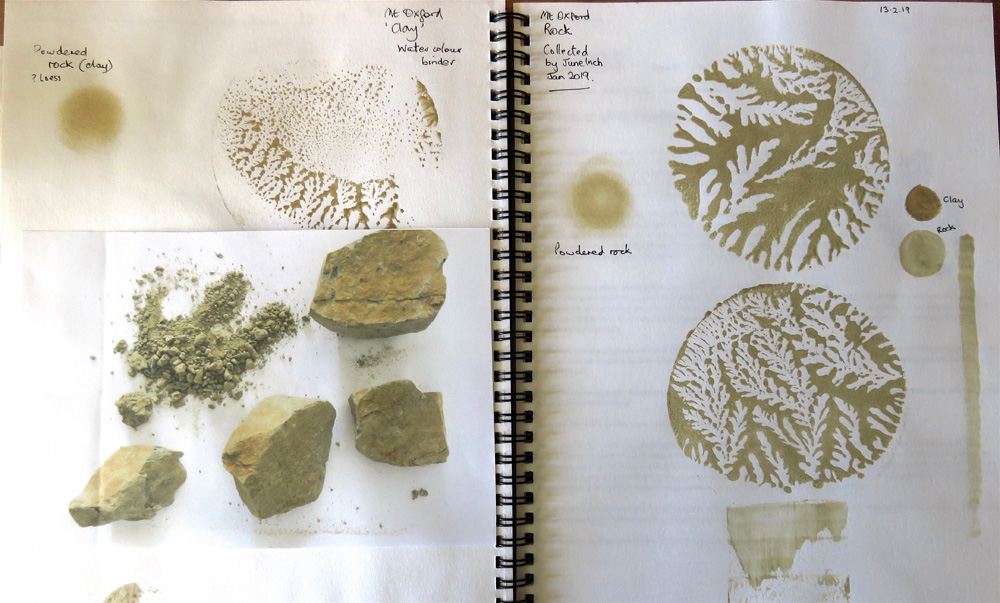
Finally, here is a ceramic-watercolour combo: one of my pottery efforts – works great!
LOCALity

I took part in this exhibition, and showed some of my paintings made with ink from empty seed pods from Harakeke (NZ flax plant).  I also held a paintmaking workshop.

Here is the published information:

Last days for the exhibition LOCALity at Arts in Oxford, 72 Main St, Oxford. Exhibition closes Tues 10 July 2018.

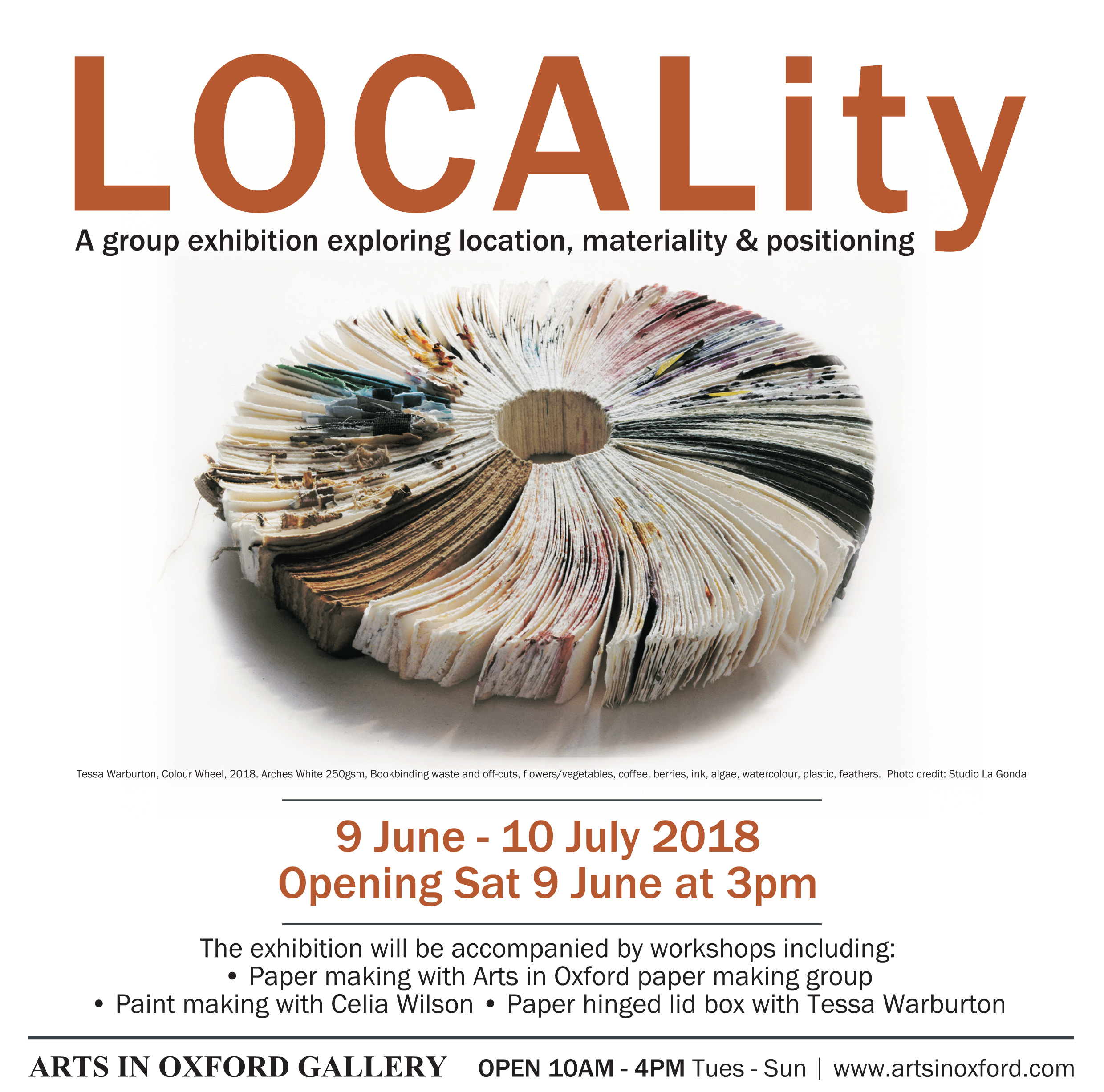
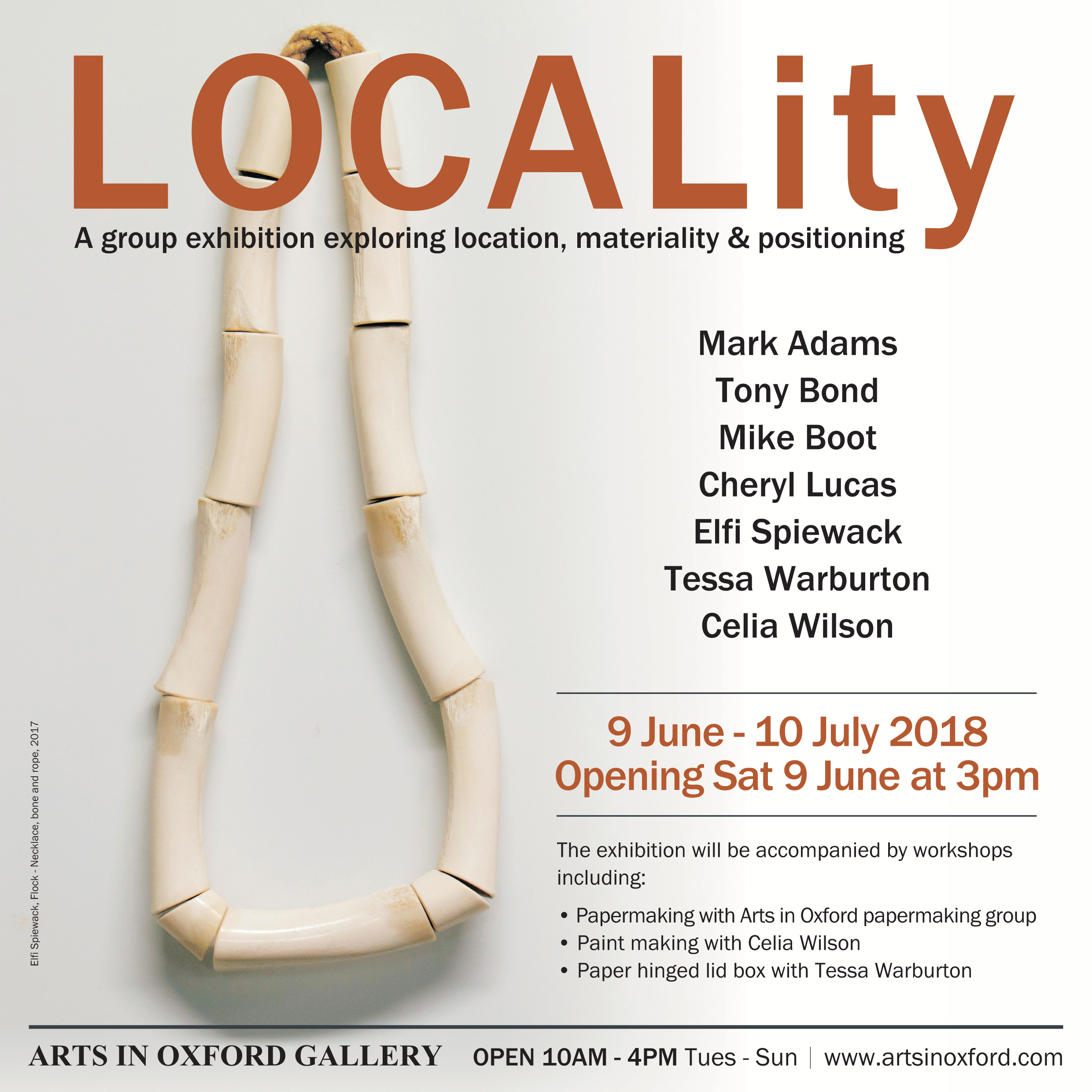
LOCALity: a group exhibition exploring location, materiality & positioning

Arts in Oxford is pleased to present a selection of artworks by Canterbury artists Mark Adams, Mike Boot, Tony Bond, Cheryl Lucas, Elfi Spiewack, Tessa Warburton and Celia Wilson.

Artists each have diverse, unique practices but collectively are themes of rural life that connect all the works. Local geology, farming industry, water issues, native and introduced flora, recycling, repurposing are all reflected in this curated exhibition.

Images by Arts In Oxford.

2018-05-24 03.00.16-12018-05-24 03.02.34-12018-05-24 03.11.27-1

(You can just see my artworks on the wall in this photo above.)

Press Release:

Art_in_Oxford_LOCALity_Press Release_final-1

LOCALITY JUNE-JULYLOCALITY JUNE-JULY

Printmaking Workshop

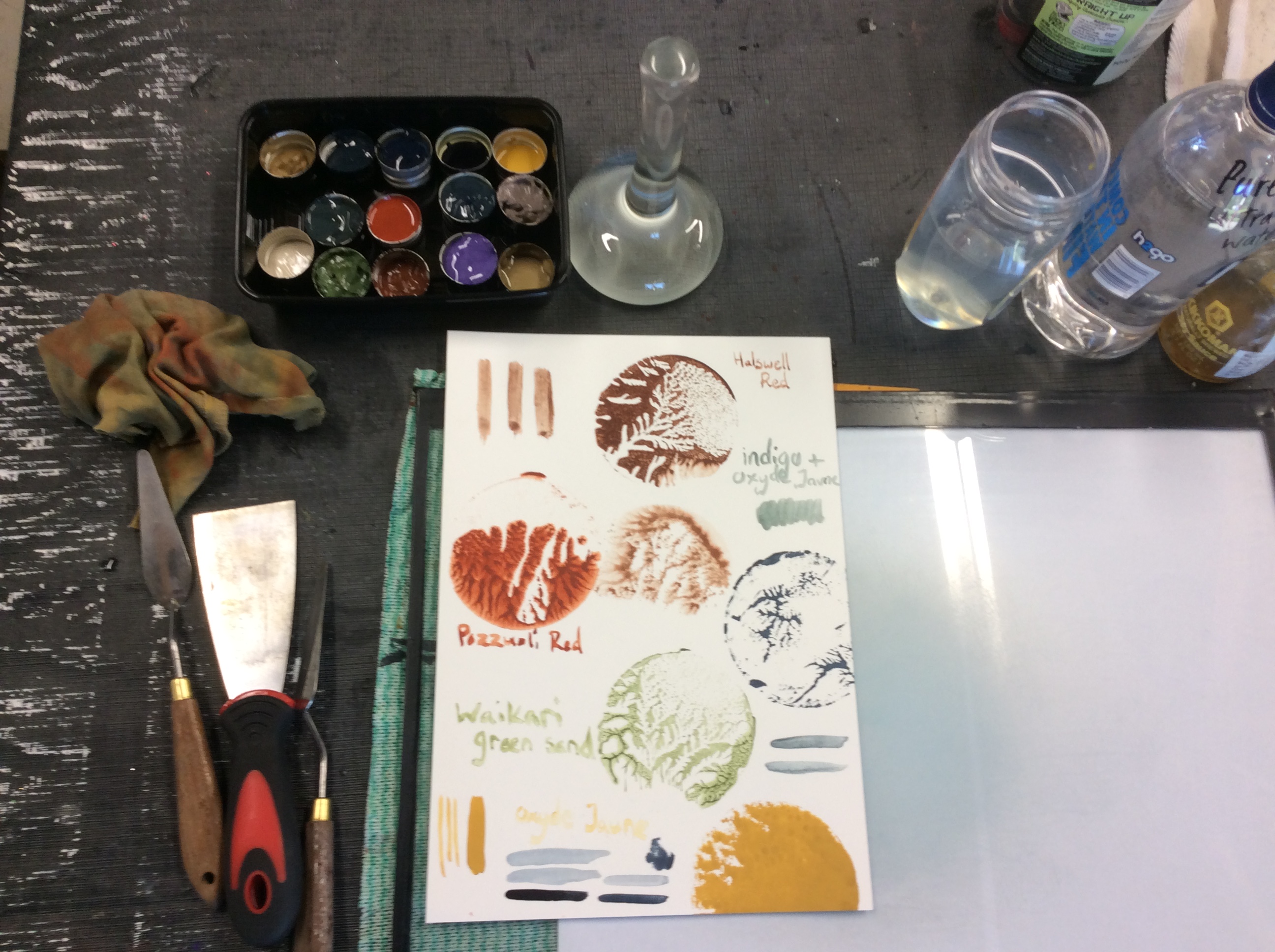
Colours of Canterbury and other places, made at this morning’s printmaking workshop at Arts in Oxford Gallery.  Many thanks to Jo who made these lovely paints.


IMG_2534

Paintmaking Workshop


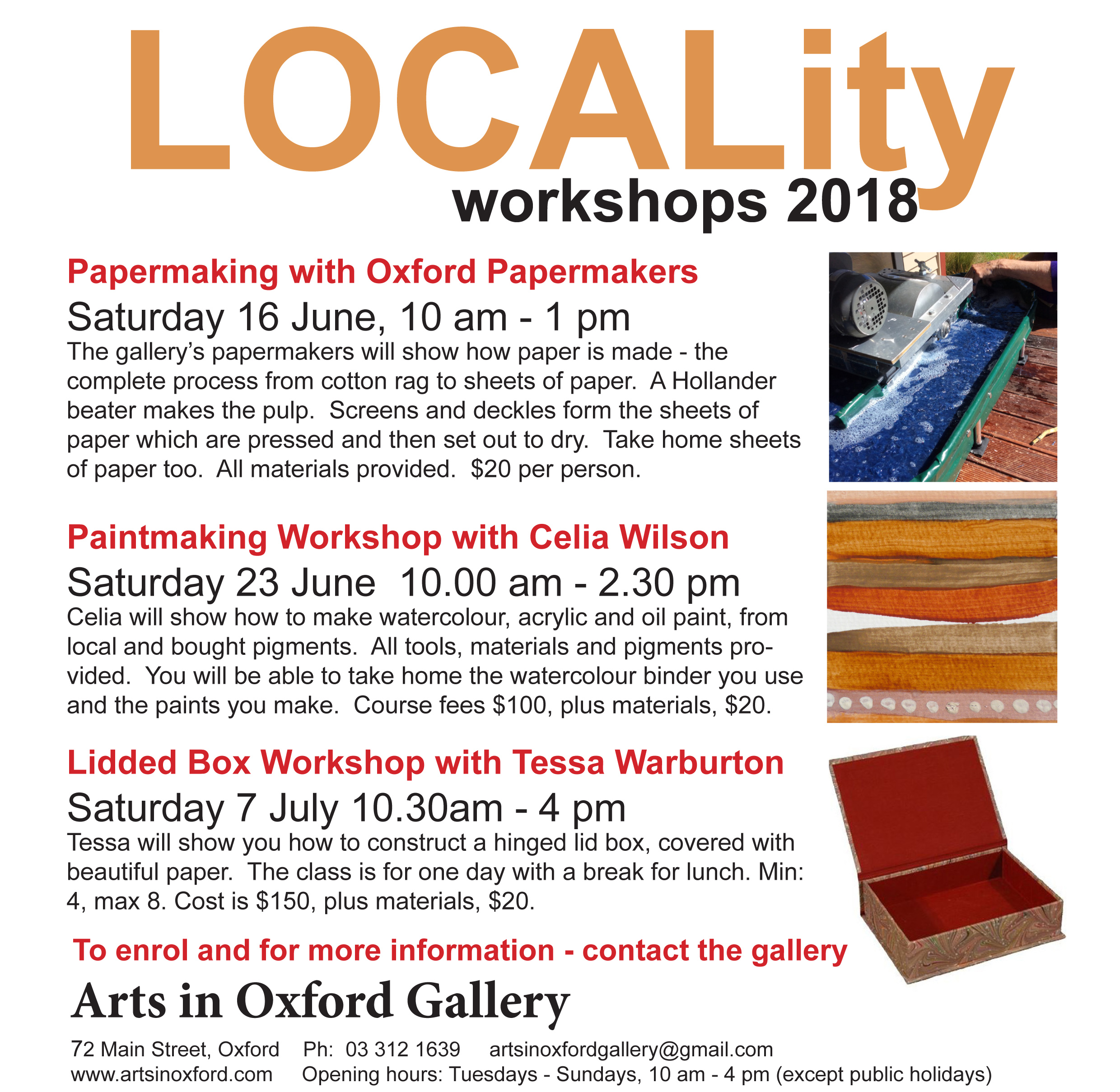
I am holding a paintmaking workshop on Saturday 23rd June.  If you are interested please book at the gallery to reserve a place.

We are also holding two other workshops to accompany the exhibition LOCALity now on show at Arts in Oxford, North Canterbury.

Locality workshops square

Seeds, hips and twigs

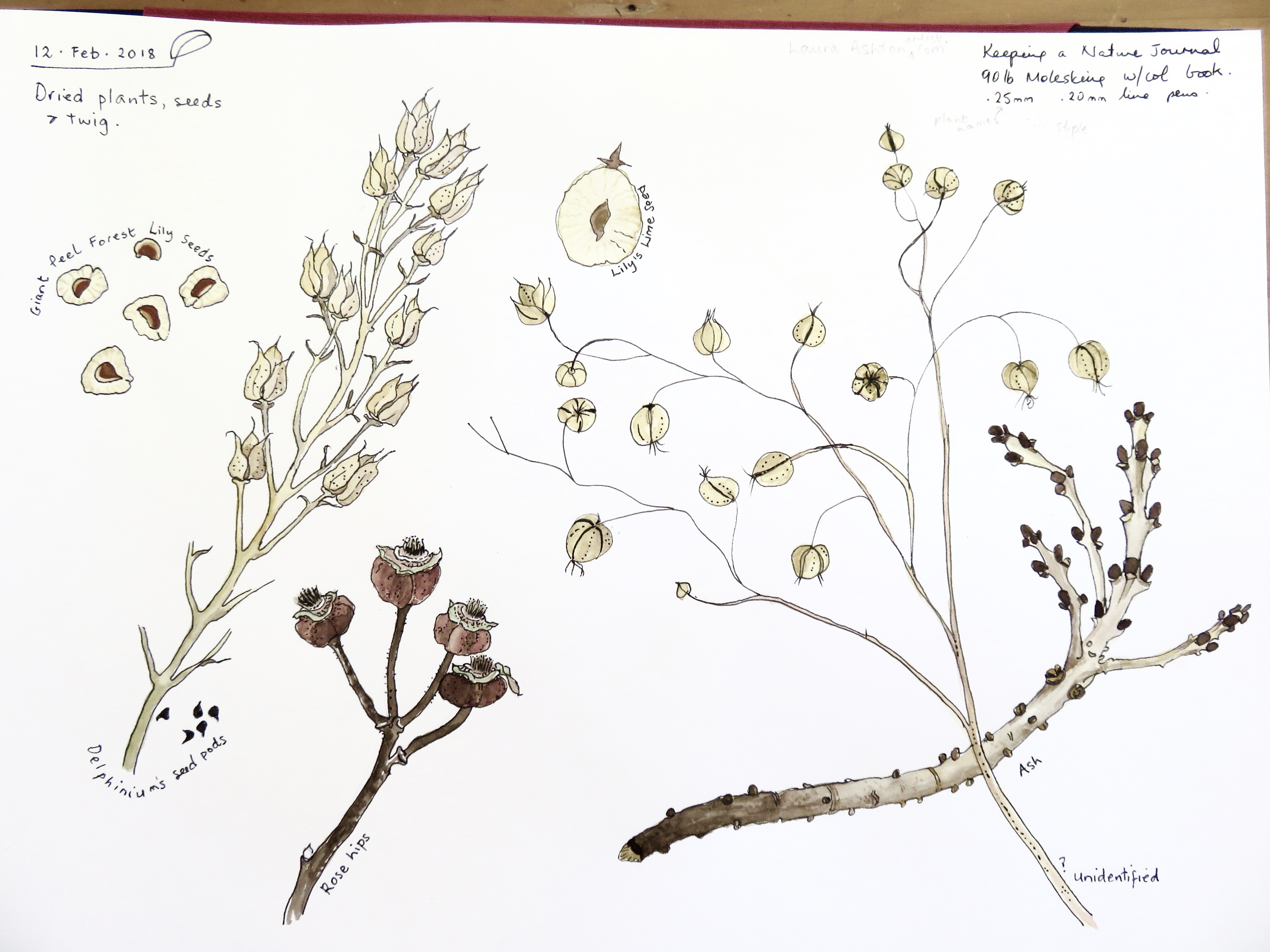
I completed a Skillshare course on botanical sketching by Laura Ashton, and was really pleased to get a few tips that really helped!  So pleased to find a use for some of my dried plant material.


IMG_4621

Wrybills

Been a while since I have posted, but I have been otherwise occupied with the gallery at Arts in Oxford.

No painting, no prints, no solar dyes.   Well, actually, I have done some on the odd occasion, and I had to do some mono prints for the exhibition “From the Rivers to the Shore” which was on at the gallery from 10 June for five weeks.  The show is now on at The Depot Artspace in Devonport, Auckland.  From there it will go up to the Hokianga, at Rawene,  in No 1 Parnell Gallery.

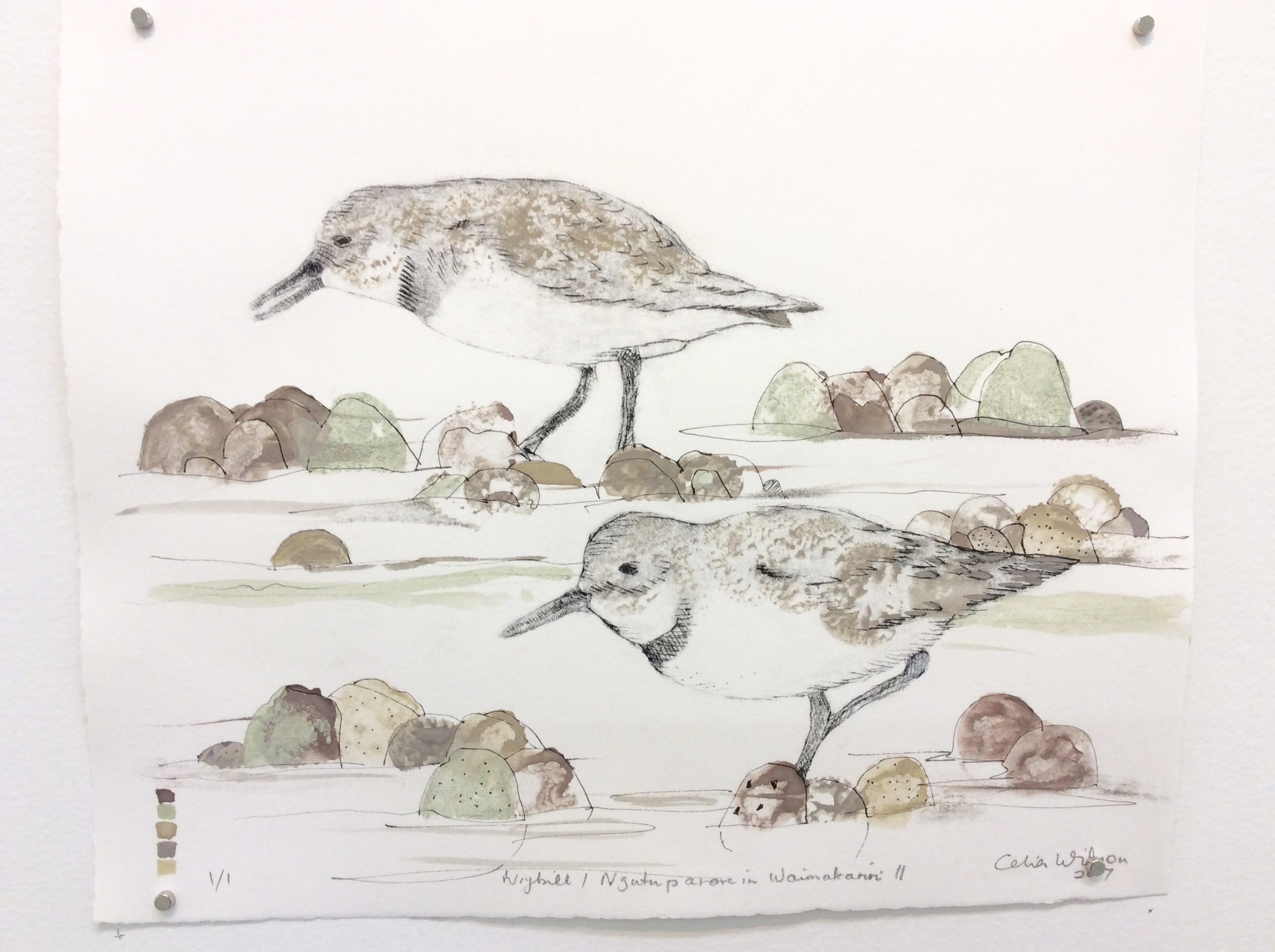
I was delighted to sell the work I exhibited in Oxford North Canterbury, which is this one below.  Wyrbills are the only bird on the planet with a bill that bends to the right – it is endangered due to habitat loss on the braided rivers of the South Island of New Zealand, where this species breeds, and on the distant shores it visits during its annual migration to overwinter in warmer climes.  It is also endangered due to predators and weed invasion of the bare rock covered areas of the braided rivers where the eggs are laid amongst the rocks.  In conjunction with Braided River Aid, the gallery hosted a panel discussion with two Canterbury University academics from the Biological Sciences department who are researching nearly everything you can think of to help these and other endangered birds.

2017-07-04 15.30.25

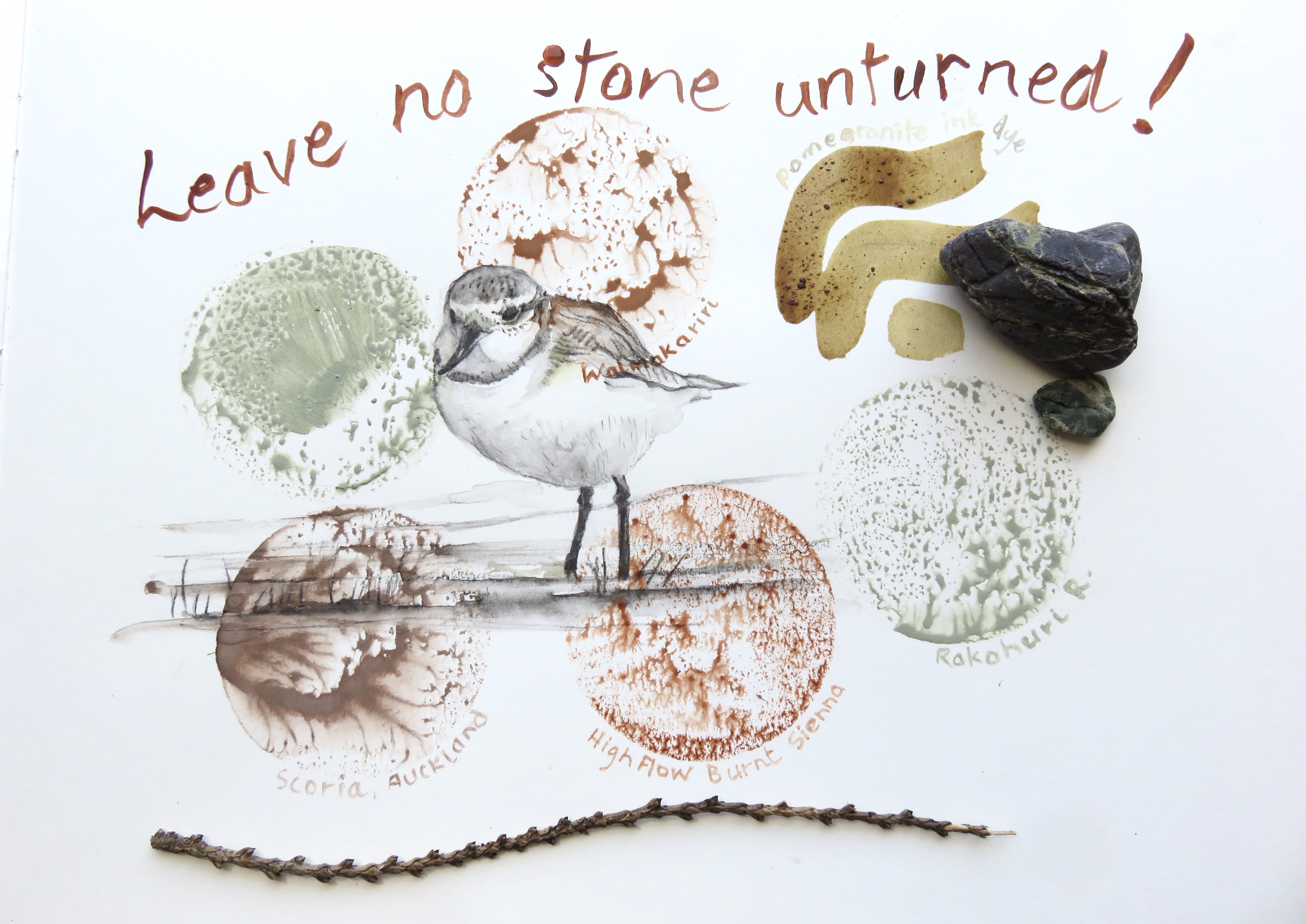
The rocks are coloured with pigments from the river rocks.  You can see the curve of the bill in this sketch below!


IMG_3833

Paintmaking in the Gallery

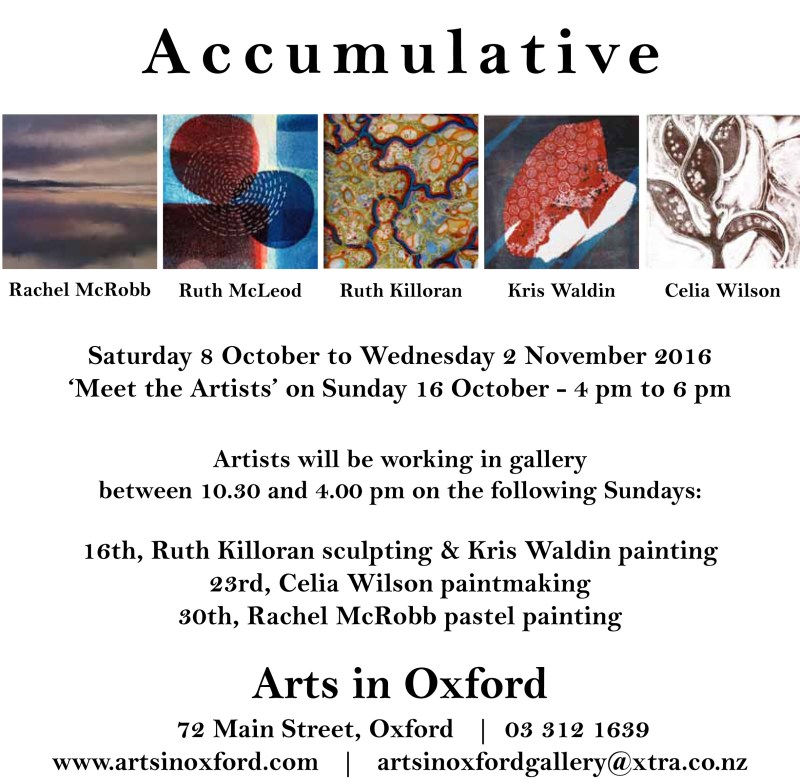
As part of our group exhibition, Accumulative, I will be in the Arts in Oxford Gallery this Sunday 23 October from 10.30 am until 4 pm making paint from rock from the Canterbury area and further afield.

Hope to see you there!

canterbury-pigments-web

‘Accumulative’ exhibition Print

img_0625

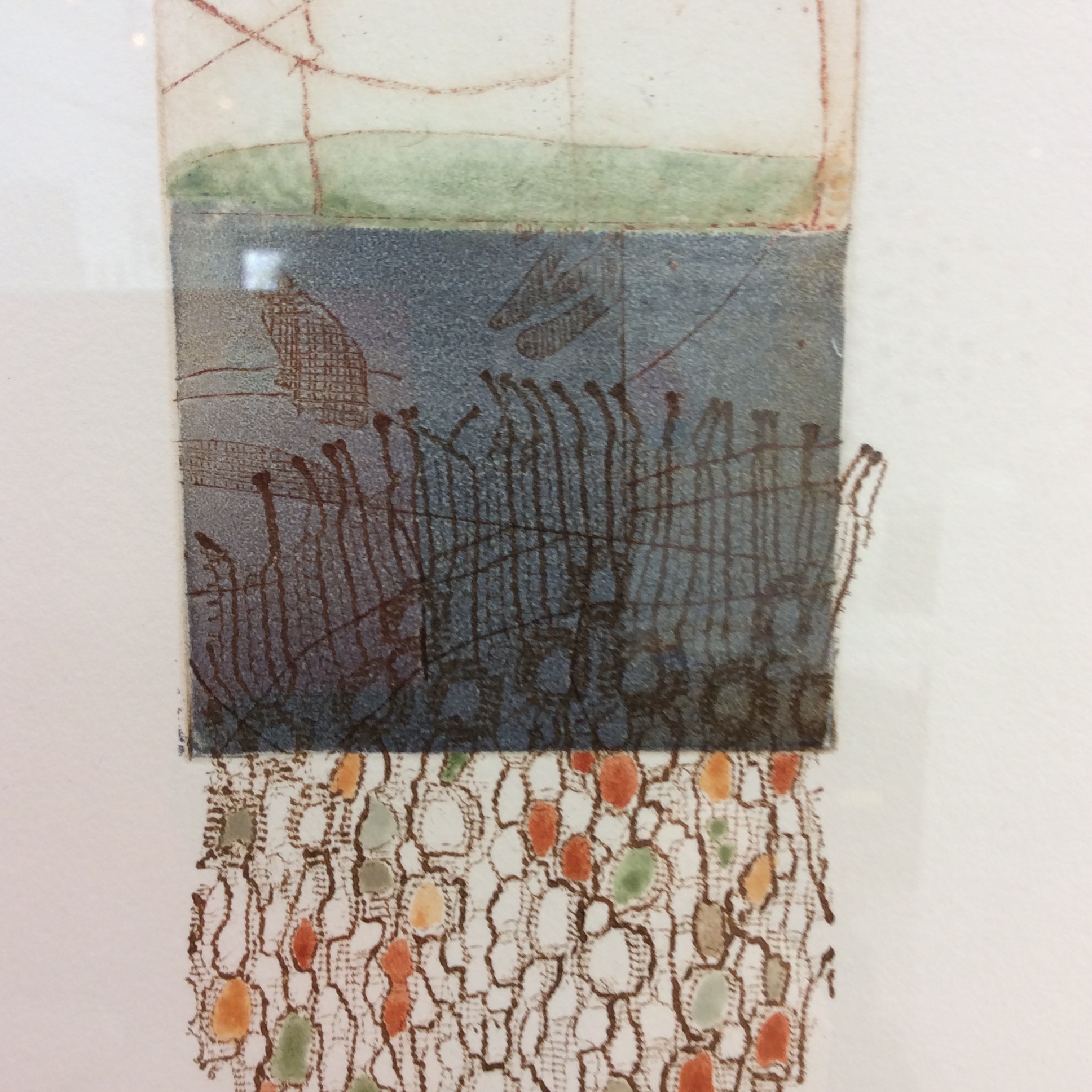
Waimakariri Near and Far, mono print on paper.  Detail of one of my Accumulative exhibition prints with Waimakariri and Waikari rock paints.

Carbon Footprint


Handprint1

We’re all in the joke mood at the moment, that is if you are doing an assignment for Art of the MOOC.  It has been a real battle for me to think of a joke related to a social issue or a social movement.  My attempts just sounded so silly, but after going on line to find some, I thought mine were not that bad after all…

So how about:

When is a thinking person’s coal mine empty?  When it’s mindful.

When can coal see?  When it’s fossilised.

Then I thought, if I am making paint from coal (which was my intention), to sequester it, for example, I need a link to paint and pigment.  Luckily, my brain caught on, and I came up with using charcoal (which is also carbon).  Now, as there is a good possibility that prehistoric man also used charcoal to paint or draw with, aka cave paintings, I could somehow make  a joke that linked carbon, pigment and paint.  I do have some coal left over from when we had a coal fire (oops, but we only used it once and we had to travel 100 k to buy the coal)…  but the charcoal came from the woodturning stove and the tree came from the garden and it did seem a little more environmentally appropriate.

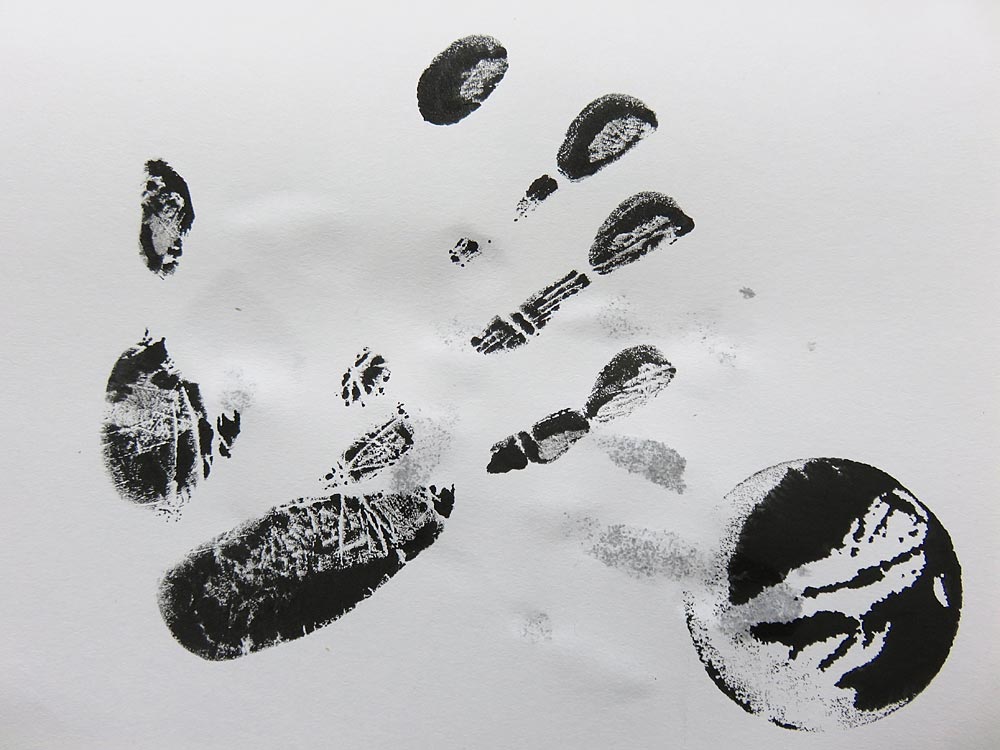
So my joke for Art of the MOOC was:  Was there a prehistoric carbon footprint?  No, they used their hands…

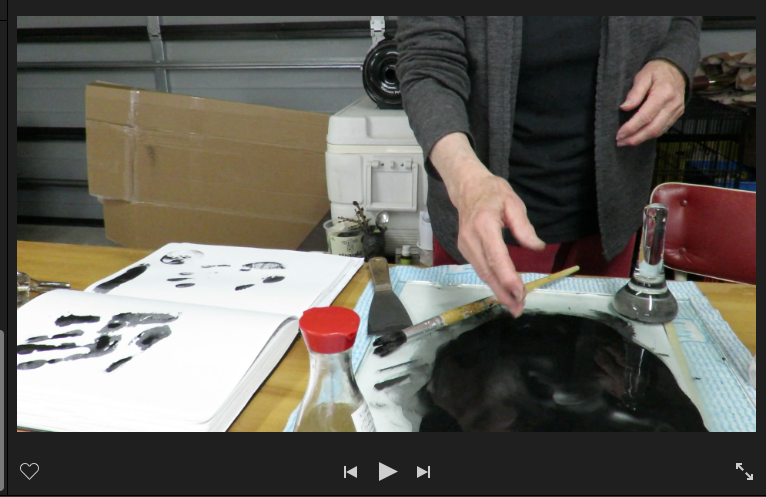
I made a video of the paint making process which can be found on my Facebook page.  www.facebook.com/celia.wilson.56   It is also on Vimeo https://vimeo.com/147520835, and I have a link to Twitter…


Screen Shot 2015-12-02 at 11.10.34 AM


Walks in the Waitakere Ranges

Have just found this draft which was started late last year, so I thought I should finish it.

In November I spent a week near the Waitakere Ranges just north of Auckland, and had the opportunity for some lovely bush walks.

IMG_1653

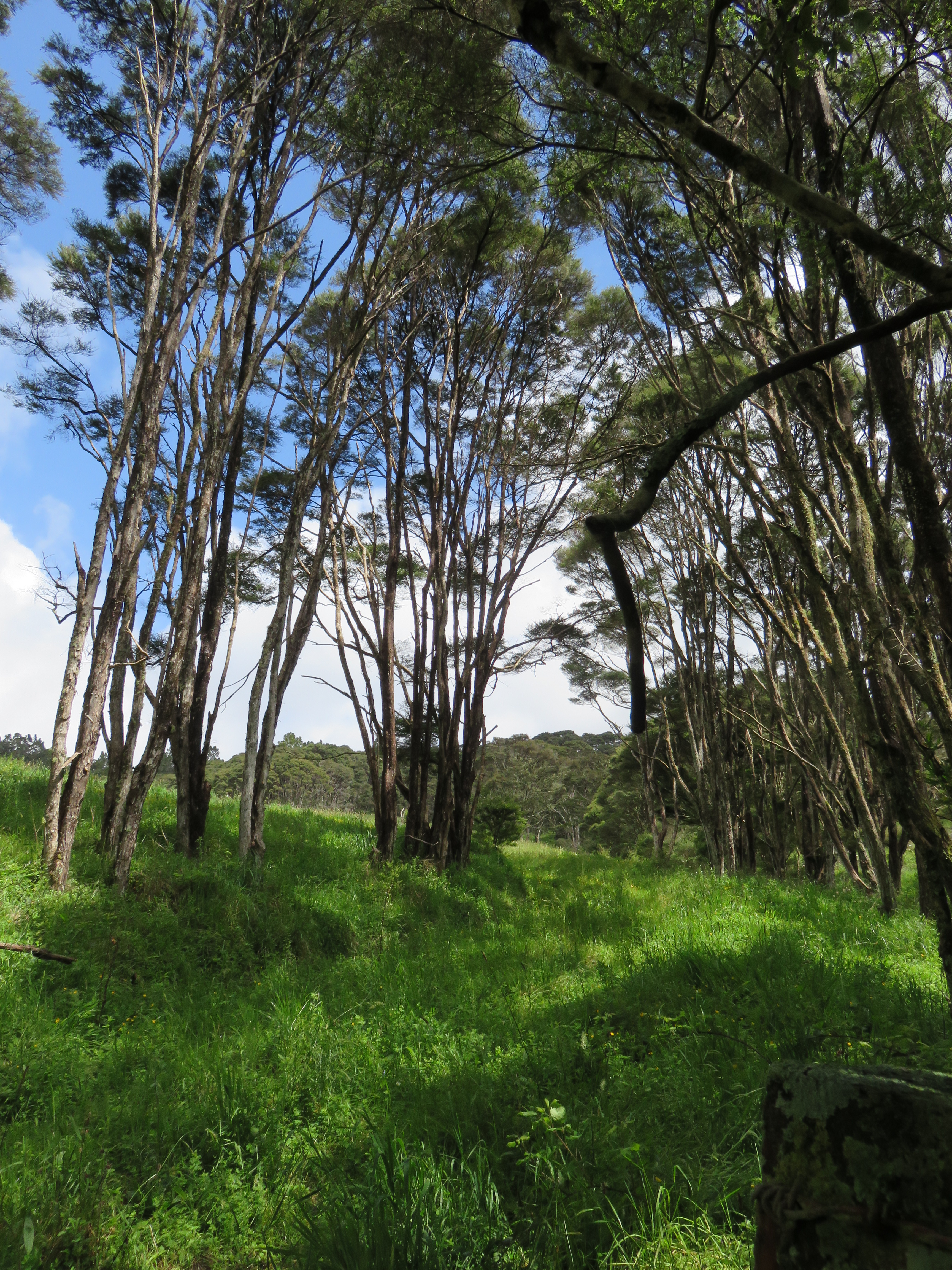
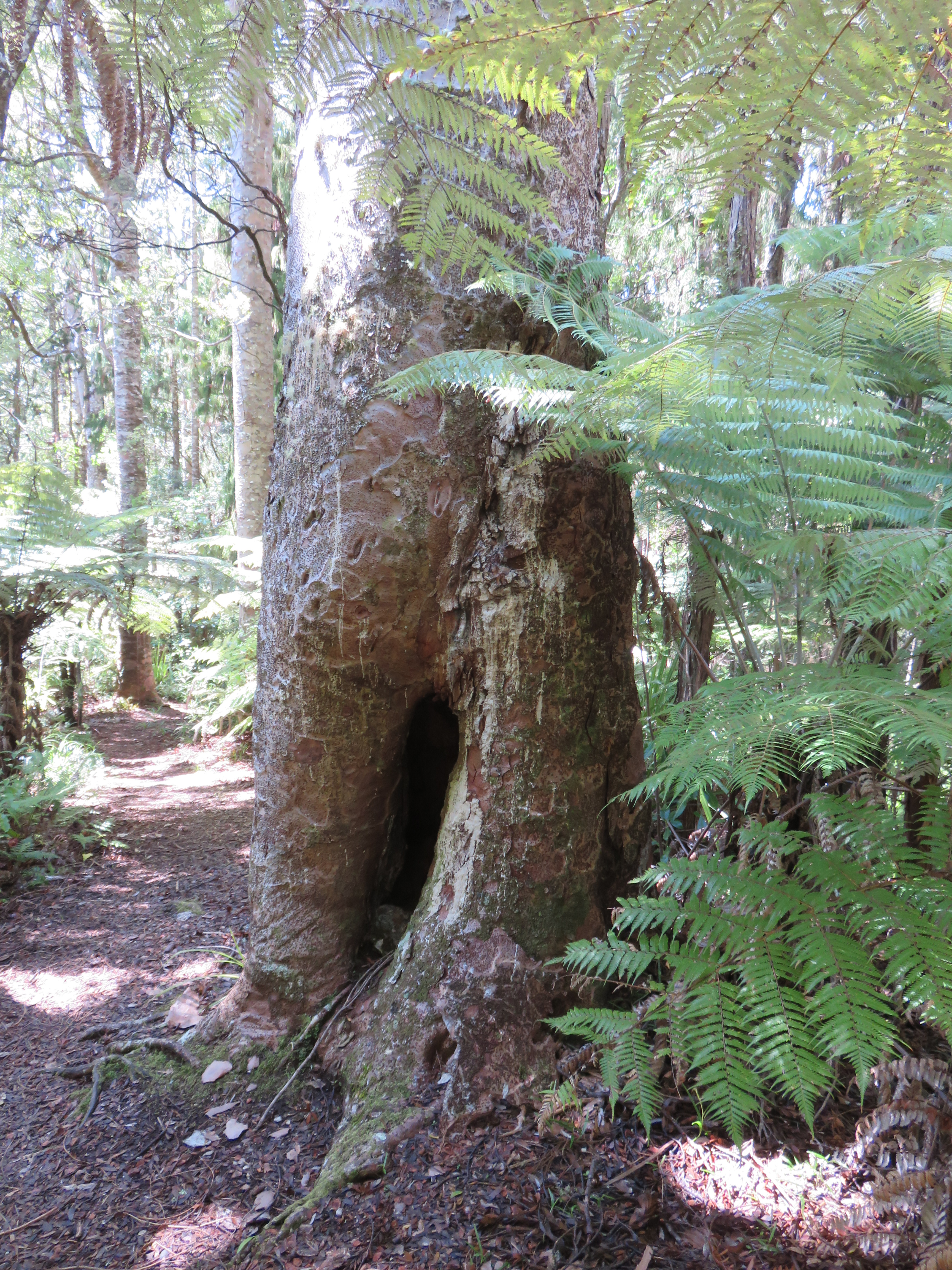
Paddocks and regenerating forest – Manuka a nursery species.  Ponga, tree ferns, Kauri alongside the track.

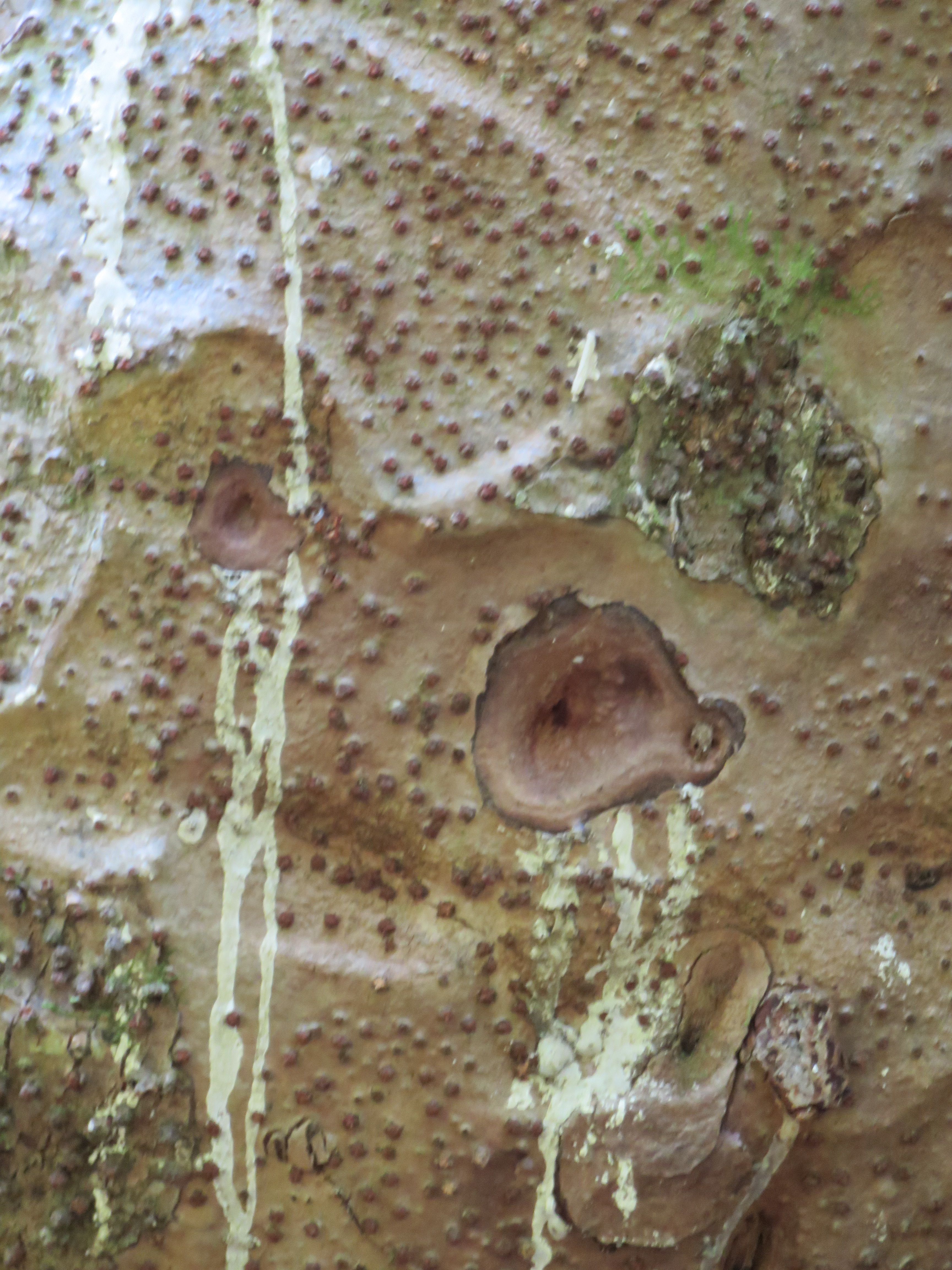
IMG_1697 IMG_1701Close up of Kauri bark.  Gorgeous!

IMG_1664

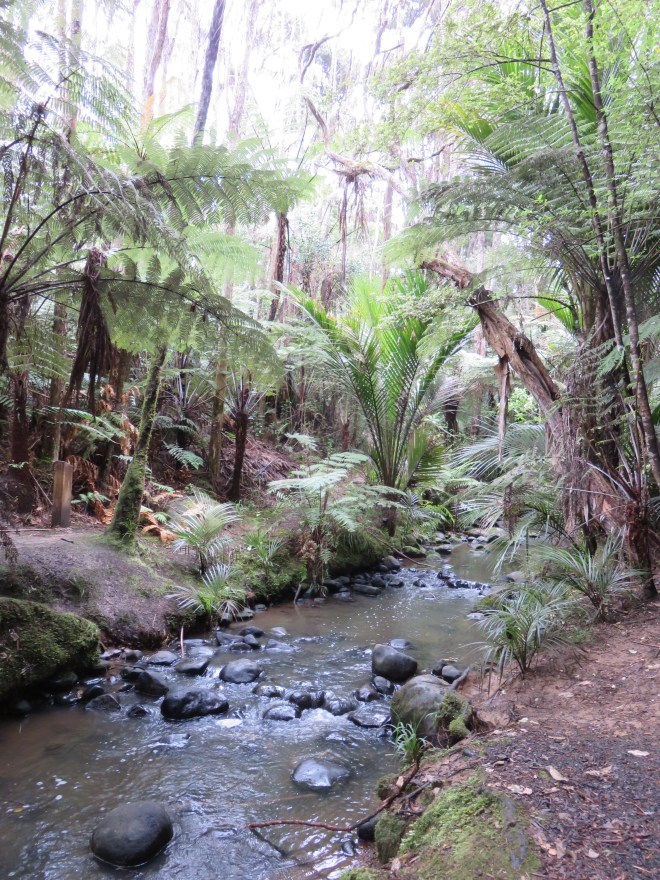
Crossed this stream.  Typical of the bush streams in the area.  This one is near civilisation.

IMG_1656


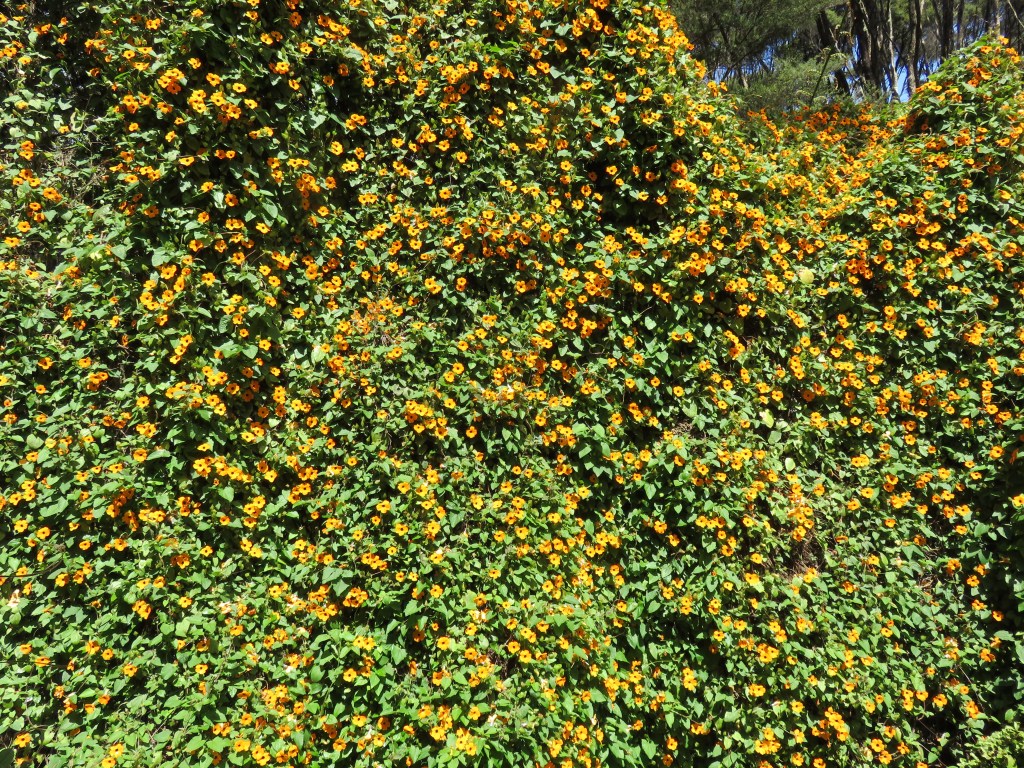
Definitely not in the bush! Planted at the entrance to a property. Looks like a Black Eyed Susan vine Thunbergia alata.

IMG_1647


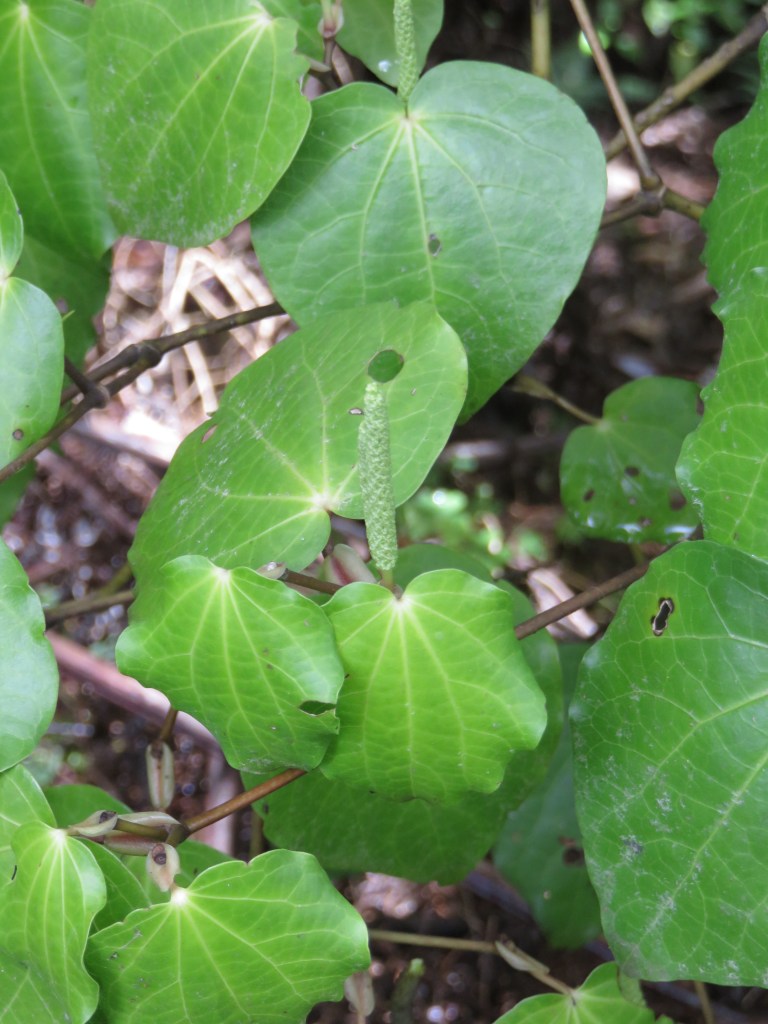
Kawakawa , Macrocarpa excelsum– lovely holes in the leaves from it’s friendly co-habitant, the Kawakawa looper moth caterpillar.

I managed to find some pigments – mainly hard clay, and some small clay pebbles, rounded by the running stream water.  I’ve never seen these before, was quite a surprise.  Because they are wet, the colour comes off on to your fingers, and you can easily mark another harder surface.  I thought perhaps that could have started the use of clay as paint…