I’m pleased to say that my paint making is getting better – not that there was a problem, but the paint was shrinking quite a lot as it dried. Not surprising really as this is what clay does when it dries out. I am an artist, not a chemist, so it is a trial and error process, especially as every pigment reacts differently. I can now say that my half-pans of paint look more like the ‘real’ (commercial) thing.
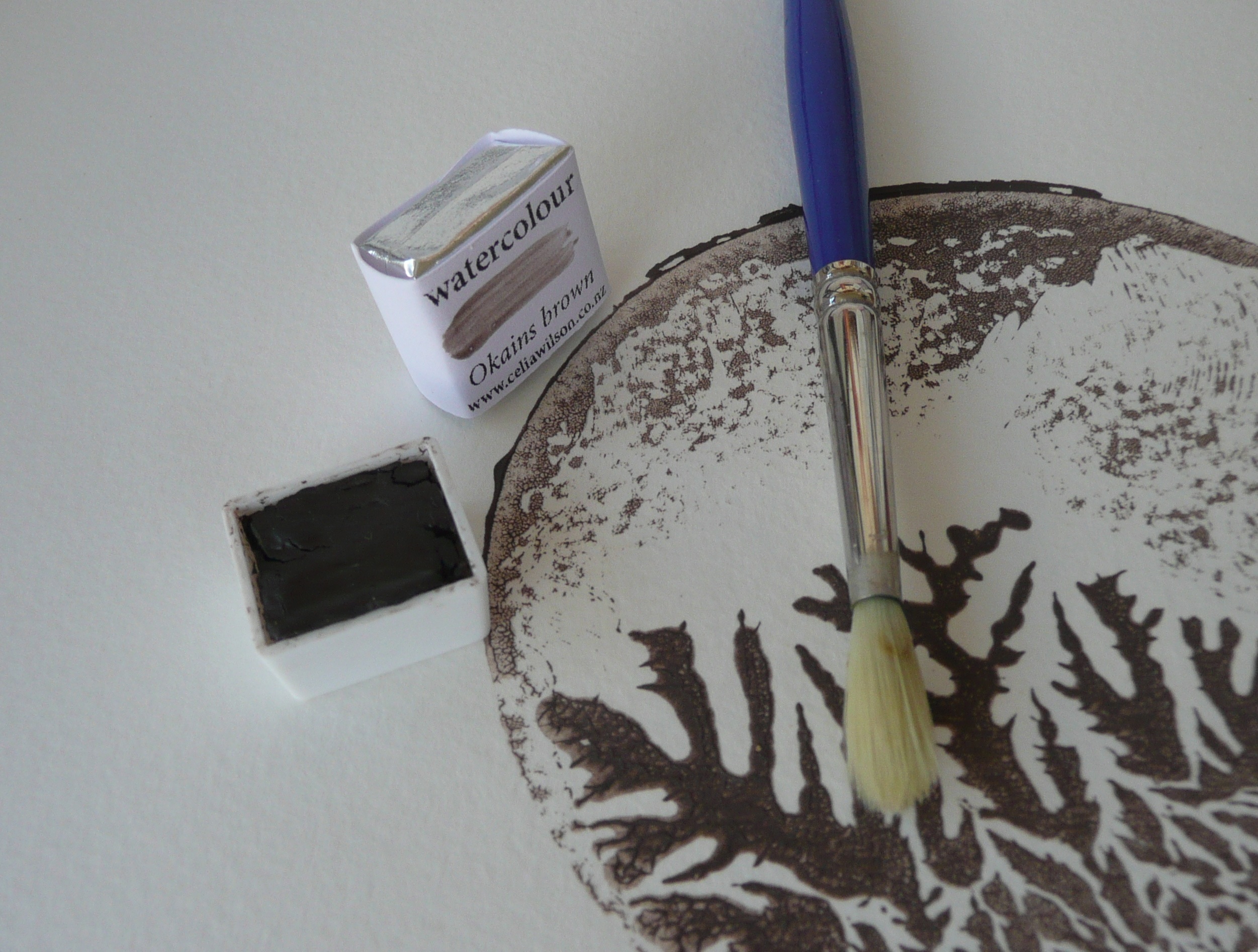
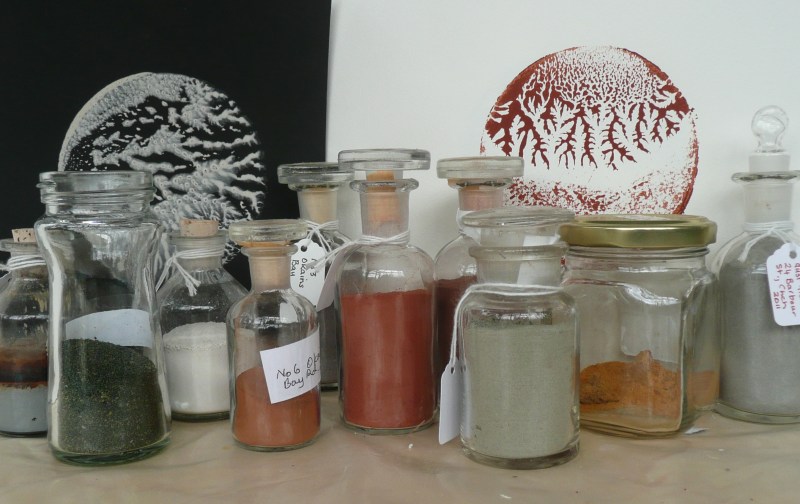
I wrote an essay on locally found pigments for my last year at university. I was motivated in this research because I feel we take artists’ paint for granted! I just accepted that these colours come out of a tube or a pot, without a second thought of their origins. Then I realised, these paints are made overseas from materials themselves imported from other places, and I became curious about what pigments might be found in New Zealand.
A painting’s main constituent – paint – and how paintings are physically made is not usually considered in art history or art theory but, of course, to a painter the paint, consciously and subconsciously, is of prime importance, as it is central to the act of painting. The painting material itself also provides the artwork with context, subject matter, psychological content and visual stimulation. I feel it is an overlooked component. A painting’s material presence is often overlooked, partly because we are so used to viewing images in print or on the screen. There is much on the subject of paint for conservation practices, and advice about art materials and techniques on the internet and in manuals, but a conversation on the ‘material memories’ (James Elkins, What Painting Is: How to Think About Oil Painting, Using the Language of Alchemy, 1999) contained in and shown by the paint or the act of painting is not usually considered.
If a painting, both in its subject matter and in its materials, is regarded as a repository of history, current circumstances – economic, environmental and ethical – encourage me to investigate the possibilities of using locally found pigments as an alternative or companion to commercial, imported pigments and paints. The experimental use of these pigments will provide information as to how such material itself performs, in most cases unlike commercial paint which offers (thankfully!) large quantities of paint of uniform consistency and pigment distribution. My use of relatively unrefined pigments has produced some exciting effects.
I find that locally found pigments each have an intrinsic or essential character. The wish to explore and exploit these idiosyncratic qualities, specific qualities and problems, is perhaps seeking to return to individuality or a rejection of bland uniformity. I started to experiment with ocherous and clay based paint in order to research the different optical effects (for example, chroma intensity or gloss or matt surfaces) and handling properties of paints, and to maximize the granulation and flocculation effects of some pigments in water-based mediums.
I also experiment with plant based paint and the same granulation effect occurred, though with much finer particles, as was found with the colour extracted from the empty seed cases of Phormium tenax – Harekeke or the New Zealand flax plant. The texture and color of the dry paint varied, and in places where the paint pooled, the dark areas of color produced a sheen on the surface of the dry paint. (This P. tenax liquid contains no added substances and should probably be called a toner.) The paint dispersed and dried differently from commercial paint by showing varied pigment dispersal and paint body per batch of paint. The artwork thereby inadvertently and indirectly reveals a new aspect of the plant and, in the artwork, the plant has a new lease of life.
And, if you got through all that – have a great painting day!






 Celia Wilson